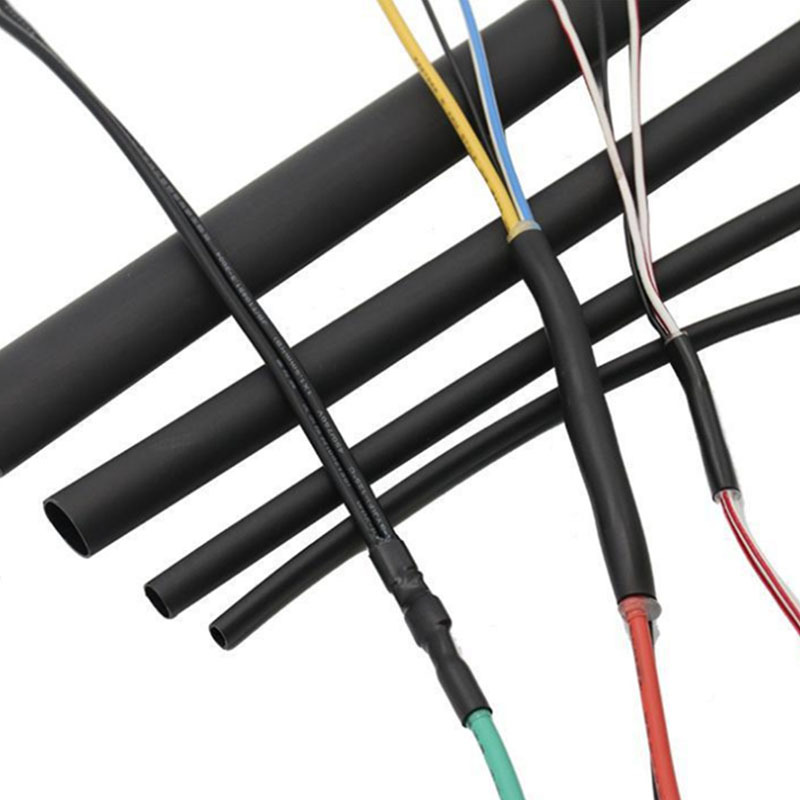
Selecting the right heat shrinkable tube requires balancing multiple competing demands, with chemical resistance and space efficiency standing as two of the most critical considerations. Industrial applications demand materials that withstand harsh chemical environments while fitting within tight physical constraints. This dual requirement creates a genuine engineering challenge that many procurement teams and design engineers face when specifying components for automotive, aerospace, marine, and manufacturing settings. Understanding how to navigate this balance prevents costly component failures, reduces installation complexity, and ensures long-term system reliability.
The tension between these two requirements stems from fundamental material science principles. Chemical-resistant polymers typically feature dense molecular structures that provide superior protection against oils, solvents, and aggressive compounds, but these same properties often result in thicker wall constructions. Conversely, space-efficient designs emphasize thinner profiles and compact shrink ratios to accommodate crowded cable bundles and confined installation spaces. Resolving this trade-off intelligently means understanding material options, application demands, and how modern dual wall technology addresses both needs simultaneously.
Understanding Chemical Resistance Requirements
Chemical Environment Assessment
Effective industrial wiring protection starts with honest assessment of the actual chemical exposure profile. Many applications encounter multiple chemical stressors simultaneously—not just one isolated substance. Engine compartments expose components to gasoline, oil, coolant, and salt spray. Factory environments introduce cutting fluids, hydraulic oils, and cleaning solvents. Marine installations present saltwater, diesel fuel, and anti-fouling compounds. The heat shrinkable tube selected must withstand this entire chemical cocktail, not just the most obvious agent. Inadequate chemical resistance leads to material degradation, seal failure, and ultimately complete system malfunction.
Material Performance Standards
Chemical resistance in heat shrinkable tube depends on polymer selection and wall thickness. Fluoropolymer-based materials like FEP and PTFE deliver excellent resistance to nearly all industrial chemicals, but add significant cost and material bulk. Polyolefin compounds provide moderate chemical protection at lower cost and thinner profiles. Cross-linked polyethylene resists many oils and fuels effectively. Standard PVC offers chemical resistance suitable for many warehouse and light industrial wire termination applications. The key insight is that chemical resistance isn't binary—it exists on a spectrum, and selection must match the specific exposure environment rather than pursuing maximum resistance indiscriminately.
Space Efficiency and Installation Constraints
Compact Design Challenges
Modern industrial equipment increasingly demands dense component packaging. Automotive harnesses pack hundreds of terminations into engine bays designed for maximum power density. Aerospace systems minimize weight through compact routing and tightly bundled cables. Renewable energy installations optimize installation efficiency by consolidating connections in confined spaces. These realities mean that heat shrinkable tube must often shrink to very small diameters while maintaining seal integrity and chemical protection. Oversize tubing creates installation nightmares—connections won't fit through routing holes, bundle diameters exceed available space, and assembly time explodes. The tension between adequate wall thickness for chemical resistance and minimal external diameter for fit becomes acute in these environments.
Shrink Ratio and Performance Trade-Offs
Dual wall heat shrinkable tube technology directly addresses this challenge through engineered shrink ratios that balance protection with compactness. A 3:1 shrink ratio provides moderate space efficiency with good wall coverage. A 4:1 ratio improves space utilization significantly, allowing the same protection in a smaller final diameter. Some advanced formulations achieve 6:1 or higher, though these extreme ratios require careful application to ensure proper sealing and chemical barrier performance. The heat shrinkable tube selection process must evaluate whether the specific application benefits more from aggressive space reduction or conservative wall thickness for maximum chemical resistance.
Dual Wall Technology for Optimal Balance
How Dual Wall Construction Works
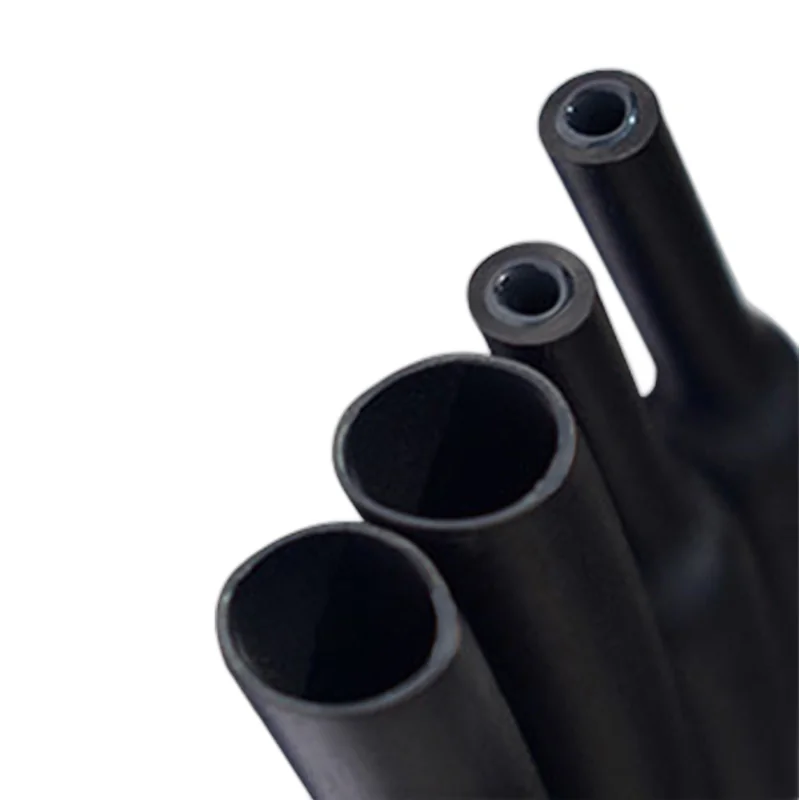
Dual wall heat shrinkable tube solves the chemical resistance versus space efficiency dilemma through clever material engineering. The outer layer provides the primary chemical barrier, typically formulated from polymers selected for specific environmental exposure. The inner wall incorporates a meltable adhesive or sealant compound that creates a moisture and contamination barrier during shrinkage. This two-layer design allows specification of thinner total wall thickness compared to single-wall alternatives while maintaining superior chemical protection and seal quality. Industrial wiring applications benefit enormously because the adhesive layer actually improves chemical resistance by creating multiple barriers rather than relying on a single thick polymer wall.
Practical Performance Benefits
Real-world installation data consistently demonstrates that dual wall configurations outperform single-wall alternatives in challenging environments. The adhesive inner layer prevents contaminant migration during thermal cycling, which single-wall materials cannot achieve. Chemical exposure penetration occurs more slowly through the dual barrier system because the inner adhesive layer absorbs and blocks many aggressive compounds. Space efficiency improves because designers can specify dual wall tubing with smaller final diameters than the single-wall equivalent needed for equivalent chemical protection. Wire termination becomes more reliable because the adhesive layer bonds to connector pins and wire insulation, preventing moisture ingress at connection points—a critical failure mode in chemical environments. This combination of benefits explains why dual wall technology has become the standard specification for demanding automotive, industrial wiring, and aerospace applications where both chemical resistance and compact installation are non-negotiable requirements.
Selection Framework and Practical Guidance
Decision Criteria Matrix
Selecting the optimal heat shrinkable tube requires systematic evaluation of four key dimensions. First, define the complete chemical exposure environment—identify all substances the tubing will contact, concentration levels, and temperature conditions during exposure. Second, establish the physical space constraints—measure available diameter and length for the shrunk tubing, accounting for connector geometries and routing restrictions. Third, evaluate temperature cycling and thermal stress requirements because chemical resistance can degrade under thermal aging. Fourth, consider cost and supply chain factors, recognizing that premium materials command price premiums that may or may not justify the application. This systematic approach prevents under-specification that causes failures and over-specification that wastes resources.
Application-Specific Recommendations
Automotive under-hood applications typically require dual wall tubing with strong oil and fuel resistance, making FEP or specialized polyolefin outer layers the standard choice. Marine and saltwater applications demand saltwater corrosion resistance combined with aggressive UV protection, pointing toward cross-linked polyethylene or PTFE-based dual wall systems. Industrial manufacturing environments with cutting fluid exposure benefit from chlorine-resistant materials in dual wall construction. Aircraft applications increasingly specify dual wall with aerospace-grade chemical resistance coupled with flame propagation ratings and minimal smoke emission. Server rooms and electronics applications can often accept simpler polyolefin dual wall with modest chemical resistance, prioritizing cost and installation simplicity. Matching the heat shrinkable tube specification to the actual application environment, rather than applying a one-size-fits-all approach, optimizes both performance and total cost of ownership across industrial wiring installations.
FAQ
Does dual wall heat shrinkable tube cost significantly more than single-wall alternatives?
Dual wall formulations typically cost 15–30% more than basic single-wall polyolefin tubing, but considerably less than premium single-wall materials like pure PTFE required to achieve equivalent chemical protection. When total system cost is evaluated—including installation labor, reliability, and warranty implications—dual wall often represents superior value because of reduced failure rates and simpler specification requirements. The adhesive layer technology has matured sufficiently that pricing reflects genuine commodity economics rather than premium positioning.
Can heat shrinkable tube withstand simultaneous exposure to multiple different chemicals?
Yes, most modern heat shrinkable tube formulations, particularly dual wall systems, are engineered to resist diverse chemical cocktails rather than single substances. Industrial environments rarely involve pure chemical exposure; instead, components encounter oils mixed with coolants, saltwater combined with UV exposure, or solvents alongside thermal stress. Material selection focuses on the most aggressive component in the expected exposure environment, with the understanding that adequate resistance to the toughest substance provides protection against milder chemicals also present. This is why comprehensive environmental assessment during specification is essential for wire termination decisions.
What shrink ratio should be specified for optimal chemical resistance and space efficiency?
A 3:1 or 4:1 shrink ratio in dual wall construction provides the practical optimum for most industrial wiring applications, balancing chemical protection adequacy with genuine space savings compared to single-wall alternatives. More aggressive ratios like 6:1 improve space efficiency further but increase installation sensitivity and can compromise adhesive layer integrity if not carefully applied. Conversely, 2:1 ratios sacrifice space efficiency gains without substantially improving chemical resistance. The optimal choice depends on whether the specific application prioritizes maximum space reduction or maximum chemical barrier certainty, but dual wall at 3:1 to 4:1 typically delivers superior balance compared to any single-wall alternative.
 EN