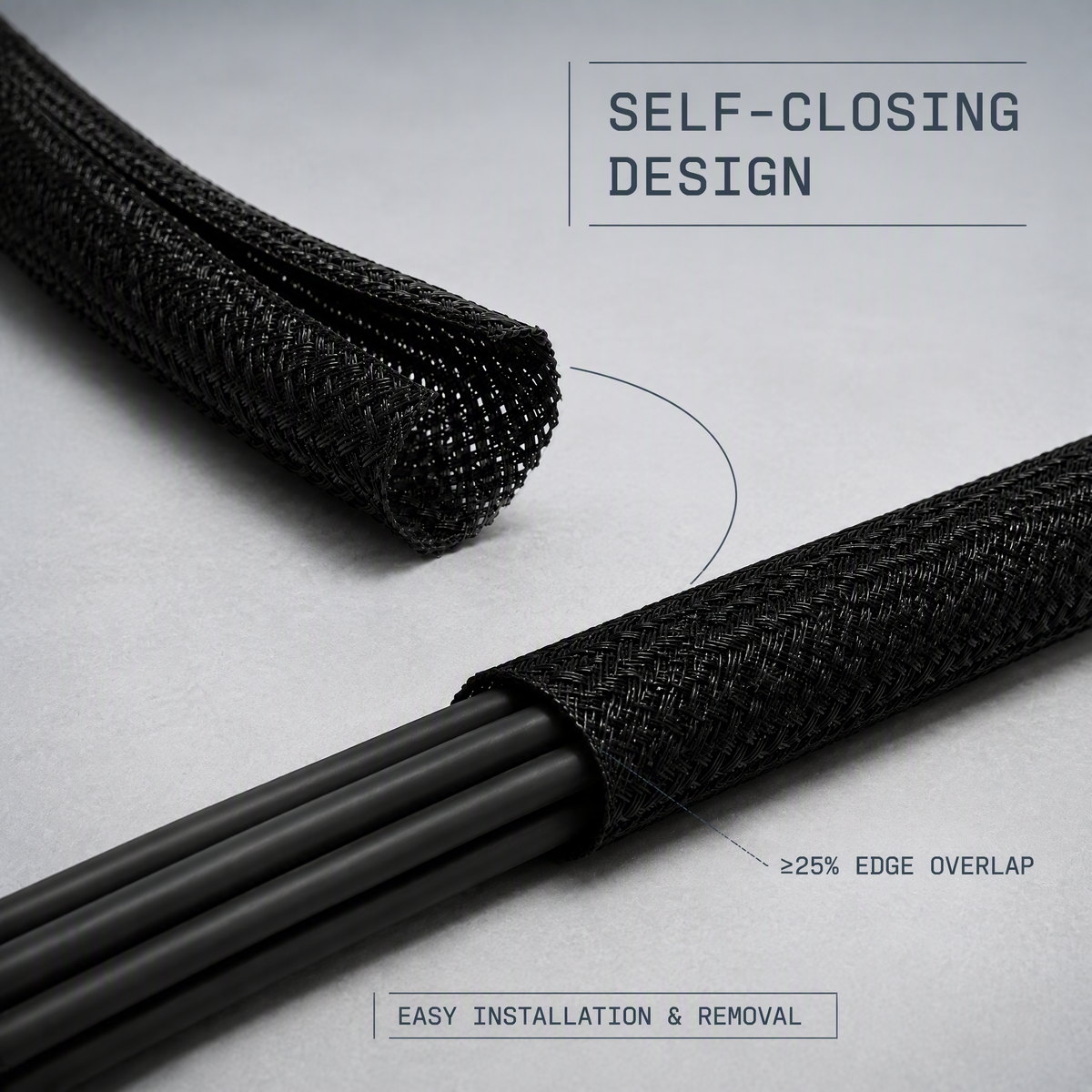
Long cable runs present unique organizational and protection challenges in industrial, automotive, and telecommunications environments. When cables extend across significant distances, they face exposure to abrasion, environmental contaminants, and mechanical stress that can compromise system reliability. A self closing wrap addresses these challenges by providing integrated cable management while delivering durable braided protection along the entire run length.
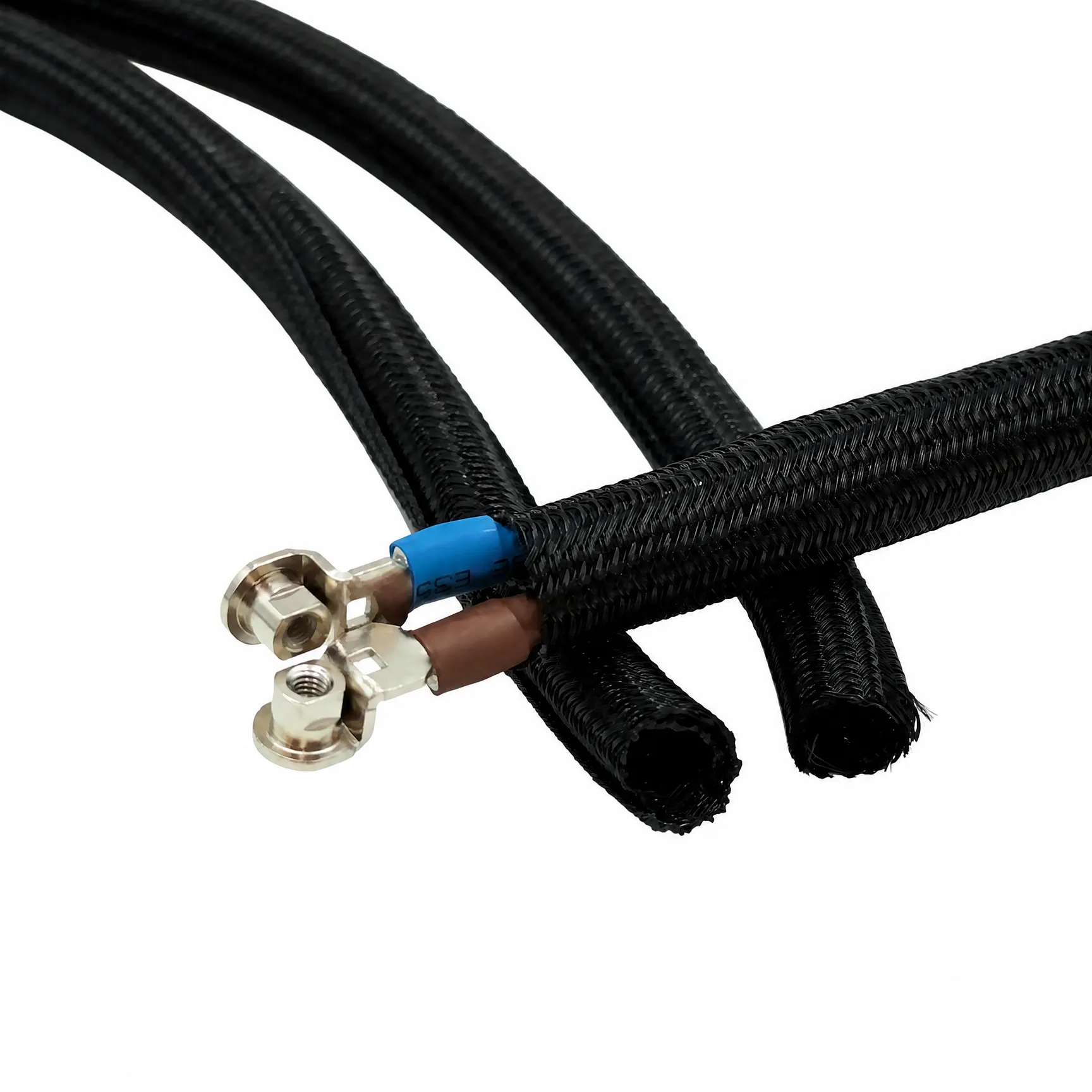
The self closing wrap design combines the durability of braided protection with the convenience of a wrap that secures itself without requiring external fasteners. This combination makes it particularly suitable for applications where cable runs are extended and require consistent, maintenance-free protection throughout their length. Understanding why this solution works so effectively helps organizations make informed decisions about their cable management infrastructure.
Continuous Protection Along Extended Distances
How Braided Protection Performs on Long Runs
Braided protection excels on long cable runs because it distributes abrasion resistance uniformly across the entire cable path. Unlike rigid conduit or spot-reinforced solutions, braided material conforms to the cable while maintaining consistent coverage. When cables travel substantial distances through manufacturing floors, routing through equipment racks, or across outdoor installations, the continuous contact with potential hazard sources demands uniform defense. The self closing wrap maintains this protection without gaps or weak points that could develop in discontinuous coverage systems.
Long cable runs often encounter varied environmental conditions—temperature fluctuations, moisture, oil exposure, and mechanical compression. Braided protection responds dynamically to these stressors because the interwoven fiber structure absorbs shock loads and distributes pressure more effectively than solid materials. For wire harness applications extending more than fifty feet, this adaptive protection prevents localized failure points that could cascade into system-wide issues.
Self Sealing Advantages Over Traditional Methods
Traditional cable management approaches require separate fastening systems—adhesive-backed tape, metal clamps, or tie-down systems—that demand ongoing maintenance and replacement on long runs. Each fastening point represents a potential failure location where the braided protection could separate or shift under vibration. The self closing wrap eliminates this vulnerability by integrating the fastening mechanism into the wrap itself. As cable diameter remains constant along the run, the wrap maintains consistent tension without external adjustment, ensuring the protection layer stays properly positioned from the cable entry point to its terminus.
This self-sealing design proves especially valuable in dynamic environments where equipment vibration or thermal cycling could loosen traditional fasteners. Industrial machinery, automotive engine bays, and high-frequency telecommunications installations all generate vibration patterns that challenge conventional cable management. A properly installed self closing wrap on a wire harness resists displacement because the wrap's closure mechanism responds continuously to any tension changes.
Streamlined Installation and Long Term Cost Management
Reducing Installation Time on Extended Cable Paths
Installation speed directly impacts project schedules and labor costs, especially for long cable runs where traditional methods require technicians to apply fasteners sequentially along the entire length. A self closing wrap reduces this time requirement because installers can wrap the entire run in a continuous motion without stopping to apply clips, ties, or adhesive at intervals. For a one-hundred-foot cable management project, this streamlined process can reduce installation time by forty to sixty percent compared to segmented fastening approaches.
The self closing wrap also minimizes the risk of installation errors. Inconsistently applied fasteners can create pressure points, uneven tension, or uncovered segments where cables become exposed to hazards. Continuous wrapping with an integrated closure mechanism produces uniform coverage across the complete cable management project. This consistency translates into predictable performance and reduced troubleshooting requirements after installation completion.
Maintenance Requirements and Total Cost of Ownership
Long cable runs require periodic inspection to verify that protective covering remains intact and properly positioned. Traditional fastened systems necessitate checking each fastener location—a time consuming process for extended runs. Self closing wrap systems reduce maintenance intensity because the integrated closure mechanism rarely requires adjustment once properly installed. The braided structure itself needs visual inspection but does not require the component-level maintenance that segmented fastening systems demand.
Over multi-year operational periods, this reduced maintenance burden delivers significant cost advantages. Organizations deploying self closing wrap on wire harness systems extending through production facilities report twenty to thirty percent reductions in cable-related maintenance labor costs. Cable replacement becomes less frequent because protective wrapping prevents the gradual wear and environmental degradation that compromise unprotected or inadequately protected runs. When cable replacement eventually becomes necessary, the wrap's continuous design simplifies removal and replacement procedures compared to systems with embedded fasteners.
Performance Reliability in Industrial and Demanding Environments
Environmental Protection Across Multiple Hazard Types
Industrial environments subject long cable runs to simultaneous hazards—mechanical abrasion, temperature extremes, fluid contamination, and ultraviolet exposure. The braided structure of a self closing wrap provides multidimensional protection because the interlocking fibers create a barrier that addresses multiple threat categories. Chemical resistance depends on material selection, but premium braided wraps resist oils, solvents, and coolants commonly encountered in manufacturing. UV-stabilized materials prevent degradation when cables route through outdoor sections or facility areas with extended sunlight exposure.
Temperature cycling particularly challenges cable management systems because thermal expansion and contraction create stress at connection points. A flexible self closing wrap accommodates these dimensional changes without creating stress concentrations. As cable temperatures increase and decrease during equipment operation, the wrap moves with the cable rather than constraining it, preventing the cumulative damage that rigid conduit systems can inflict.
Operational Reliability and System Downtime Prevention
Cable failures resulting from inadequate protection create unplanned downtime that disrupts production schedules and increases operating costs. Long cable runs present elevated risk because failures at any point along the path compromise the entire circuit. Self closing wrap systems reduce cable failure probability by maintaining consistent protection throughout the extended length. Industrial plants deploying braided protection report significant reductions in electrical system failures attributed to cable degradation, particularly in environments with aggressive mechanical or chemical stressors.
The psychological benefit of visible, reliable cable management also contributes to operational reliability. When technicians observe properly maintained cable runs with consistent braided protection, they develop confidence in system integrity. This confidence supports preventive maintenance practices and encourages proper handling during facility modifications or equipment relocations. Conversely, systems showing inconsistent protection, exposed fasteners, or deteriorating wrapping encourage corners cutting behaviors that compromise cable integrity.
FAQ
What cable diameters work best with self closing wrap?
Self closing wrap systems are manufactured in multiple sizes to accommodate wire harness bundles ranging from quarter-inch to two inches in diameter. The most common industrial applications use wraps sized for cables from half-inch to one-inch diameter. Selection depends on the total cross-sectional area of the bundled conductors rather than individual conductor size. Manufacturers provide sizing guides matching wrap dimensions to cable bundle specifications, ensuring optimal protection and self-closure performance.
How long does braided protection typically last on extended cable runs?
Braided protection lifespan depends on material composition, environmental conditions, and installation quality. Premium self closing wrap systems using polyester or polypropylene in protected indoor environments often exceed ten years of service. Outdoor installations or chemically aggressive environments may require replacement after three to five years. Regular visual inspection allows organizations to anticipate replacement timing rather than experiencing unexpected failure-induced downtime.
Can self closing wrap be reused if cables are relocated?
Most self closing wrap designs are single-use because the closure mechanism becomes permanently engaged during initial installation. However, some premium systems feature reversible or resealable closures that permit removal and reinstallation on relocated cable runs. When selecting wrap systems for applications involving frequent cable modifications, specifying reusable designs reduces long-term material costs despite slightly higher initial investment per wrap unit.
 EN