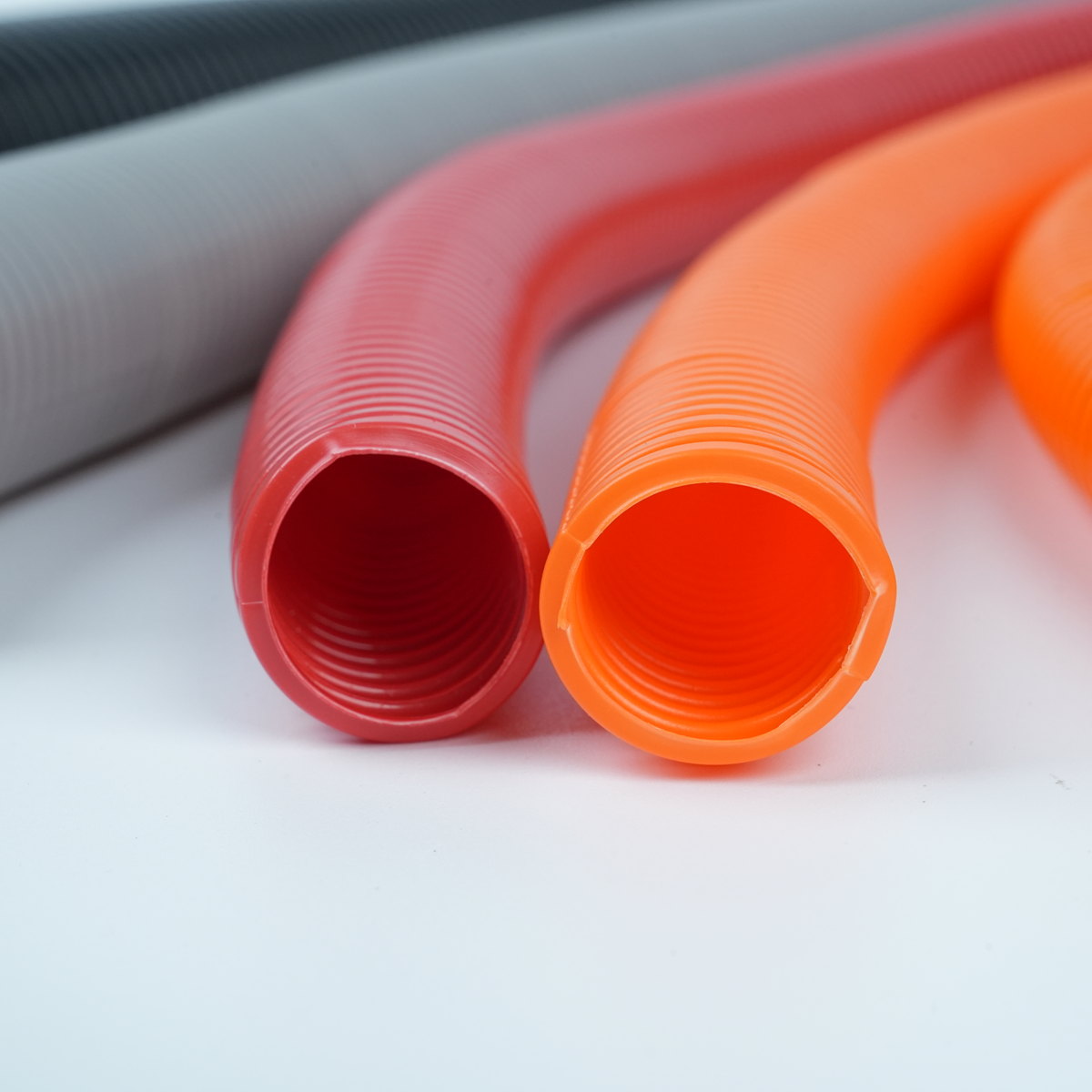
Retrofit wiring projects present unique challenges that standard installation methods often cannot address efficiently. When existing infrastructure, tight spaces, and accessibility constraints dominate the job site, choosing the right cable protection becomes critical. Split corrugated conduit offers a practical solution that streamlines the installation process while maintaining robust wire protection. Understanding when to deploy split corrugated conduit versus traditional conduit systems can significantly reduce project timelines and labor costs while ensuring compliance with electrical codes and safety standards.
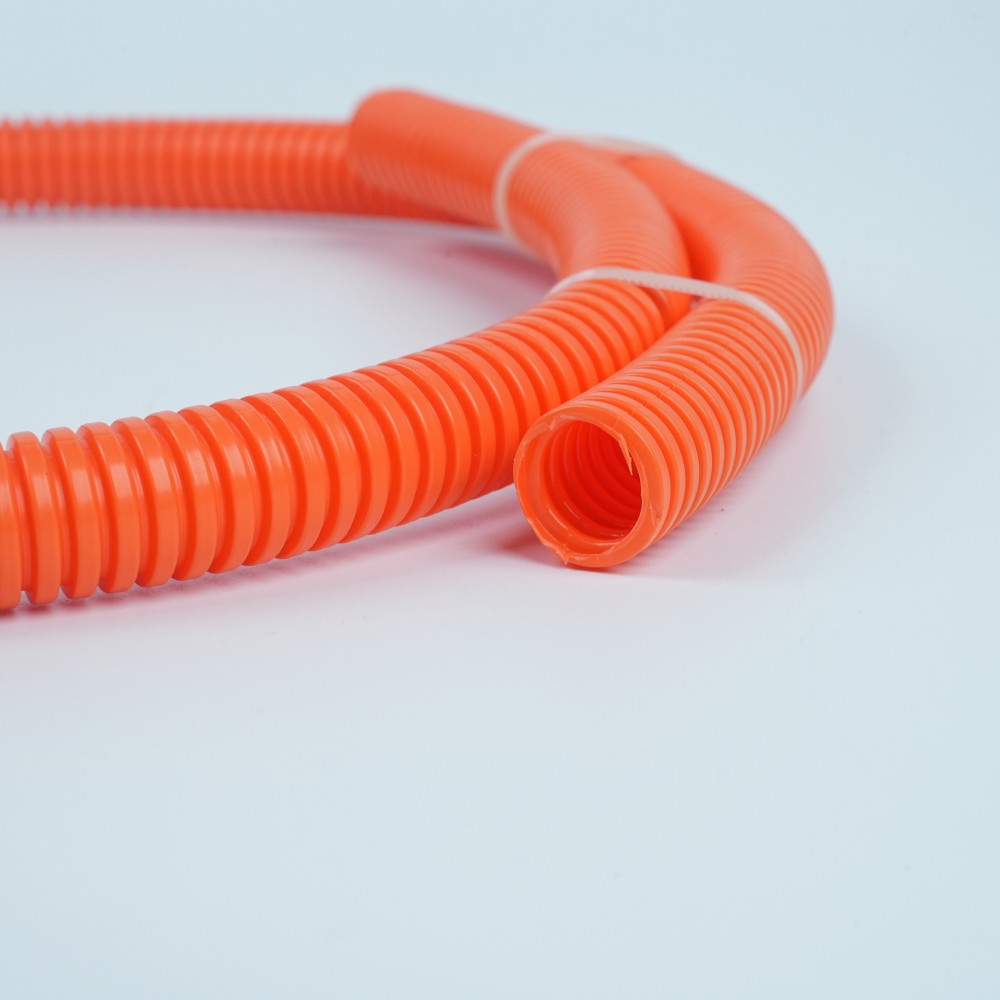
Retrofit wiring demands a fundamentally different approach than new construction installations. Existing walls, conduit runs, and equipment layouts cannot be modified as freely, requiring flexible conduit solutions that adapt to real-world constraints. Split corrugated conduit addresses this challenge by allowing pre-installed cables to be threaded through its protective tubing without requiring extensive ductwork modifications. This cable conduit innovation has become the preferred choice for electricians tackling renovation projects where minimizing disruption and maximizing speed are paramount.
Understanding Split Corrugated Conduit Advantages
Simplified Installation in Constrained Spaces
The defining feature of split corrugated conduit is its hinged, longitudinal slit that runs the full length of the tube. This design eliminates the need to thread cables through closed tubing, a process that becomes exponentially more difficult as cable runs lengthen. For retrofit projects, this advantage cannot be overstated. Instead of disconnecting existing equipment, routing cables through walls, and reassembling systems, electricians can simply open the split conduit, place the cables inside, and close it securely. The flexibility of this cable conduit approach reduces labor time by 40 to 60 percent compared to traditional methods.
Superior Wire Protection with Minimal Disruption
Split flexible conduit maintains the same level of wire protection as standard corrugated conduit while dramatically simplifying deployment. The corrugated exterior protects against mechanical damage, abrasion, and environmental exposure, while the split design preserves this protective function without requiring cable pre-planning or special threading techniques. Retrofit wiring often involves routing cables along existing equipment racks, through machinery frameworks, and across areas where direct contact with sharp edges or heat sources poses genuine risks. Split corrugated conduit addresses these hazards without forcing the costly redesign of existing infrastructure. The cable conduit's inherent flexibility also allows it to conform to irregular surfaces, tight bends, and asymmetrical mounting configurations that would be impossible with rigid conduit systems.
Identifying Retrofit Scenarios Where Split Conduit Excels
Equipment Upgrades and Capacity Additions
Facility expansions frequently require new power or control circuits alongside existing installations. Adding these new cables to established industrial or commercial environments presents a genuine operational challenge. Plant managers cannot simply shut down production to install new ductwork or redirect power distribution systems. Split flexible conduit enables electricians to route new cables parallel to existing runs, protecting them without disturbing active systems. This cable conduit solution is particularly valuable in manufacturing plants, data centers, and utility facilities where downtime costs exceed installation expenses by orders of magnitude. The ability to add wire protection without system interruptions makes split corrugated conduit the economically rational choice for capacity additions.
Renovation and Structural Modifications
When buildings undergo structural changes, equipment relocation, or architectural modifications, electrical systems must often be rerouted completely. Accessing walls, ceiling cavities, and conduit spaces becomes limited by new structural elements. Split corrugated conduit allows electricians to work within these constraints by adapting to existing space limitations rather than requiring extensive cutting, patching, and restoration. The cable conduit's flexibility means cables can navigate around new columns, HVAC systems, or architectural features that would otherwise necessitate expensive workarounds. For restoration projects in historic buildings or facilities with strict preservation requirements, this approach to wire protection eliminates many technical barriers that would otherwise complicate the retrofit process.
Accessibility-Limited Installations
Some retrofit locations present genuine accessibility challenges that make traditional conduit installation impractical. Overhead cable runs above active production areas, cables running along ceiling joists in occupied spaces, or routing through machinery frameworks all benefit from split flexible conduit. These scenarios typically cannot accommodate the time investment required for traditional cable threading techniques. Split corrugated conduit allows protection to be installed rapidly, with minimal aerial work and reduced risk of dropped tools or cable damage during threading operations. The cable conduit approach significantly improves workplace safety by reducing the complexity and duration of elevated work required to achieve proper wire protection.
Performance and Compliance Considerations
Flame Retardancy and Environmental Specifications
Industrial and commercial retrofit projects must satisfy fire code requirements and environmental operating specifications. Split corrugated conduit is available in flame-retardant formulations that meet UL 94 V-0 ratings and comply with the National Electrical Code requirements for specific installation environments. The cable conduit's material composition must be selected based on temperature exposure, chemical environments, UV conditions, and humidity levels characteristic of the installation location. Flexible conduit materials include nylon variants for general purpose applications, halogenated polymers for enhanced flame performance, and specialized compounds for chemical resistance. Matching flexible conduit specifications to environmental requirements ensures long-term wire protection and regulatory compliance throughout the retrofit system's operational life.
Mechanical Durability and Abuse Resistance
Split corrugated conduit must withstand mechanical abuse, impact forces, and operational stresses characteristic of industrial environments. The split design does not compromise the tube's ability to resist crushing, abrasion, or puncture damage. Cable conduit wall thickness, corrugation depth, and material formulation work together to provide robust wire protection in high-traffic areas, outdoor environments, and locations subject to thermal cycling or vibration. Retrofit installations often expose flexible conduit to more severe conditions than new construction projects because existing facility layouts were not optimized around cable routing. Specifying corrugated conduit with appropriate abuse resistance ensures retrofit systems maintain protective integrity throughout their service life without requiring premature replacement or emergency repairs.
FAQ
When should I choose split corrugated conduit over solid rigid conduit for retrofit wiring?
Split flexible conduit becomes the superior choice when retrofit constraints prevent traditional conduit installation, when existing systems cannot be interrupted, or when accessibility limitations make cable threading impractical. If your retrofit project involves adding cables to established runs, navigating structural obstacles, or working within tight spatial boundaries, split corrugated conduit delivers faster installation with equivalent wire protection. However, if your retrofit involves completely new infrastructure with adequate accessibility and ductwork space, rigid conduit may offer cost advantages. Evaluate your specific project constraints, accessibility conditions, and downtime tolerance to determine whether split corrugated conduit justifies its installation benefits.
Does split corrugated conduit provide adequate cable conduit protection for outdoor or hazardous environments?
Split corrugated conduit is available in formulations specifically designed for outdoor exposure, chemical environments, and hazardous locations. UV-resistant variants protect cables in direct sunlight, flame-retardant materials satisfy codes for indoor hazardous locations, and chemical-resistant compounds handle agricultural or marine environments. The cable conduit's protective effectiveness does not diminish because of its split design; the corrugated structure still shields wires from mechanical damage, environmental exposure, and thermal cycling. Verify that your selected flexible conduit meets the environmental ratings, flame classifications, and material specifications required for your specific retrofit application before proceeding with installation.
Can split corrugated conduit be used alongside existing cable management systems?
Split flexible conduit integrates seamlessly with existing cable trays, conduit runs, and overhead routing systems typical of retrofit installations. The cable conduit's flexibility allows it to be bundled with existing cables using standard cable clips, secured to equipment frames with non-penetrating fasteners, or routed along established pathways. Retrofit wiring projects benefit from this compatibility because electricians can leverage existing infrastructure and support systems rather than installing entirely new cable management. Ensure that any fastening methods preserve the integrity of the split corrugated conduit and do not create sharp pinch points that could compress the flexible tubing or compromise wire protection during long-term operation.
 EN