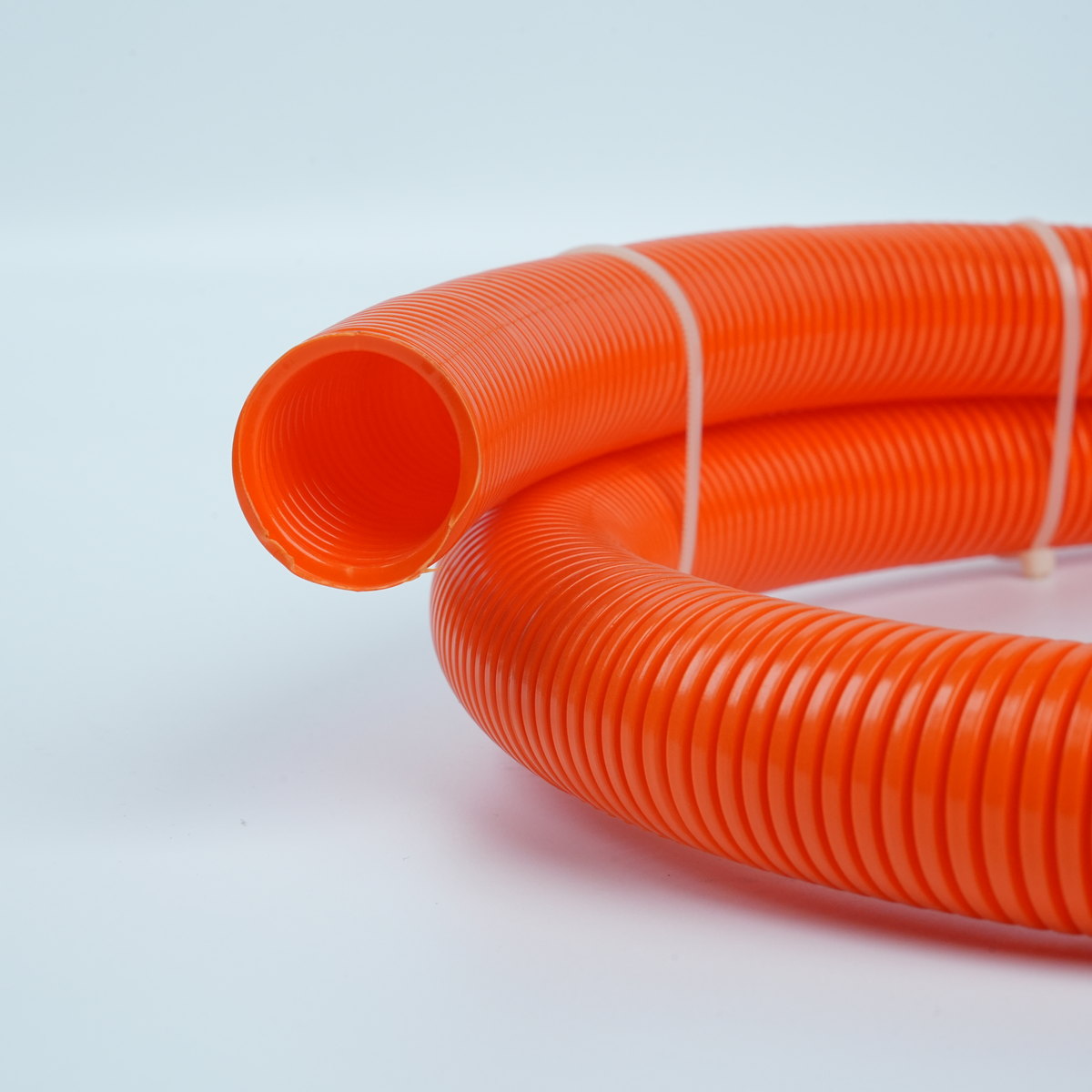
Corrugation plays a critical role in flexible cable routing by providing structural integrity, protection, and organizational benefits that are essential in modern industrial and automotive applications. The ridged, wave-like surface of corrugated materials creates a dynamic interface between the cable system and its external environment, enabling flexibility while maintaining mechanical strength. Understanding this role is fundamental for engineers, technicians, and facility managers who design, install, or maintain complex electrical and mechanical systems where wire loom conduit serves as a protective backbone.
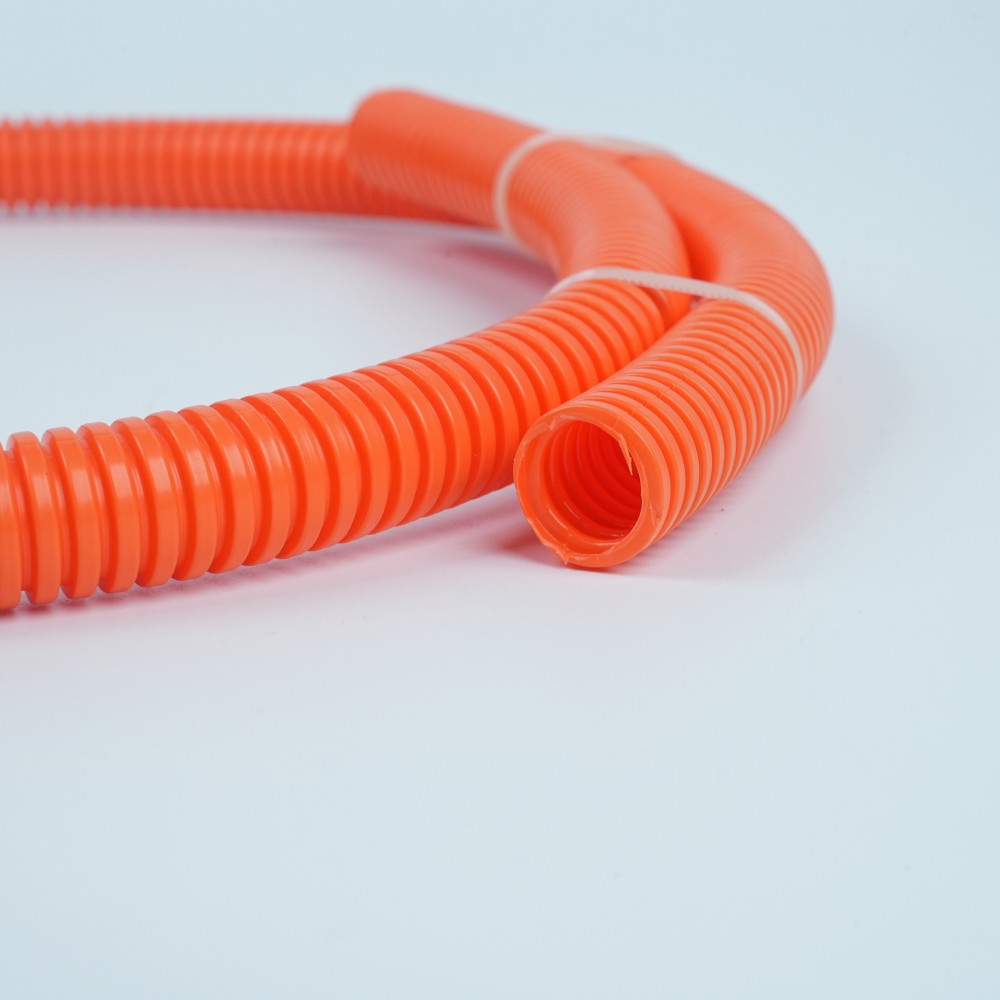
Cable routing challenges intensify across automotive wiring systems, machinery installations, and telecommunications infrastructure, where exposure to heat, vibration, chemicals, and abrasion demands reliable protection. Corrugated designs address these challenges by distributing stress evenly across the conduit surface rather than concentrating it at single points. This distributed-load characteristic allows split loom and other corrugated forms to accommodate movement, thermal expansion, and compression cycles without degradation, thereby extending the operational lifespan of both the protective medium and the cables it safeguards.
Understanding Corrugation in Cable Protection
What Corrugation Achieves in Cable Systems
Corrugation transforms flat, rigid materials into flexible structures through a precise manufacturing process that creates repeating ridges and valleys. This geometric configuration delivers multiple functional benefits that generic smooth conduits cannot match. The corrugated pattern increases surface area, enabling better heat dissipation while maintaining structural rigidity at the points where it matters most. In automotive wiring environments, this characteristic prevents thermal stress buildup that could compromise insulation integrity or solder joints, a concern that traditional cable routing solutions often overlook.
The mechanical flexibility of corrugated conduit allows for tighter bends and routing through complex spatial layouts without requiring additional fittings or junction boxes. When split loom corrugated designs are employed, technicians can install cables post-assembly, reducing production time and labor costs while maintaining protection standards. This flexibility also accommodates future modifications, a critical advantage in manufacturing plants and vehicle platforms where system upgrades occur regularly throughout the asset lifecycle.
Material Properties and Corrugation Synergy
The material composition of conduit works synergistically with corrugated geometry to determine overall performance. Nylon-based wire loom conduit, polyester blends, and flame-retardant formulations each interact differently with corrugation patterns. Nylon corrugated conduit offers excellent chemical resistance and low friction surfaces, enabling smooth cable insertion and extraction during maintenance. The corrugated structure prevents the cable inner surface from experiencing excessive friction even during repeated flex cycles, a phenomenon that smooth conduits cannot control as effectively.
Flame-retardant variants maintain their corrugated integrity even after exposure to high temperatures or brief flame contact, preserving the protective function during emergency conditions. The ridged profile in these materials helps channel air circulation more effectively than smooth alternatives, reducing local heat concentration. This ventilation property is particularly valuable in enclosed automotive wiring harnesses where multiple cables run in parallel, generating cumulative thermal load throughout the routing path.
Corrugation Benefits in Automotive Wiring Applications
Vibration Absorption and Fatigue Resistance
Automotive environments present severe vibration stresses that cause premature cable failure in poorly protected systems. Corrugated split loom conduit absorbs vibrational energy through the flexibility of the ridge-valley pattern, preventing direct transmission of micro-movements to the underlying cables. Engine vibrations, road-surface impacts, and rotational stress from moving components are partially dissipated through the corrugation geometry itself, reducing cumulative fatigue damage that would otherwise concentrate at cable stress points.
The corrugated design also provides cushioning during installation, where impact-related damage often occurs when cables are routed through sharp frame corners or mounted against metallic surfaces. A properly selected corrugated wire loom conduit prevents cables from making direct contact with structural elements that could puncture insulation or damage connector pins. This passive protection mechanism operates continuously without requiring active monitoring or maintenance intervention, representing a cost-effective insurance policy against operational failures.
Organization and Thermal Management
Cable routing in automotive platforms demands both logical organization and effective thermal separation between power circuits and signal cables. The corrugated profile of split loom naturally spaces cables within the harness, preventing them from compressing into a dense bundle where heat cannot dissipate efficiently. This inherent spacing characteristic, combined with the increased surface area from corrugation, allows ambient air to circulate more freely throughout the cable bundle than would occur with smooth, tightly compressed alternatives.
In high-performance automotive applications, where engine bays operate at elevated temperatures, corrugated wire loom conduit maintains structural integrity while allowing thermal energy to escape. The ridge pattern creates micro-pathways for convective cooling, preventing localized hot spots where insulation degradation accelerates. Temperature management through corrugation geometry extends cable service life significantly, particularly when combined with flame-retardant material formulations specifically designed for under-hood environments.
Corrugation in Industrial Cable Routing Scenarios
Machine Vibration and Repetitive Flex Cycles
Manufacturing equipment, packaging machinery, and robotic systems subject cables to repetitive flex cycles and sustained vibration that demand superior protective mechanisms. Corrugated cable routing solutions excel in these demanding environments because the ridge-valley pattern distributes bending stress across multiple contact points rather than creating stress concentrations at single angles. A split loom corrugated design can endure millions of flex cycles without cracking, splitting, or allowing cable escape, a performance level that smooth conduits struggle to achieve under equivalent load conditions.
Industrial facilities increasingly depend on corrugated wire loom conduit for drag-chain applications, mobile equipment connections, and articulated cable bundles where movement ranges exceed 180 degrees over extended operating periods. The corrugation geometry permits these extreme movements without pinching or kinking the internal cables, maintaining electrical continuity and mechanical integrity throughout the equipment lifecycle. Maintenance teams report substantially fewer cable failures in systems protected by corrugated routing solutions compared to legacy smooth-conduit installations, translating directly to reduced downtime and improved production reliability.
Chemical and Environmental Resistance
Industrial facilities often expose cables to oils, coolants, ultraviolet radiation, and corrosive atmospheres that degrade conventional conduit materials. Corrugated wire loom conduit manufactured from chemically resistant polymers maintains its protective properties even after prolonged exposure to these challenging conditions. The corrugated structure, combined with appropriate material selection, ensures that environmental degradation affects only the outer surface layers while the underlying protective function remains intact throughout the operational period.
The split loom corrugated design also facilitates easier cable replacement when environmental damage eventually requires conduit renewal. Rather than cutting through rigid conduit or unraveling complex harnesses, technicians can simply open the split loom along its pre-formed seam, remove damaged cables, and install fresh conductors without disturbing the installation geometry. This modularity, enabled by corrugation and split design, represents significant operational flexibility that rigid smooth conduits cannot provide in maintenance-intensive industrial environments.
FAQ
How does corrugation improve cable routing flexibility compared to smooth conduit?
Corrugation creates a ridge-valley pattern that allows the conduit to bend and compress smoothly in multiple directions without kinking or stress concentration. The geometric design distributes forces across numerous contact points rather than at single angles, enabling tighter bends and better accommodation of complex routing paths. Split loom and wire loom conduit benefit from this flexibility, allowing technicians to route cables through tight spaces, around sharp corners, and through moving components without requiring additional fittings or modification to the installation geometry.
Why is corrugated automotive wiring conduit preferred in high-vibration environments?
Corrugated designs absorb and dissipate vibrational energy through the flexibility of the ridge-valley structure, preventing direct transmission of vibration stress to internal cables. This energy absorption characteristic reduces cumulative fatigue damage that causes cable failure in smooth conduits, extending the operational lifespan of the entire wiring system. In automotive engines, chassis routing, and suspension components, corrugated wire loom conduit provides continuous passive protection against vibration-induced failures without requiring active monitoring or intervention.
Can corrugated split loom maintain protection in high-temperature industrial applications?
Yes, when manufactured from flame-retardant materials with appropriate thermal ratings, corrugated split loom maintains its protective geometry and mechanical properties even at elevated temperatures. The corrugated structure facilitates better heat dissipation than smooth alternatives, preventing localized thermal concentration that degrades conduit materials. Industrial applications ranging from machine tool enclosures to electrical panel routing benefit from this combination of corrugation geometry and flame-retardant polymer composition, ensuring long-term reliability in thermally demanding environments.
 EN