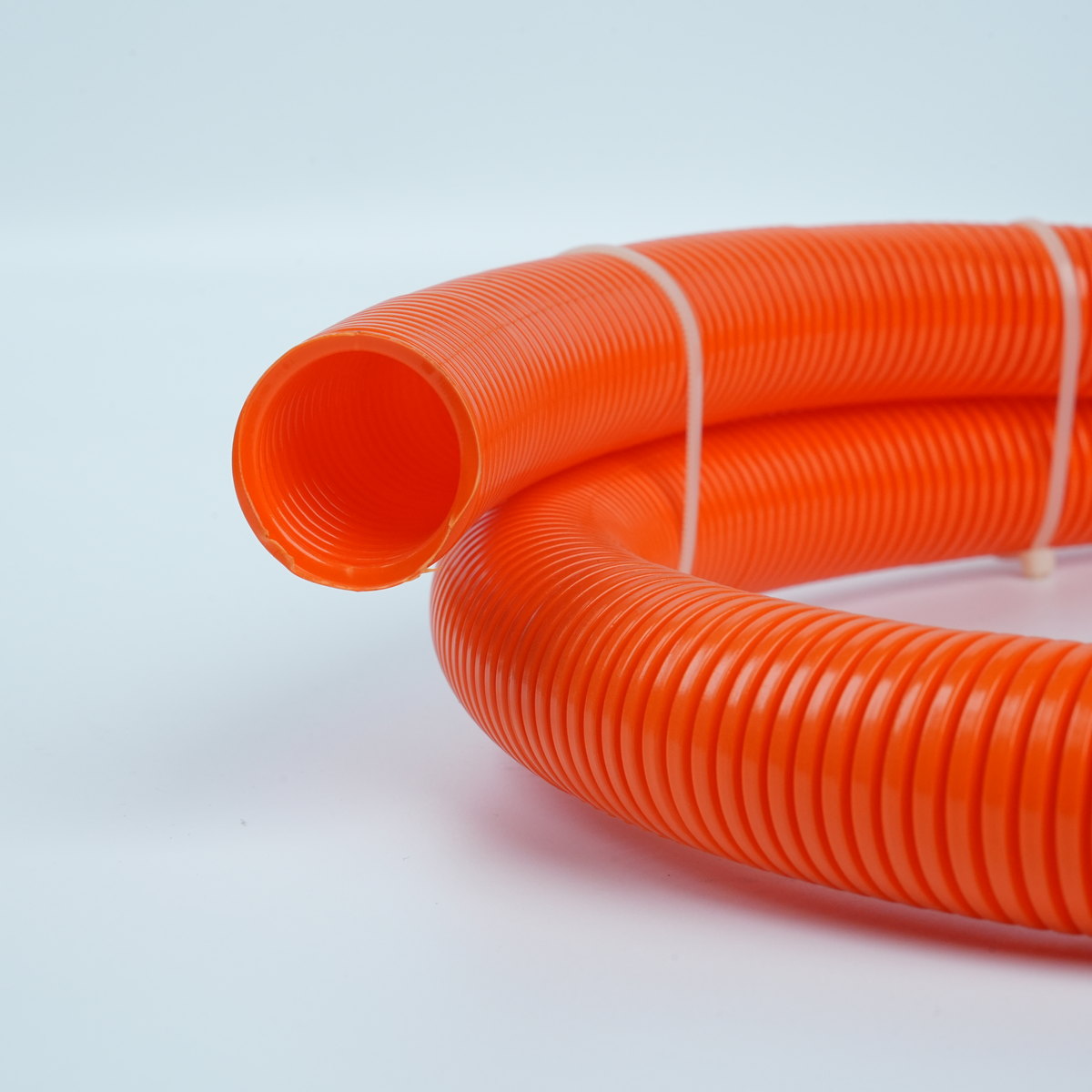
Selecting the right wire loom conduit type directly impacts maintenance efficiency, system durability, and total operational costs. Industrial facilities and equipment designers face a critical decision between split and closed wire loom conduit systems, each offering distinct advantages for cable routing and protection. Understanding the practical differences between these two approaches enables you to choose the most suitable wire harness protection solution for your specific operational environment.

The choice between split and closed design fundamentally affects how easily technicians can service, replace, or reroute cables during maintenance operations. Split wire loom design features a lengthwise opening that allows technicians to install or remove cables without disconnecting entire harnesses, while closed wire loom conduit requires complete removal and reinstallation. This distinction becomes increasingly important in complex industrial systems where cable access and serviceability directly influence downtime and labor costs.
Understanding Split Wire Loom Conduit Design
Installation and Cable Access Benefits
Split wire loom offers exceptional accessibility for both initial installation and ongoing maintenance tasks. Technicians can place cables into the conduit along the split seam, then secure the opening with adhesive strips, fasteners, or snap closures. This design dramatically reduces installation time compared to threading cables through fully closed conduit. When maintenance becomes necessary, workers can open the split wire loom conduit at the seam, access specific cables, and close it again without disturbing the entire system.
The accessibility advantage extends to cable harness protection in environments requiring frequent modifications or upgrades. When production lines change, equipment configurations shift, or additional circuits need routing through existing pathways, split designs minimize service windows and associated production losses. Cable conduit installed with this split methodology allows for rapid adaptations that closed systems simply cannot match.
Flexibility and Routing Advantages
Split wire loom conduit accommodates varying bundle sizes more effectively than rigid closed alternatives. As cables are added or removed during the equipment lifecycle, the split design adapts without requiring complete harness reconstruction. This wire harness protection approach proves particularly valuable in industries experiencing frequent technology updates or system expansions.
Closed Wire Loom Conduit for Maximum Protection
Environmental Shielding and Durability
Closed wire loom conduit provides comprehensive cable protection in harsh industrial environments. The continuous sealed construction shields wires from moisture, chemical exposure, abrasion, and mechanical impact that could compromise circuit integrity. Facilities operating near caustic substances, high-vibration equipment, or outdoor installations gain superior protection through closed designs.
The sealed nature of closed cable conduit maintains consistent wire harness protection regardless of environmental conditions. Temperature fluctuations, dust accumulation, and corrosive vapor exposure create less deterioration within fully enclosed systems. Industries including petrochemical, automotive manufacturing, and food processing often specify closed designs precisely because environmental demands exceed what accessible split alternatives can provide.
Security and Cable Integrity
Closed wire loom prevents accidental cable displacement and maintains consistent bundling throughout the system lifecycle. Once installed, cables remain fixed in position without risk of shifting or sagging that could create stress points or signal interference. This stability benefit directly supports reliable electrical performance and extends cable service life in demanding industrial settings.
Selecting Based on Maintenance Workflow Demands
Downtime Considerations and Service Patterns
Maintenance frequency and service accessibility should drive your wire loom conduit selection decision. Facilities requiring routine cable access, quick modifications, or frequent troubleshooting tasks benefit significantly from split designs that minimize service time. Production environments where every minute of downtime creates measurable financial impact often prioritize split wire loom because technicians accomplish maintenance work faster.
Conversely, operations emphasizing continuous uptime without frequent modifications may justify closed cable conduit selection. Systems designed for extended operational periods without intervention perform better with sealed designs offering maximum wire harness protection. Heavy industrial environments, marine installations, and remote locations where maintenance visits occur infrequently typically favor closed configurations.
Long-Term Cost Factors
Initial purchase cost differences between split and closed wire loom conduit often appear modest, but total cost of ownership reveals more substantial distinctions. Split designs reduce labor expenses during installation and maintenance by potentially fifty percent or more compared to closed alternatives. Labor represents the dominant cost driver for most maintenance operations, making split configurations economically superior in facilities with regular service needs.
Closed cable conduit systems justify their typically higher initial cost through extended replacement intervals and reduced environmental damage claims. When a production facility operates in corrosive environments where cable failure directly impacts safety or regulatory compliance, the superior wire harness protection provided by closed designs prevents costly shutdowns. Calculating total cost across the full equipment lifecycle rather than purchase price alone provides more accurate economic comparison.
FAQ
Can you convert existing closed wire loom conduit to split design?
Converting existing closed cable conduit to split design typically requires removing and reinstalling the harness, which negates the cost savings benefit. Planners should finalize wire loom selection during equipment design phases rather than attempting post-installation modifications. Occasionally, technicians can parallel-run new split conduit alongside existing closed systems to support future cable additions while maintaining original protection for critical circuits.
What industries most commonly use split wire loom versus closed designs?
Electronics assembly, telecommunications infrastructure, and aerospace manufacturing strongly favor split cable conduit due to frequent configuration changes and high labor costs. Closed wire loom conduit dominates petrochemical plants, offshore drilling operations, and chemical processing facilities where environmental protection matters more than service accessibility. Medical device manufacturing splits preference depending on sterilization requirements and maintenance protocols.
Does split wire loom conduit provide adequate wire harness protection for outdoor installations?
Standard split designs offer limited protection against extended outdoor weathering, moisture intrusion, and UV degradation compared to closed alternatives. However, outdoor-rated split cable conduit featuring sealed connectors and advanced polymer materials can provide acceptable protection for temporary installations or semi-sheltered environments. Permanent outdoor installations requiring sustained wire harness protection almost always specify closed designs with sealed entry points and weatherproof fastening systems.
 EN