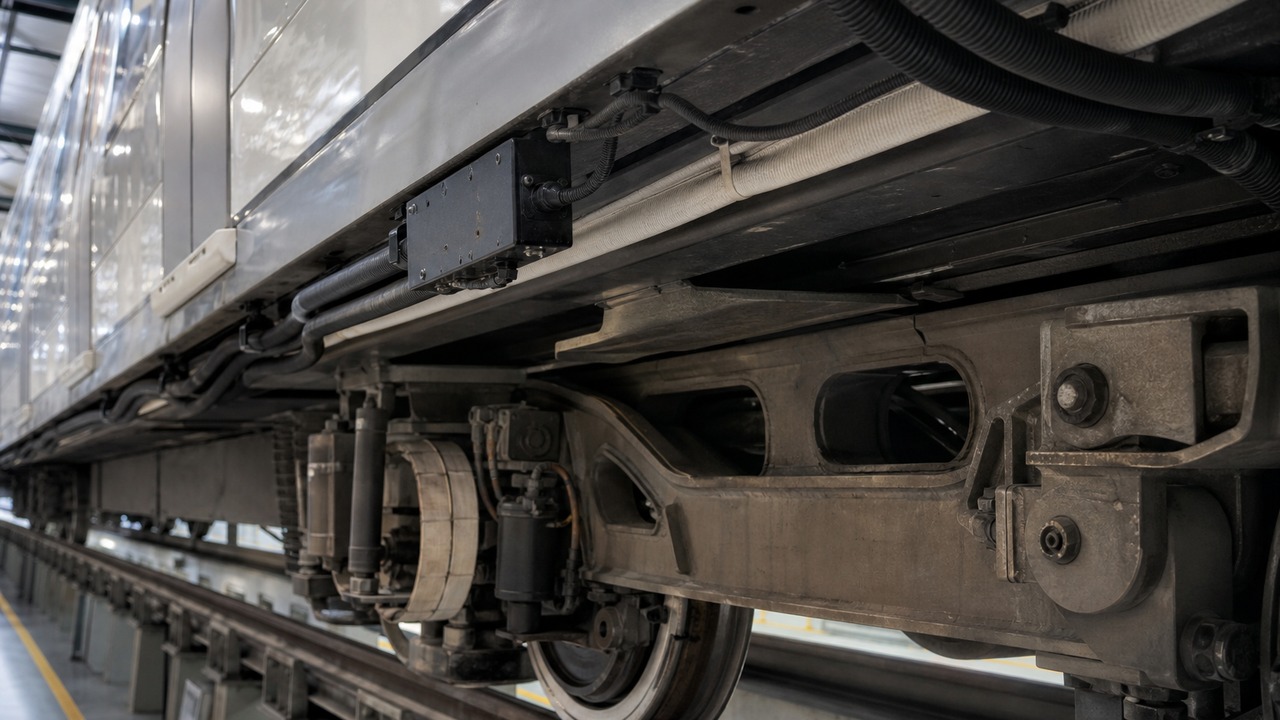
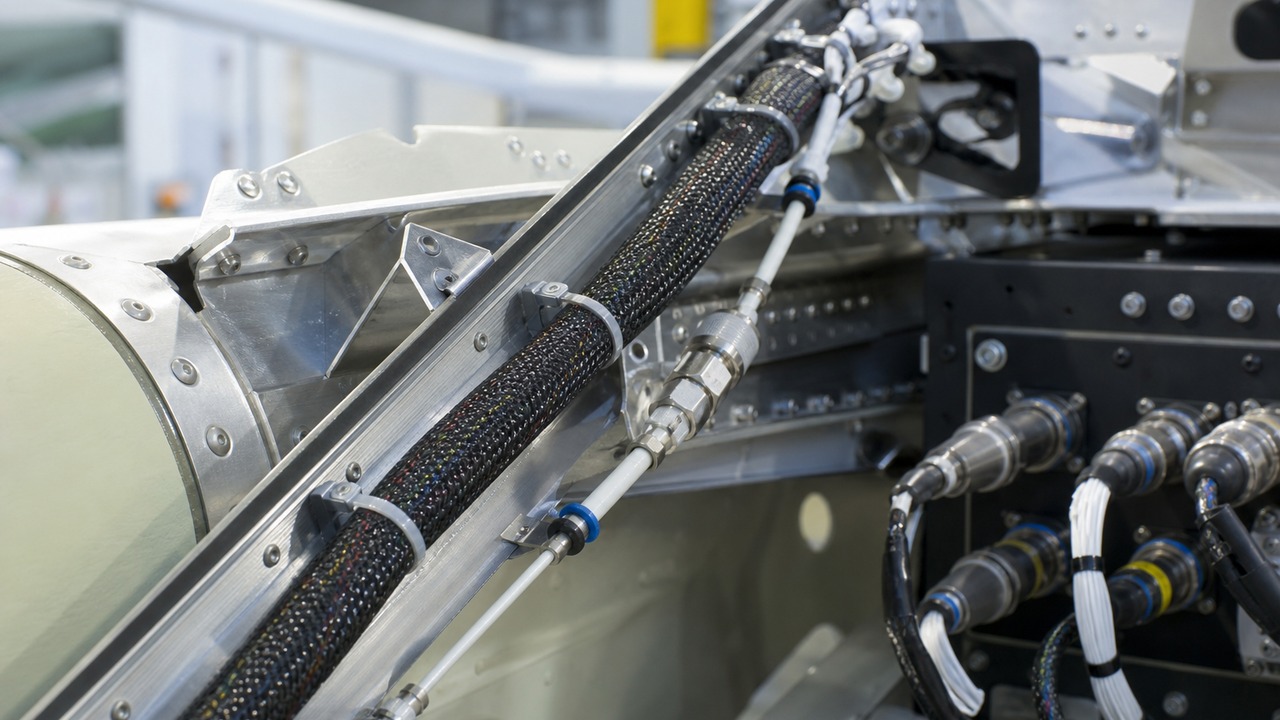
Machine builders and panel shops share one problem: cable protection is specified last, after the mechanics are frozen, and it has to fit into whatever space is left. The material then has to survive oil, coolant, chips, constant flexing and a cabinet that reaches 70–90°C. Chengrun makes the sleeving, tubing and tape that keep industrial machinery running instead of going down for an insulation fault.
What industrial cables actually face
Four stresses dominate. Oil and coolant attack plasticisers and turn PVC tacky. Continuous flexing in a drag chain fatigues a jacket at the clamp. Chips and swarf abrade anything soft. And the panel itself concentrates heat around drives and transformers. Good protection reflects all four, and the right choice differs between a static cabinet and a moving machine.
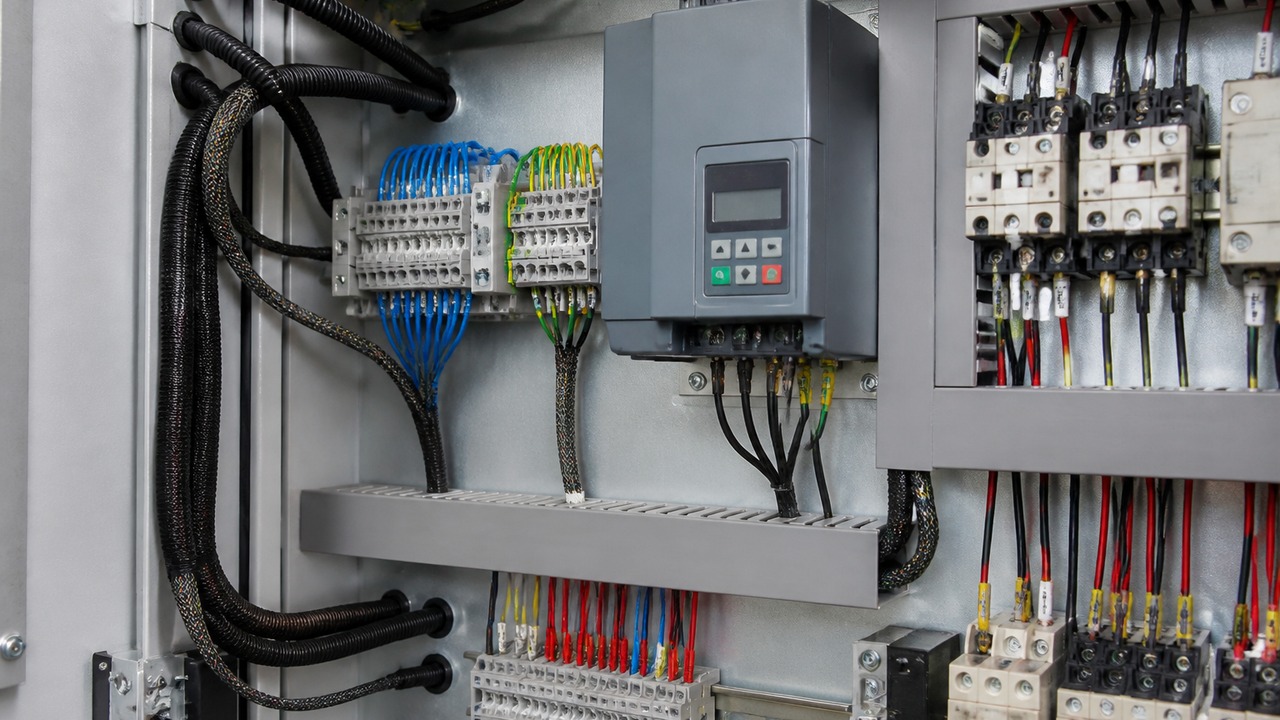
Control cabinets and panel builds
Inside a cabinet, the priorities are neat routing, clear marking and a clean dielectric. PET textile sleeving gives a flexible, braided cable covering that resists chafe where wires cross a DIN rail, and PA textile sleeving adds chemical resistance for areas exposed to lubricants. Corrugated tube gathers a bundle into a tidy, flame-retardant raceway that an inspector can follow. For harness finishing, acetate cloth tape and PVC tape hold the classic wrap that panel builders expect.
Motion, robots and drag chains
Where cable moves, flexibility becomes the limiting factor. Expandable braided sleeving expands over a connector and then contracts to grip the bundle, absorbing flex without a hard edge that would crack. PET monofilament braided sleeving gives a tighter, abrasion-resistant mesh for high-cycle runs, and PET&PA monofilament braided sleeving blends the dimensional stability of PA with the flexibility of PET for mixed requirements. On the tightest bends, knitted self-closing wrap installs over cable that is already terminated.
Heat, motors and drives
A motor terminal box or a drive heatsink is not a place for commodity sleeving. Silicone coated fiberglass sleeving holds at 200°C and stays flexible, so a lead can be dressed around a hot frame without cracking. Where a lead passes a heated die or a mould, silicone fiberglass fire-proof tube adds a fire barrier, and PI high temperature tape handles insulation at the very top of the range — 260°C class — for the small, critical spots. PET high temperature tape covers the 130–150°C tier at lower cost.
Sensors, signals and noise
Modern machines are full of encoders, cameras and fieldbus lines, and a single noisy signal stops a line. EMI shielding braided sleeving screens control and sensor cable against drive noise, and PET tinned copper braided sleeving combines mechanical protection with an electrical screen in one pass. Tinned copper foil self-closing wrap is the retrofit answer when a screen has to be added to an existing cable without cutting it.
Sealing, strain relief and repair
Joints and terminations fail first in an industrial environment, and heat shrink is how they are protected. Adhesive lined dual wall heat shrinkable tubing seals a splice against coolant and moisture, and PTFE heat shrinkable teflon tubing handles chemical exposure and extreme temperature where nothing else will hold.
Selection guide
Location |
Material |
Static cabinet, chafe points |
PET or PA textile sleeving |
Cabinet bundle raceway |
Corrugated tube |
Drag chain / robot arm |
PET monofilament braided sleeving |
Near motor or drive |
Silicone coated fibreglass sleeving |
Hottest die / mould spot |
PI high temperature tape |
Noisy signal lines |
EMI shielding braided sleeving |
Retrofit screen |
Tinned copper foil self-closing wrap |
Sealed splices |
Adhesive-lined dual-wall heat shrink |
Documentation and quality
Industrial buyers audit suppliers, and Chengrun documents every model: UL and CSA listings, RoHS 2.0 and REACH SVHC declarations, and Prop 65 statements where relevant, plus material datasheets. The Dongguan factory works to an ISO 9001 and IATF 16949 quality management system, and every lot is traceable from incoming fibre to finished roll.
One vendor for the whole bill of materials
Static runs versus moving axes
The biggest single driver of cost in industrial cable protection is whether the cable moves. A static run inside a cabinet can use a thin sleeve or a plain conduit, because abrasion is minimal and the only real requirement is dielectric separation. A drag chain or a robot arm needs a material that resists flex fatigue at the same time as chafe, and wall thickness matters more there than material grade. Specify the cycle count and the bend radius and the right construction becomes obvious; leave them out and the only safe answer is an expensive one.
Panel-build practicalities
Panel builders work to a wiring schedule and a deadline, and they judge a material on three things: how fast it installs, how neatly it routes, and whether it passes inspection. Hand-tearable tape, expandable sleeving that opens over a connector, and conduit that holds a bend without collapsing all shorten assembly time. Chengrun supplies these in the widths and cut lengths a panel shop actually uses, plus printed identification sleeves, so the labour cost falls alongside the material cost.
The real cost in industrial cable protection is coordination: five vendors, five lead times, five spec sheets. Chengrun manufactures fibre sleeving, corrugated tubing, heat shrink, braided sleeving and tape in house, and adds custom cutting and die-cutting so a pre-formed part arrives ready to fit. Send your drawing, the ambient and peak temperature and the chemical exposure, and our engineers will propose a material, share the datasheet and quote within 24 hours.
 EN