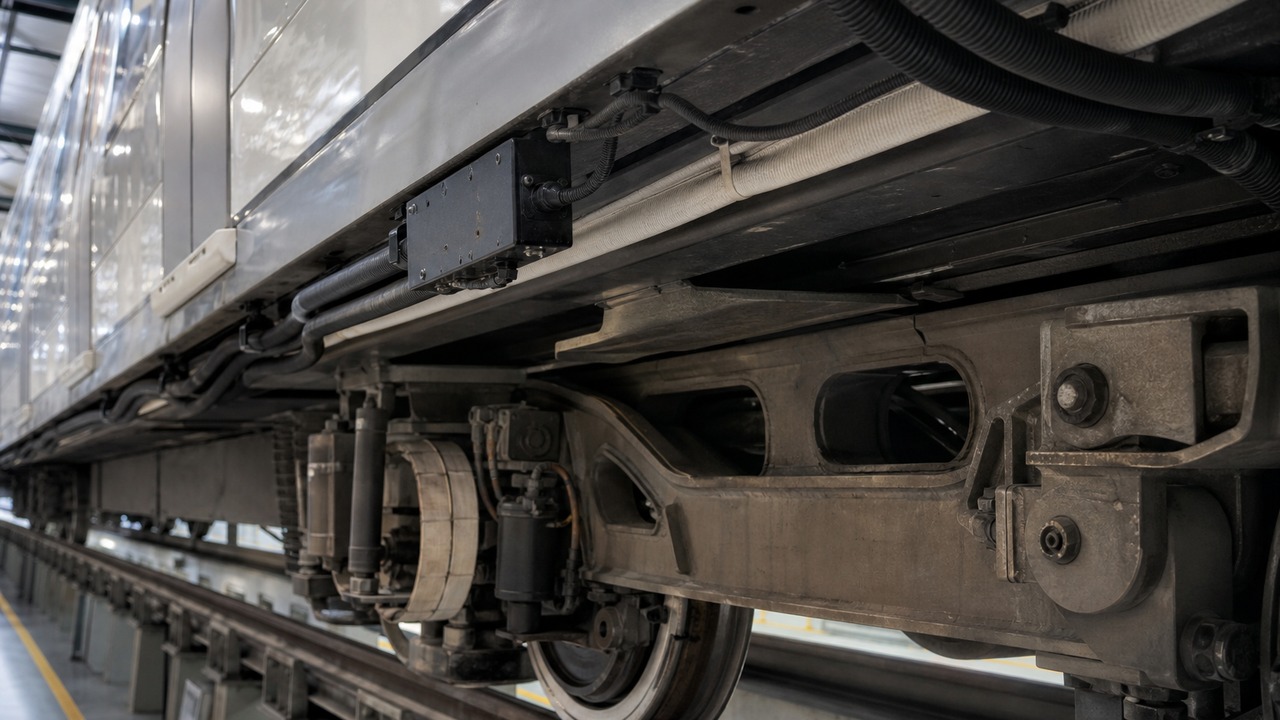
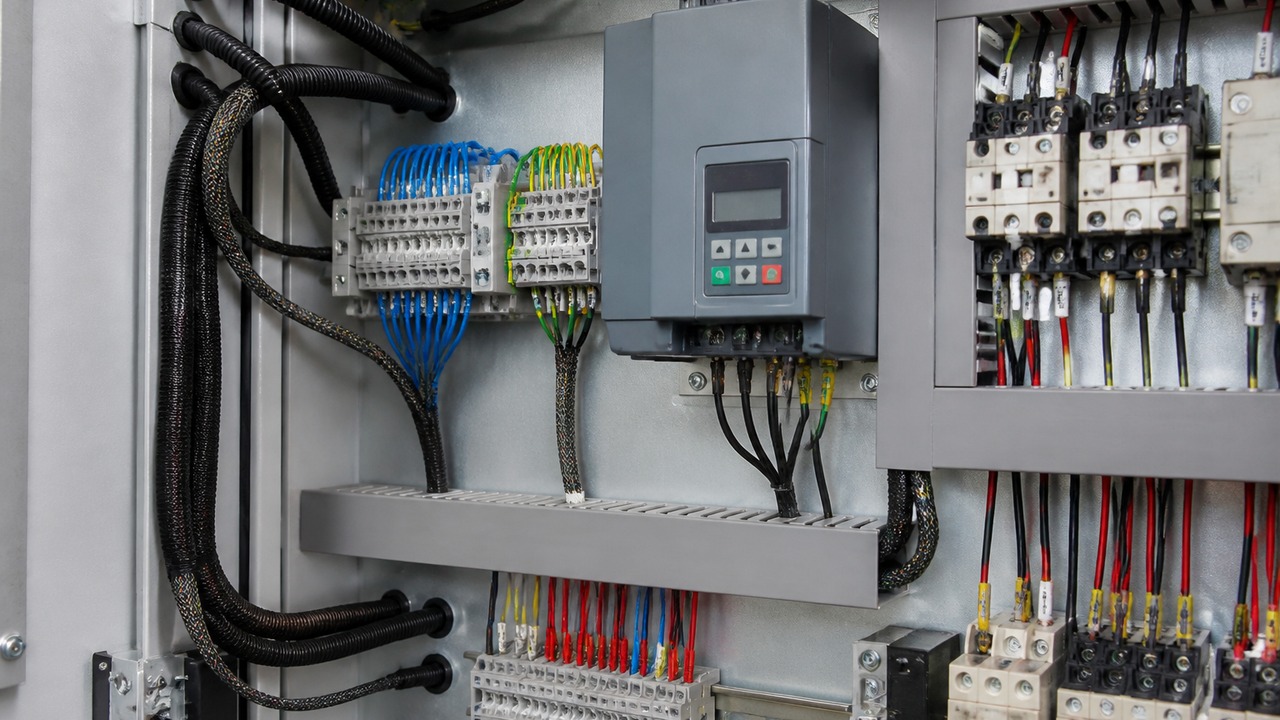
In aerospace, weight is cost and failure is not an option. A wire bundle in an aircraft or a launch vehicle has to survive vibration that would destroy a ground harness, temperature swings from −55°C to well past 200°C, and fluids that dissolve ordinary plastics — all while adding the minimum possible mass. Chengrun's high-temperature sleeving and PTFE tubing give designers materials that meet those constraints without a custom development programme.
Why aerospace is different
Ground cable protection optimises for cost and lifetime. Aerospace optimises for weight, reliability and traceability. Three consequences follow. Materials must work across a wider temperature band than industrial grades. Flammability and smoke requirements are stricter, and every material needs documentation for an airworthiness file. And the design margin is smaller — you cannot simply thicken a jacket to add safety.
Engine, pylon and high-temperature zones
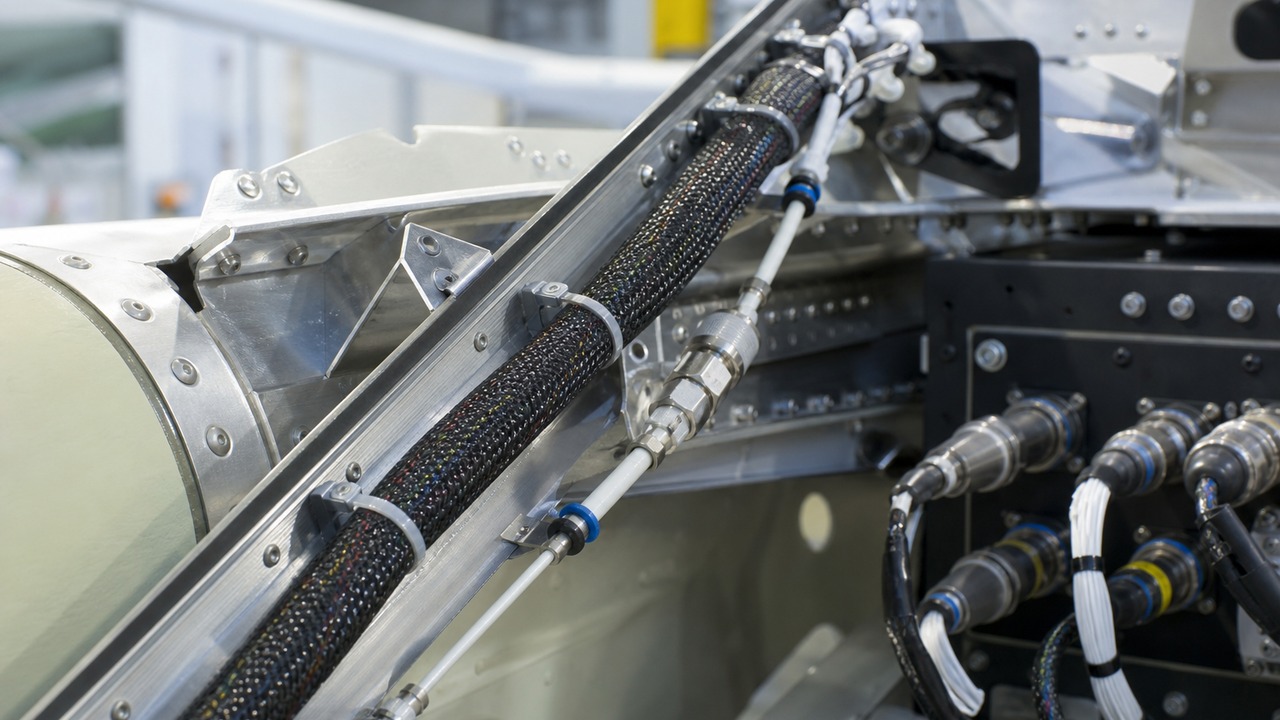
Near an engine or an APU, temperatures exceed the range of standard sleeving. Silicone coated fiberglass sleeving holds at continuous 200°C and remains flexible for routing around hot structures, and silicone fiberglass fire-proof tube provides a thickened fire barrier for the most exposed runs. Aluminum foil fiberglass sleeving reflects radiant heat away from a line that has to pass close to a hot surface.
PTFE and the extreme end of the range
Where temperature and chemistry peak together, PTFE heat shrinkable teflon tubing is the material of choice — one of the widest service windows available, near-universal chemical resistance and a low friction surface. Teflon tape and PI high temperature tape cover the 260°C-class spots around sensors, heaters and avionics bays where adhesives must not outgas.
Vibration, abrasion and lightweight bundles
Airframe vibration fatigues cable at every clamp. Expandable braided sleeving bundles a run and absorbs vibration without adding a rigid shell, and lightweight PET monofilament braided sleeving gives the best strength-to-mass ratio for high-cycle routes. Kevlar braided sleeving adds cut and abrasion resistance where the route passes a sharp frame, and Nomex braided sleeving brings inherent flame resistance and high-temperature stability to the areas that need it.
EMI, avionics and signal integrity
Avionics depend on clean signals. EMI shielding braided sleeving provides a screened, flexible jacket for data and control lines, and PET tinned copper braided sleeving combines mechanical protection with an electrical screen in one lightweight construction. For retrofit screening on a terminated harness, tinned copper self-closing wrap installs without disturbing the connector.
Ground support and test equipment
Aerospace programmes also run on ground rigs, test benches and simulators, where cost matters more than airworthiness. There, corrugated tube and nylon conduit tubing provide reliable, flame-retardant protection for test cabling at industrial prices.
Selection guide
Location |
Material |
Engine / pylon, 200°C+ |
Silicone coated fibreglass sleeving |
Radiant heat path |
Aluminum foil fibreglass sleeving |
Max temperature + chemicals |
PTFE heat shrinkable tubing |
Airframe vibration |
PET monofilament braided sleeving |
Cut / abrasion risk |
Kevlar braided sleeving |
Flame-critical zones |
Nomex braided sleeving |
Avionics data lines |
EMI shielding braided sleeving |
Test rigs and benches |
PA/PP corrugated tube |
Documentation for the airworthiness file
Materials must be traceable, and Chengrun supports that with per-model documentation: UL and CSA listings, RoHS 2.0 and REACH SVHC declarations, and Prop 65 statements where applicable, plus material datasheets that list temperature class, dielectric strength and flammability rating. The Dongguan factory operates an ISO 9001 and IATF 16949 quality management system, with lot traceability from raw fibre to finished roll.
Engineering support without a development programme
Weight and routing discipline
In aerospace every gram is budgeted, so the material decision is usually about strength per unit mass. A monofilament braid gives the best abrasion resistance per gram on a moving bundle, and a sleeve should add weight only where a hard shell or a fire barrier is genuinely required. Routing matters just as much as material: a sleeve that removes one clamp, one protective channel or one stand-off often saves more weight than a material substitution, and it deletes a chafe point at the same time.
Supporting qualification
A new material in an airframe or an engine bay means a qualification programme, and most programmes will not start without comparable data for an existing part. Chengrun's leverage is that its sleeving, PTFE tubing and braided products already cover the common temperature and fluid exposures, so a designer can usually specify a proven construction rather than develop one. Where a bespoke inner diameter, a specific wall thickness or a pre-cut sleeve is needed, that is a production parameter at the factory rather than a research project.
Aerospace teams rarely have time for a new-material qualification cycle. Chengrun's advantage is breadth in proven materials: fibre braiding, silicone coating, PTFE extrusion and precision die-cutting are all in house, so a custom inner diameter, a specific wall thickness or a pre-cut sleeve is a production parameter, not a research project. Send your drawing, the temperature and fluid exposure and the applicable standard, and an engineer will respond with a recommended material and datasheet within 24 hours.
 EN