Electric vehicle and energy storage systems demand exceptional durability from their cable infrastructure, particularly in environments where thermal stress and mechanical damage pose constant threats. Fiberglass sleeving has emerged as a critical component in these applications, offering reliable protection that extends cable lifespan and ensures safety across demanding operational conditions. Understanding how to properly implement fiberglass sleeving in your cable systems directly impacts system reliability and compliance with industry standards.
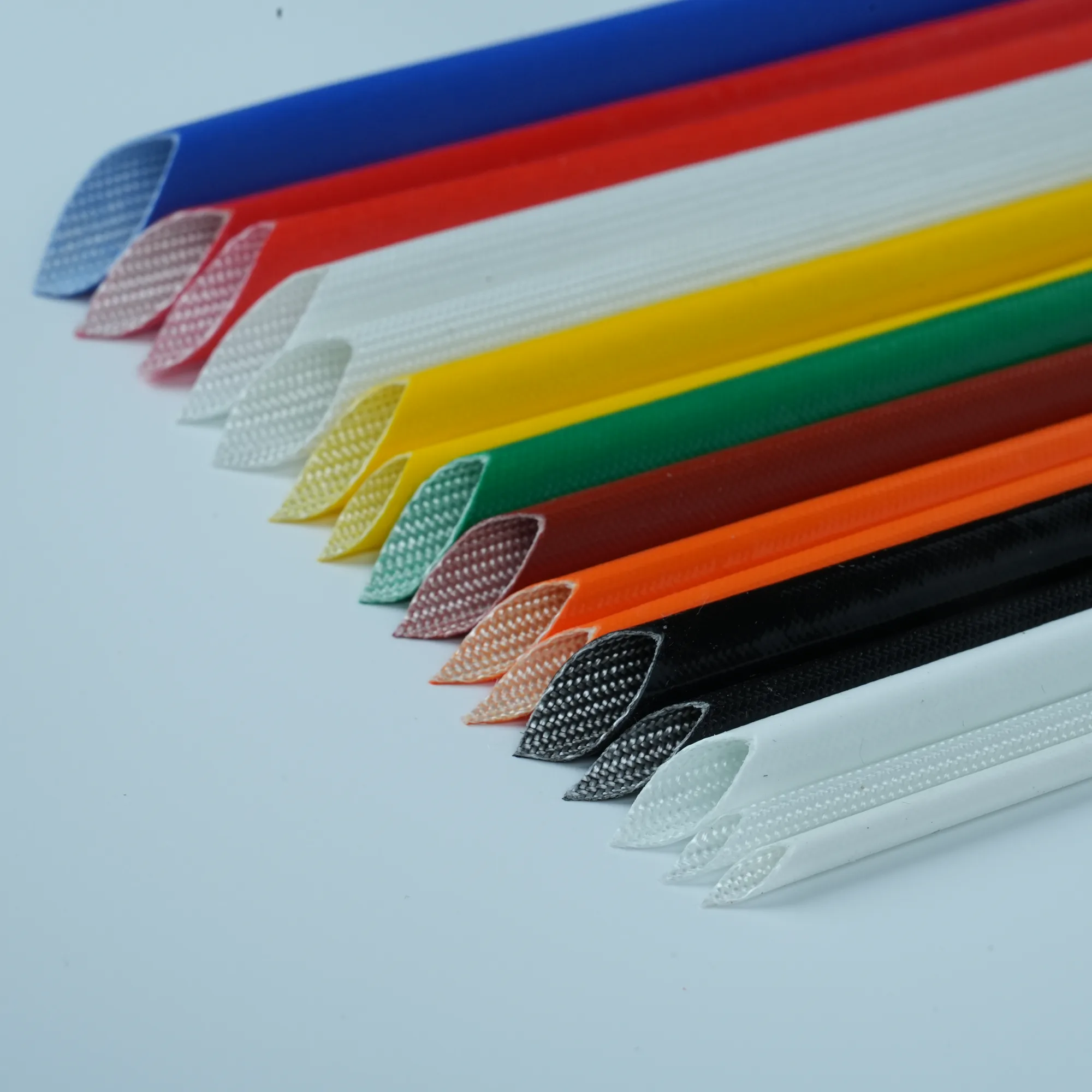
In modern EV powertrains and battery energy storage systems, cables operate in high-temperature zones where conventional insulation fails. The integration of fiberglass sleeving provides multi-layered protection that combines mechanical strength with thermal stability. This guide explores the practical applications, installation techniques, and performance benefits that make fiberglass sleeving an indispensable choice for contemporary cable management in electrified transportation and grid-scale energy storage.
Understanding Fiberglass Sleeving Properties and Performance
Heat Resistance and Thermal Capabilities
Fiberglass sleeving delivers exceptional heat resistance in environments where temperature fluctuations could compromise cable integrity. The woven glass fiber construction maintains structural stability at temperatures exceeding 200°C, making it ideal for inverter connections and battery pack assemblies where thermal stress is continuous. This heat resistance ensures the sleeving does not degrade, crack, or lose its protective properties even during prolonged exposure to elevated temperatures common in EV power distribution systems.
High temperature insulation properties of fiberglass sleeving prevent thermal transfer between adjacent conductors and external components. When silicone-coated variants are employed, the combination creates a barrier that resists both heat penetration and moisture ingress. This dual-function capability is especially critical in energy storage installations where multiple cable runs operate in close proximity and ambient temperatures can spike during charging cycles.
Mechanical Protection and Durability
Wire protection through fiberglass sleeving prevents abrasion damage during cable routing and vibration cycles. The braided structure absorbs mechanical stress that would otherwise transfer directly to cable insulation, extending service life significantly. In vehicle platforms where cables traverse engine bays, battery enclosures, and structural elements, this protective layer acts as a sacrificial barrier against sharp edges, thermal cycling fatigue, and installation contact damage.
Fiberglass sleeving maintains consistent performance across thousands of thermal expansion and contraction cycles. Unlike rigid conduits that crack under thermal stress or simple fabric sleeves that deteriorate, woven fiberglass construction accommodates movement while maintaining compression and coverage integrity. This durability characteristic proves particularly valuable in applications involving repeated charging cycles and temperature transients.
Installation Methods and Application Workflows
Preparation and Cable Routing
Proper installation of fiberglass sleeving begins with accurate cable measurement and route planning within your energy storage or EV system architecture. Before applying the sleeving, inspect cables for sharp edges, burrs, or surface irregularities that could puncture the protective layer during thermal cycling. Pre-assembly cable dressing using cable trays or temporary routing guides ensures organized placement and prevents tangling that would complicate sleeving application and reduce heat resistance effectiveness.
When routing high-voltage cables in EV battery packs, identify zones requiring enhanced high temperature insulation protection and those where standard wire protection suffices. This prioritization approach optimizes material usage while concentrating premium protection on critical conductors carrying peak currents. Segment your cable runs logically to enable neat sleeving transitions and maintain clearance from heat sources and moving components.
Sleeving Application and Securing Techniques
Fiberglass sleeving installation requires careful threading over cable assemblies, typically performed before final connector termination. For complex harnesses, temporary separation of cable bundles enables individual sleeving application, which then rejoin at connection points. Ensure sleeving covers the entire length requiring protection, with slight overlap at termination areas to prevent exposed conductor insulation at stress concentration points.
Securing fiberglass sleeving employs various methods depending on application requirements and thermal cycling expectations. Adhesive-backed sleeves simplify installation in confined spaces, while mechanical fasteners like cable ties provide adjustability and removability for maintenance access. For energy storage systems requiring maximum durability, heat-shrink termination sleeves lock fiberglass protection in place while sealing exposed edges against moisture infiltration and environmental degradation.
Performance Benefits in EV and Energy Storage Systems
System Reliability and Safety Enhancement
Integration of fiberglass sleeving significantly reduces cable failure rates in demanding EV and energy storage environments. By providing reliable heat resistance and wire protection simultaneously, the sleeving eliminates multiple failure modes including thermal degradation, abrasion damage, and environmental contamination. Systems incorporating proper fiberglass sleeving installation demonstrate measurably improved mean-time-between-failures, translating directly into reduced warranty claims and enhanced customer satisfaction.
High temperature insulation delivered by fiberglass sleeving prevents unintended electrical pathways that could trigger faults or safety shutdown events. In battery management system architectures where multiple sensing and power cables operate in proximity, the electrical isolation provided by properly installed fiberglass sleeves eliminates crosstalk while maintaining clear thermal monitoring capability. This combination of electrical safety and thermal transparency supports system diagnostics and prevents nuisance disconnections during normal operation.
Regulatory Compliance and Standards Alignment
Modern EV and energy storage certifications increasingly mandate high temperature insulation specifications that fiberglass sleeving naturally satisfies. Compliance with automotive standards including ISO and UL requirements becomes straightforward when cable protection incorporates materials explicitly validated for high-temperature operation. Fiberglass sleeving documentation and test certifications provide clear audit trails for regulatory submissions and third-party inspection processes.
Energy storage system installations serving grid-connected applications require fire safety and thermal stability compliance that fiberglass sleeving addresses comprehensively. The material's non-flammability characteristics and stable performance under fault conditions demonstrate adherence to NFPA and equivalent international standards. Installation protocols incorporating fiberglass sleeving simplify certification pathways and reduce project timelines by eliminating cable protection redesigns during regulatory review phases.
FAQ
What temperature range can fiberglass sleeving withstand in EV applications?
Standard fiberglass sleeving maintains functional integrity from -40°C to approximately 220°C, covering the full operational envelope of modern EV powertrains. Specialized high-temperature variants extend the upper limit beyond 250°C for applications involving direct proximity to motor windings or power electronics. Heat resistance across this range ensures fiberglass sleeving protection remains effective throughout vehicle lifetime without degradation or replacement.
Can fiberglass sleeving be applied to already-installed cables?
Application options exist for retrofit scenarios, though pre-installation remains the preferred approach for optimal coverage and security. Slit-sleeve variants allow application over terminated cables and connectors without disassembly, providing convenient retrofit wire protection for existing systems requiring enhancement. However, seamless coverage and consistent high temperature insulation quality are most reliably achieved through design-phase incorporation during initial cable harness assembly.
How does fiberglass sleeving compare to other cable protection methods in energy storage systems?
Fiberglass sleeving offers superior cost-to-benefit ratio compared to individual conduit systems or expensive alternative materials while delivering comparable heat resistance and wire protection performance. The lightweight construction reduces vehicle weight penalties compared to metallic shielding, while the flexibility enables complex routing impossible with rigid ducting. For energy storage applications requiring both thermal stability and mechanical resilience, fiberglass sleeving represents the optimal material choice balancing protection effectiveness, installation feasibility, and lifecycle economics.
 EN







