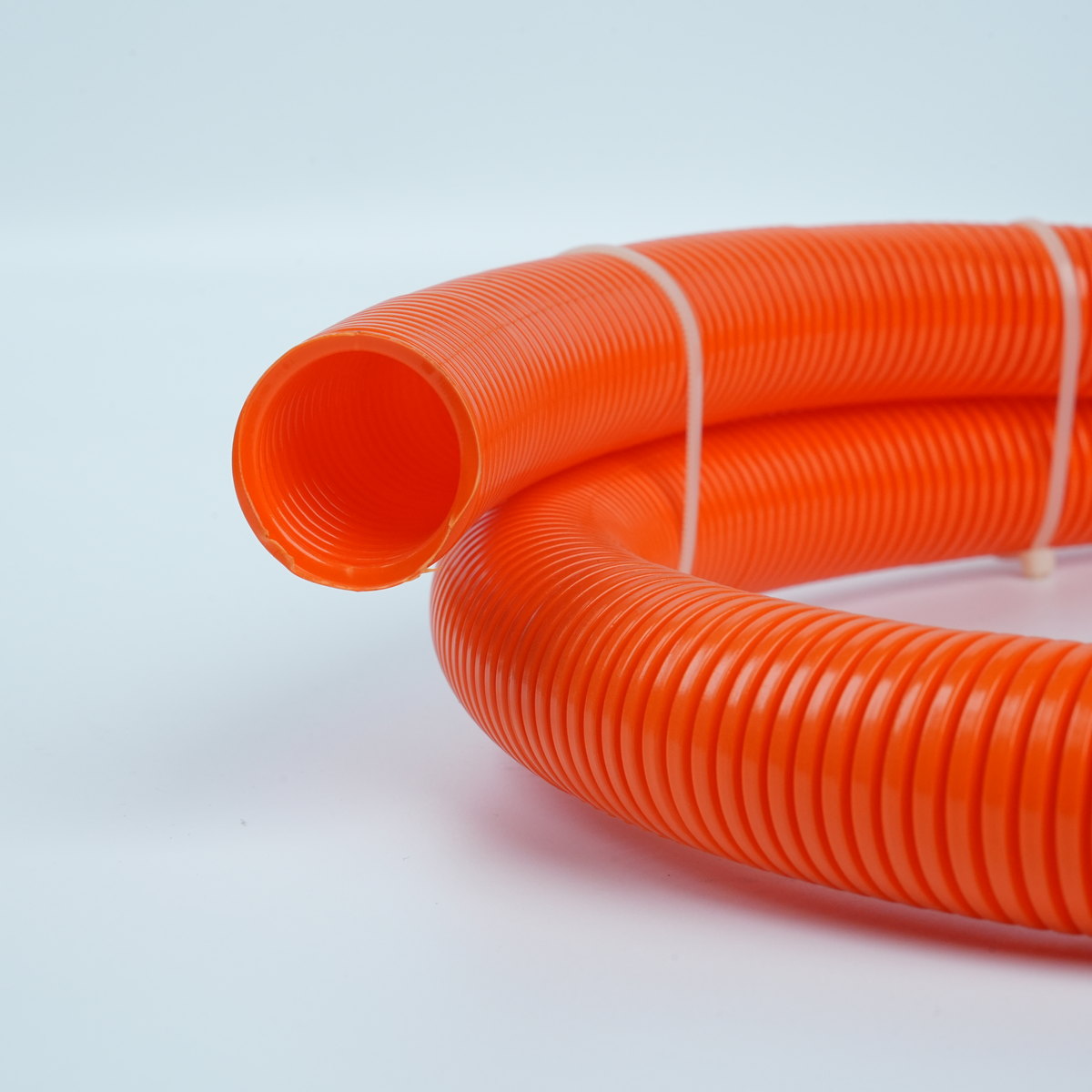
Installation speed directly impacts project timelines and labor costs in industrial wiring applications. Selecting the right wire loom conduit can significantly reduce installation time while maintaining protection and organization standards. The proper conduit system simplifies cable routing, minimizes rework, and enables faster commissioning across manufacturing floors, data centers, and mechanical assemblies.
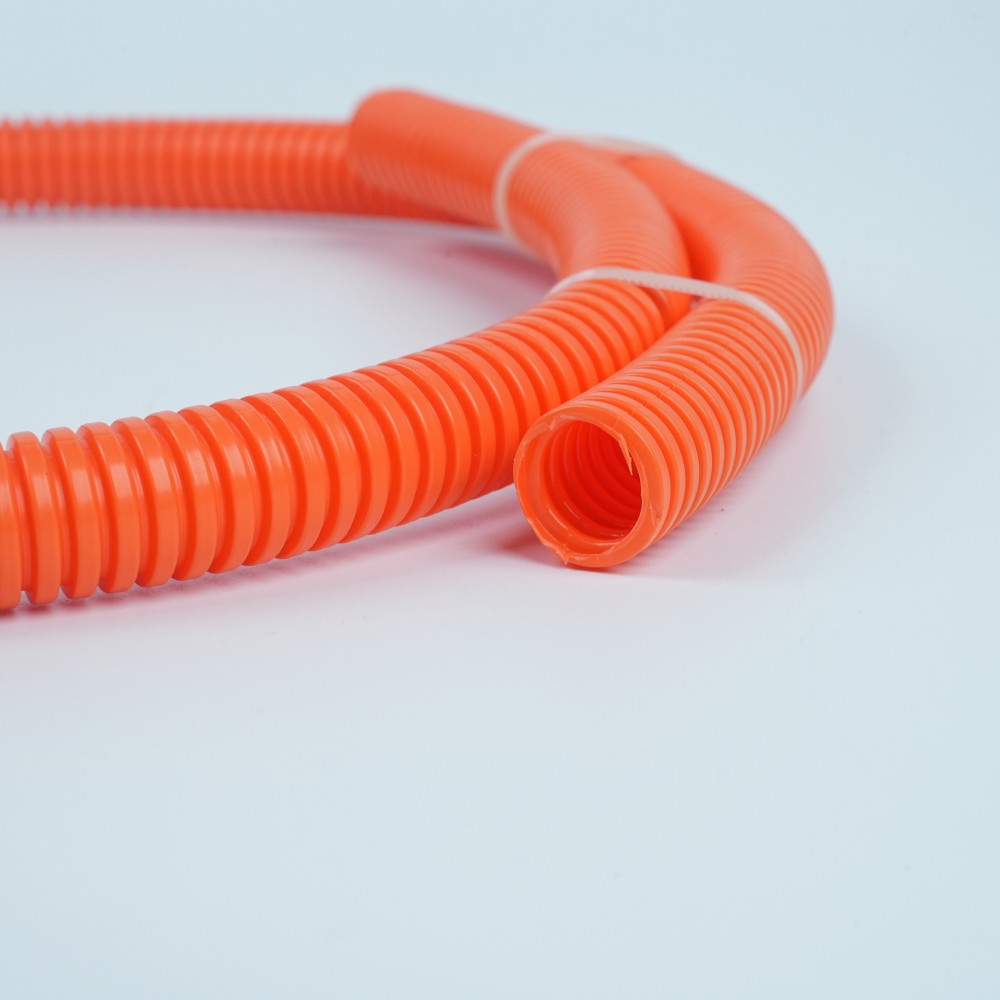
Time savings during installation depend on conduit design, material properties, and how well the system accommodates your specific wiring layout. Modern split loom and flexible conduit solutions have evolved to balance durability with installation efficiency. Understanding these factors helps engineers and technicians select solutions that deliver measurable speed gains without compromising cable safety or equipment longevity.
Design Features That Accelerate Installation
Split Loom Advantages for Rapid Deployment
Split loom represents one of the fastest cable routing options because it opens lengthwise, allowing technicians to slip bundles of wires directly inside without threading each cable individually. This open-and-place design eliminates the time-consuming process of feeding cables through rigid or closed-profile conduit. Compared to traditional tubing, split loom can reduce cable insertion time by 60 percent or more, particularly in retrofit scenarios where existing bundles must be retrofitted with protection. The flexible material of split loom also means less precise pre-measurement and cutting, as slight length variations do not cause installation complications.
Quality split loom products feature integrated velcro strips or snap closures that secure the loom around the bundle without additional fasteners, eliminating secondary assembly steps. This one-step closure mechanism is especially valuable in high-volume assembly environments where every second counts. The ability to bundle wires first, then encapsulate them in a single motion, simplifies training for new technicians and reduces the error rate during installation.
Flexible Material Properties for Speed
Wire loom conduit made from flexible nylon or polypropylene materials bends easily during installation, reducing the need for complex routing hardware or manual adjustment. Rigid conduit requires careful bending, specialized tools, and longer lead times for custom configurations. Flexible conduit conforms to the available space naturally, whether wrapping around equipment corners or adapting to existing cable trays. This flexibility also means fewer pressure points and crimps that can damage wires during the installation process itself, reducing the likelihood of rework. Technicians can install flexible wire loom conduit with basic hand tools, avoiding the downtime associated with specialized equipment setup or calibration.
Strategic Cable Routing for Installation Efficiency
Planning Your Cable Routing Layout
Pre-installation planning directly affects how quickly cable routing can proceed on the work floor. Mapping out the path that wire loom conduit will follow before work begins allows technicians to cut conduit lengths accurately and position anchoring points in advance. This preparation phase reduces on-site guesswork and rework cycles. Documentation of cable routing plans also ensures consistent methodology across multiple technicians and projects, which improves predictability and reduces variation in installation time. Clear routing maps also facilitate future maintenance, as operators can quickly identify which wires occupy specific conduit sections.
Effective cable routing minimizes the total path length that conduit must cover, reducing material consumption and installation labor proportionally. Routing that consolidates cables into main bundles at distribution points rather than scattering them individually through multiple conduit runs accelerates the overall installation. This consolidation approach also improves the aesthetic finish and simplifies future troubleshooting by creating logical cable hierarchies that match equipment logic.
Anchor Point Placement and Securing Methods
Strategic placement of anchoring points determines whether technicians must stop frequently to manually support conduit or can work continuously along the routing path. Over-spaced anchor points require technicians to hold and position conduit manually, consuming time and reducing efficiency. Under-spaced anchor points increase the fastener count and labor to install them. Optimal spacing balances conduit sag prevention with installation speed. Most modern wire loom products are designed for 18 to 24-inch anchor spacing, which provides adequate support while limiting fastener labor. Self-adhesive backing systems or integrated mounting clips reduce the time required to secure conduit compared to drilling holes and threading separate mounting hardware.
Selecting the right split loom or flexible wire loom conduit with built-in attachment features eliminates extra fabrication steps. Conduit systems equipped with integrated adhesive strips, snap mounts, or adhesive-backed bases allow technicians to position and secure the entire bundle in one continuous motion rather than alternating between installation and fastening tasks. This integration is particularly valuable in production environments where installation speed directly translates to reduced labor hours and faster project delivery.
Material Selection and Environmental Considerations
Balancing Durability with Quick Installation
Wire loom conduit materials must withstand operational stresses while remaining easy to install and position. Nylon-based conduit delivers excellent flex fatigue resistance and abrasion protection without excessive weight or stiffness that would slow installation. Polypropylene options offer lower cost and easier cutting characteristics, making them ideal for projects prioritizing installation speed over extended lifecycle durability. Rubber or PVC-wrapped variants provide additional flame resistance and chemical protection but may require more careful handling during installation due to their increased weight and reduced flexibility. Choosing material grade appropriately for the application ensures the conduit performs reliably without imposing unnecessary installation complexity.
Environmental Resistance and Long-Term Reliability
Cable routing in industrial environments must handle temperature extremes, UV exposure, chemical vapors, and mechanical stress without degrading rapidly. Wire loom conduit selected for harsh environments may require flame-retardant additives or UV stabilizers that slightly increase installation difficulty but prevent costly failures and rework. Evaluating the true operating environment ensures the selected conduit will not deteriorate prematurely, which would necessitate replacement and associated installation labor all over again. Materials rated for the specific temperature and chemical exposure of your application extend the time between maintenance interventions and reduce total cost of ownership despite potentially longer initial installation procedures.
FAQ
How much faster is split loom installation compared to traditional rigid conduit?
Split loom typically reduces installation time by 50 to 70 percent compared to rigid conduit because cables can be inserted directly into the open profile without threading. No individual cable feeding is required, and closure is accomplished with integrated fasteners. Time savings scale with cable bundle size; larger bundles see greater proportional gains because the traditional threading method becomes increasingly cumbersome. The exact time reduction depends on bundle diameter, total length, and technician experience level.
Can wire loom conduit be installed in high-vibration environments without additional support?
Quality wire loom conduit is engineered to resist vibration-induced fatigue, but additional support spacing depends on the specific operating conditions and conduit material. Shorter anchor spacing in high-vibration zones prevents excessive movement and wire damage. Pre-planning anchor point locations for anticipated vibration stress reduces the need for post-installation adjustments. Using split loom with integrated anchor clips accelerates this process compared to retrofitting additional fasteners after initial installation.
What is the fastest way to organize multiple wire bundles using cable routing techniques?
Consolidating similar signal types into single wire loom conduit runs and organizing conduit routes by functional logic reduces total installation labor. Main distribution conduit lines with secondary branch runs minimize repetitive work. Using color-coded split loom for different wire classes enables rapid visual identification during installation and future maintenance. Pre-assembling bundled wires before conduit installation, then applying split loom in a single pass, typically accelerates the overall process more than point-by-point installation.
 EN