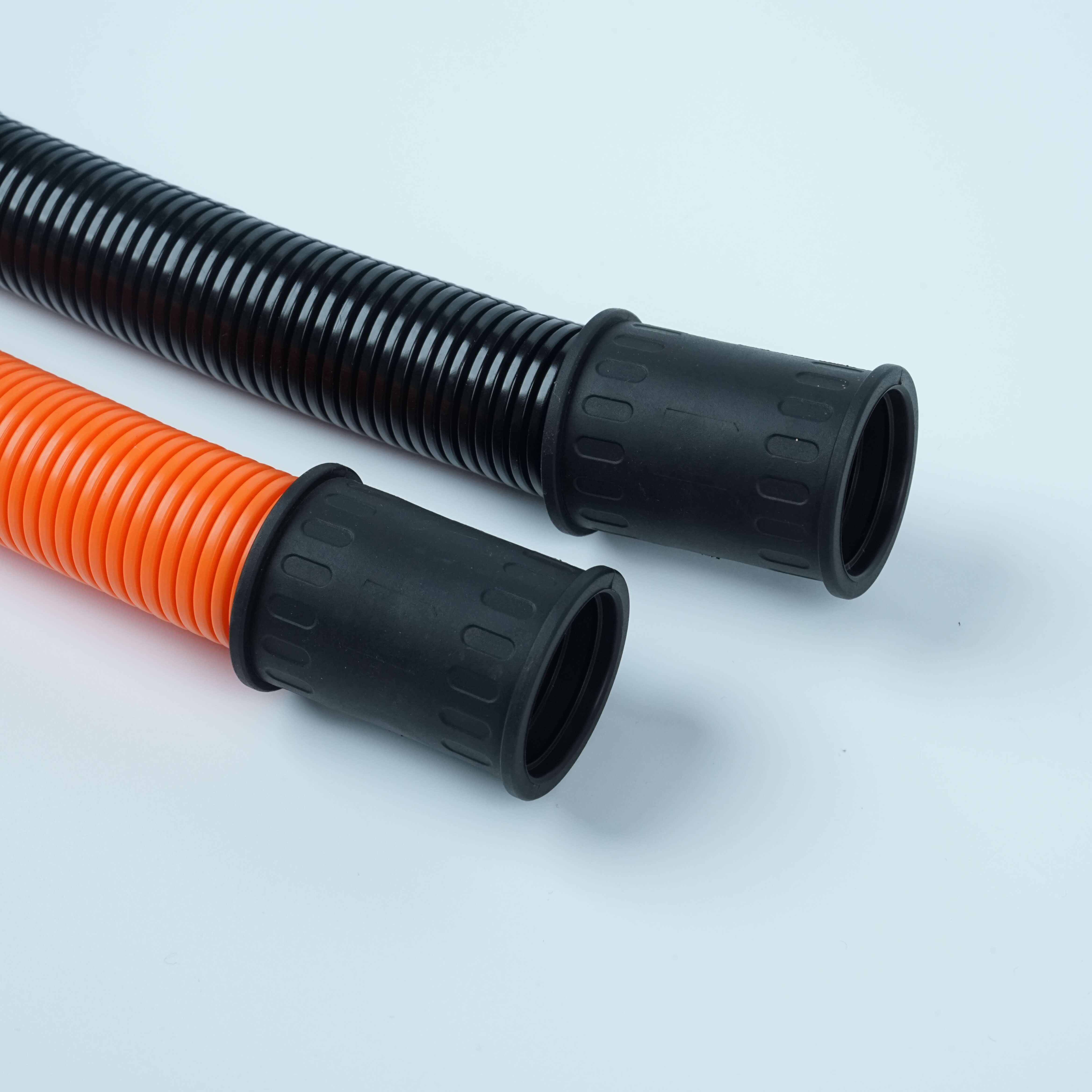
Managing branch points and connectors effectively is essential for creating reliable automotive wiring systems. When harnesses split into multiple paths or merge from different sources, the structural integrity and protection of individual conductors depend heavily on proper conduit management. Wire loom conduit serves as the backbone of organized electrical routing, ensuring that each cable segment remains protected from abrasion, moisture, and environmental stress. Understanding how to handle these critical junction areas transforms complex wiring layouts into predictable, maintainable systems.

Branch points represent the physical locations where automotive wiring pathways diverge or converge. These junctions demand special attention because they concentrate multiple conductors in a confined space and often experience higher mechanical stress than straight routing sections. Proper conduit design at branch points prevents signal interference, reduces connector damage, and extends the operational life of the entire harness assembly. This guide explores practical strategies for managing these areas using split loom and other protective routing methods.
Understanding Branch Point Anatomy and Connector Integration
Defining Branch Point Structures in Wiring Systems
A branch point occurs whenever a single wire harness must serve multiple destinations or when several independent circuits merge into a common routing path. In automotive applications, these are common at distribution blocks, fuse holders, relay centers, and modular connector interfaces. Each branch point involves both physical space constraints and electrical load considerations. The challenge intensifies when multiple automotive wiring segments converge in areas with limited installation clearance, such as engine compartments or under-dash panels.
Connectors at branch points must accommodate varying wire gauges and materials while maintaining consistent spacing. Using wire loom conduit around connector assemblies provides essential vibration damping and environmental sealing. Split loom tubing adapts easily to irregular shapes, allowing designers to create protective layers around connector housings without compromising accessibility for assembly or maintenance. Cable routing through branch regions must account for both the present wire bundle size and future harness modifications.
Protective Functions of Conduit at Junctions
Split loom and rigid conduit systems prevent chafing where multiple conductors cross or overlap during directional changes. High-vibration environments such as engine bays require additional protection because movement between individual wires can degrade insulation over time. Conduit also shields the connector terminals from moisture, salt spray, and chemical exposure that accelerate corrosion. For automotive wiring exposed to temperature extremes, flame-retardant split loom materials ensure compliance with safety standards while maintaining flexibility during installation and service procedures.
Strategic Conduit Design for Multi-Path Cable Routing
Planning Conduit Transitions at Branch Points
Effective cable routing begins with a clear layout diagram that identifies all branch points before physical installation. Designers should map the primary trunk route and mark secondary branches separately, calculating the combined cross-sectional area of all wires at each junction. This planning step prevents the common mistake of undersizing conduit, which creates excessive tension during wire insertion and damages insulation. Split loom allows flexible transitions where a single large-diameter section reduces smoothly into smaller branches, mimicking the actual wire configuration rather than forcing all branches into one rigid profile.
When implementing split loom at branch points, engineers must consider bend radius limitations and anchor point spacing. Automotive wiring systems benefit from graduated conduit sizing, where the trunk remains larger and splits into appropriately-scaled tubes for each outbound circuit. This approach reduces pressure on individual conductors and ensures that each cable maintains its designed bend stiffness. Conduit should be secured at intervals not exceeding 12 inches on straight sections and at every 6 inches near branch points where movement occurs most readily.
Connector Preparation and Conduit Sealing
Preparing connectors for integration with split loom involves selecting appropriate ferrule sizes and sealing methods that accommodate both the conduit outer diameter and the connector boot design. Flame-retardant split loom can be bonded directly to connector housings using heat-resistant adhesives or mechanical fasteners depending on application requirements. Cable routing discipline requires that all wires be fully enclosed within conduit from their origination point through the branch junction and into the final termination location. This continuous protection eliminates unshielded segments that might otherwise experience damage during assembly, testing, or field installation.
Practical Implementation and Maintenance Strategies
Installation Techniques for Multi-Branch Systems
Installing split loom at branch points follows a logical sequence beginning with the primary trunk and proceeding outward to secondary branches. Wires should be drawn through pre-positioned conduit in a single direction to prevent cross-threading and insulation damage. For complex automotive wiring harnesses with numerous branch points, technicians benefit from detailed insertion guides that show wire order, bundle orientation, and connector alignment. Split loom's flexibility means it can be positioned during assembly and adjusted as needed, but final positioning must be secured once testing confirms proper signal transmission and electrical continuity.
Conduit routing at branch points often requires creative problem-solving in tight installation spaces. Flexible split loom adapts to available clearance around existing components, whereas rigid alternatives demand precise pre-bending. When automotive wiring branches must navigate around sharp corners, split loom can be carefully shaped by hand or heated to a specific temperature that allows controlled forming without compromising structural integrity. Once positioned correctly, the conduit should be held in place with cable ties or adhesive-backed fasteners spaced to prevent slippage during vehicle operation.
Long-Term Maintenance and System Evolution
After initial installation, the conduit system at branch points requires periodic inspection to detect abrasion, compression, or environmental degradation. Split loom designed for automotive wiring should be checked quarterly in high-vibration environments to ensure that protective layers remain intact and wires have not shifted within the bundle. Maintenance procedures should include verification that connector access remains clear and that no moisture has accumulated inside the conduit. When vehicle systems are upgraded or modified, technicians must assess whether existing conduit diameters still accommodate the new automotive wiring requirements or if additional split loom sections are needed to maintain system reliability.
Cable routing modifications become easier when proper conduit documentation is maintained alongside the wiring diagram. Recording the conduit type, diameter, length, and routing path at each branch point simplifies future service work and reduces the risk of damage during maintenance procedures. If a section of split loom fails, replacement involves carefully removing the damaged conduit without disturbing adjacent wires, then threading new conduit that matches the original specifications. This modularity is one of the key advantages of split loom over permanently bonded alternatives, enabling repairs without complete harness replacement.
FAQ
What is the ideal conduit diameter for managing multiple branch points in automotive wiring?
Conduit diameter should be selected based on the total cross-sectional area of all wires at the junction plus 25 percent additional space for flexibility and heat dissipation. A general rule is that wire bundle diameter should not exceed 70 percent of the inner diameter of the surrounding split loom. For branch points where multiple automotive wiring paths converge, designers often choose a trunk diameter one size larger than calculations suggest, then transition to appropriately-scaled tubes for each outbound route. This prevents compression and ensures consistent protection across the entire system.
Can split loom be applied after the connector assembly is complete?
Yes, split loom can be installed after connector assembly, though pre-assembly application is generally more efficient and allows for better compression control. If applied afterward, the split loom should be positioned carefully to avoid disturbing terminal connections or damaging connector boots. The material must be long enough to extend at least one inch beyond the connector body on both ends to provide complete environmental sealing. For automotive wiring in harsh environments, applying split loom before final connector mating ensures that all exposed conductor surfaces remain protected from corrosion and moisture intrusion.
How does flame-retardant split loom improve safety at branch points?
Flame-retardant split loom materials meet automotive safety standards by preventing fire propagation in the event of electrical arcing or short circuits at branch point locations. These materials self-extinguish and do not produce toxic fumes when exposed to open flame, protecting vehicle occupants during emergency scenarios. Cable routing through branch junctions using flame-rated conduit ensures that multiple conductors cannot create a combined fire hazard if insulation fails. This protection is particularly critical in areas where different voltage circuits converge or where high-current automotive wiring passes through confined spaces near fuel systems or other flammable components.
 EN