Selecting the right fiberglass sleeving requires understanding how surface contact and cable protection directly impact performance and longevity. In industrial applications, the quality of electrical insulation depends on consistent material contact, thermal stability, and mechanical durability. When cables run through harsh environments—high heat, chemical exposure, or mechanical stress—the sleeving must maintain uniform contact with the conductor while offering reliable wire protection. This evaluation process goes beyond simple product selection; it demands knowledge of material composition, testing standards, and real-world performance indicators.
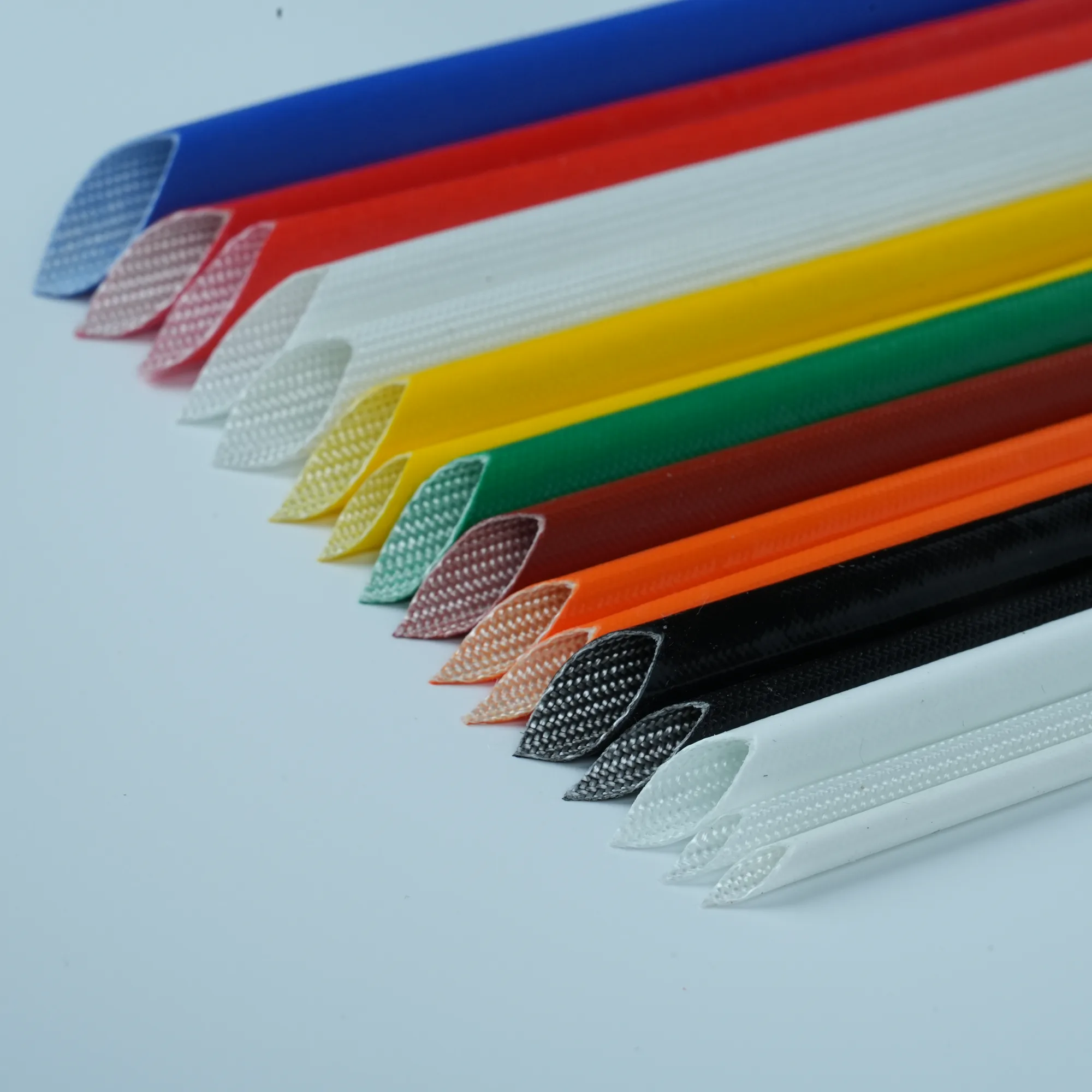
Understanding surface contact dynamics is critical for industrial operations. The inner surface of fiberglass sleeving must make consistent contact with the cable or conductor to provide effective high temperature insulation. Poor contact creates air gaps, which reduce insulation effectiveness and allow heat to concentrate at weak points. Similarly, the outer surface must resist degradation from UV exposure, abrasion, and chemical attack while maintaining flexibility. This dual-surface requirement means evaluating both the inner layer's conductivity contact and the outer layer's protective properties when assessing fiberglass sleeving quality.
Understanding Surface Contact Quality
Inner Surface Contact Consistency
The inner surface of fiberglass sleeving directly influences how well electrical insulation functions. Quality fiberglass sleeving maintains uniform contact across the entire conductor length, preventing voids that compromise performance. When evaluating surface contact, inspect whether the sleeving conforms tightly to the cable without gaps or wrinkles. Manufacturing precision determines this conformity; well-made fiberglass sleeving uses consistent fiber weaving and coating processes to ensure every section maintains proper contact. Testing surface contact involves visual inspection under magnification, thermal imaging to detect cold spots, and electrical conductivity measurements that reveal inadequate contact areas.
Outer Surface Condition Assessment
The outer surface of wire protection material must resist mechanical damage and environmental degradation. Quality fiberglass sleeving exhibits smooth, uniform exterior surfaces without tears, bubbles, or thin spots that would reduce protection. Surface assessment should include flexibility testing—materials that become brittle at operating temperatures fail to maintain contact. Perform bend tests at room temperature and elevated temperatures to confirm the material maintains its protective barrier. Look for consistent color and texture; discoloration or rough patches often indicate manufacturing defects or material degradation that will accelerate failure during operation.
Evaluating Cable Protection Effectiveness
Mechanical Durability and Abrasion Resistance
Cable protection effectiveness depends on the fiberglass sleeving's resistance to abrasion, puncture, and compression damage. In industrial settings, cables experience constant movement, vibration, and contact with sharp edges or rough surfaces. High quality wire protection must withstand this mechanical stress without splitting or thinning. Test mechanical durability through abrasion resistance standards such as ASTM D4157, which measures material loss under standardized rubbing conditions. Evaluate puncture resistance by examining how the sleeving handles sharp object contact without allowing internal conductor exposure. Compression testing reveals whether the material maintains its protective structure under continuous pressure or machinery weight.
High Temperature Insulation Performance
High temperature insulation capability distinguishes premium fiberglass sleeving from basic alternatives. The material must maintain electrical insulation properties at or above the maximum operating temperature specified by system designers. Quality fiberglass sleeving retains flexibility and tensile strength when exposed to sustained heat, preventing brittleness that leads to cracking. Thermal cycling tests reveal weaknesses; materials that fail after repeated heating and cooling cycles are unsuitable for environments with temperature fluctuations. Verify that the sleeving's chemical composition includes silicone, ceramic, or other additives that enhance high temperature insulation stability beyond basic fiberglass alone.
Practical Evaluation Methods and Standards
Visual Inspection and Dimensional Verification
Begin evaluation with systematic visual inspection of fiberglass sleeving samples. Examine inner and outer surfaces under bright light for uniformity, surface defects, and color consistency. Measure wall thickness at multiple points; variations indicate inconsistent manufacturing and predict performance problems. For wire protection assessment, check that the ID (inner diameter) and OD (outer diameter) match specifications exactly. Verify that the sleeving conforms properly to test cables without excessive looseness or harmful compression. Document all findings with photographs for reference and quality tracking.
Standard Compliance and Certification
Reputable fiberglass sleeving meets recognized industry standards that govern electrical insulation and wire protection. Common standards include UL (Underwriters Laboratories) certifications, IEC (International Electrotechnical Commission) standards, and military specifications such as MIL-I-46115. These standards define minimum performance requirements for high temperature insulation, tensile strength, flame resistance, and surface quality. When evaluating products, request certification documentation and verify that test reports are current and from accredited laboratories. Compliance with multiple standards indicates serious quality commitment and reduces risk of premature failure or safety incidents.
Performance Testing Under Operating Conditions
The most reliable evaluation involves testing fiberglass sleeving under conditions that simulate actual use. Prepare test cables with installed sleeving and run them through thermal chambers at maximum operating temperature for extended periods. Monitor electrical continuity and insulation resistance to detect degradation. Perform bend and flex tests at temperature to confirm wire protection remains intact. Evaluate chemical compatibility by exposing samples to fluids, coolants, or solvents encountered in the intended application. Real-world simulation reveals problems that laboratory standards might miss and provides confidence that the fiberglass sleeving will perform reliably throughout its service life.
FAQ
What causes poor surface contact in fiberglass sleeving?
Poor surface contact results from inconsistent inner diameter dimensions, inadequate coating adhesion, or improper cable preparation. Manufacturing defects such as fiber separation, air pockets in the resin matrix, or uneven weaving patterns create gaps between the sleeving and conductor. Cable surface contamination, oxidation, or rough edges prevent uniform contact. Under-sizing the sleeving ID relative to the actual conductor diameter also causes contact problems. Proper material selection, precision manufacturing, and cable surface preparation prevent these contact failures.
How does high temperature insulation differ between fiberglass materials?
Standard fiberglass provides electrical insulation up to approximately 200°C, while silicone-coated fiberglass sleeving handles temperatures exceeding 260°C without significant degradation. Ceramic-enhanced fiberglass formulations achieve even higher temperature ratings. The binder system—polyester, epoxy, or silicone—determines the material's thermal stability and flexibility retention at elevated temperatures. Wire protection quality also varies; materials with high temperature insulation capability maintain mechanical strength and surface integrity far longer than basic alternatives. Selecting the appropriate material grade ensures the electrical insulation matches your specific thermal requirements.
What testing confirms wire protection will last through multiple thermal cycles?
Thermal cycling tests expose fiberglass sleeving to rapid temperature changes between minimum and maximum operating conditions, typically 50 to 200 cycles. After exposure, measure tensile strength, elongation, and flexibility to confirm mechanical properties remain acceptable. Inspect surfaces for cracks, crazing, or separation from the core material. Electrical continuity tests after cycling confirm that high temperature insulation properties persist. Performance standards such as UL and military specifications require specific thermal cycling protocols. Requesting thermal cycling test data from manufacturers provides objective evidence that the sleeving will survive long-term field conditions.
 EN







