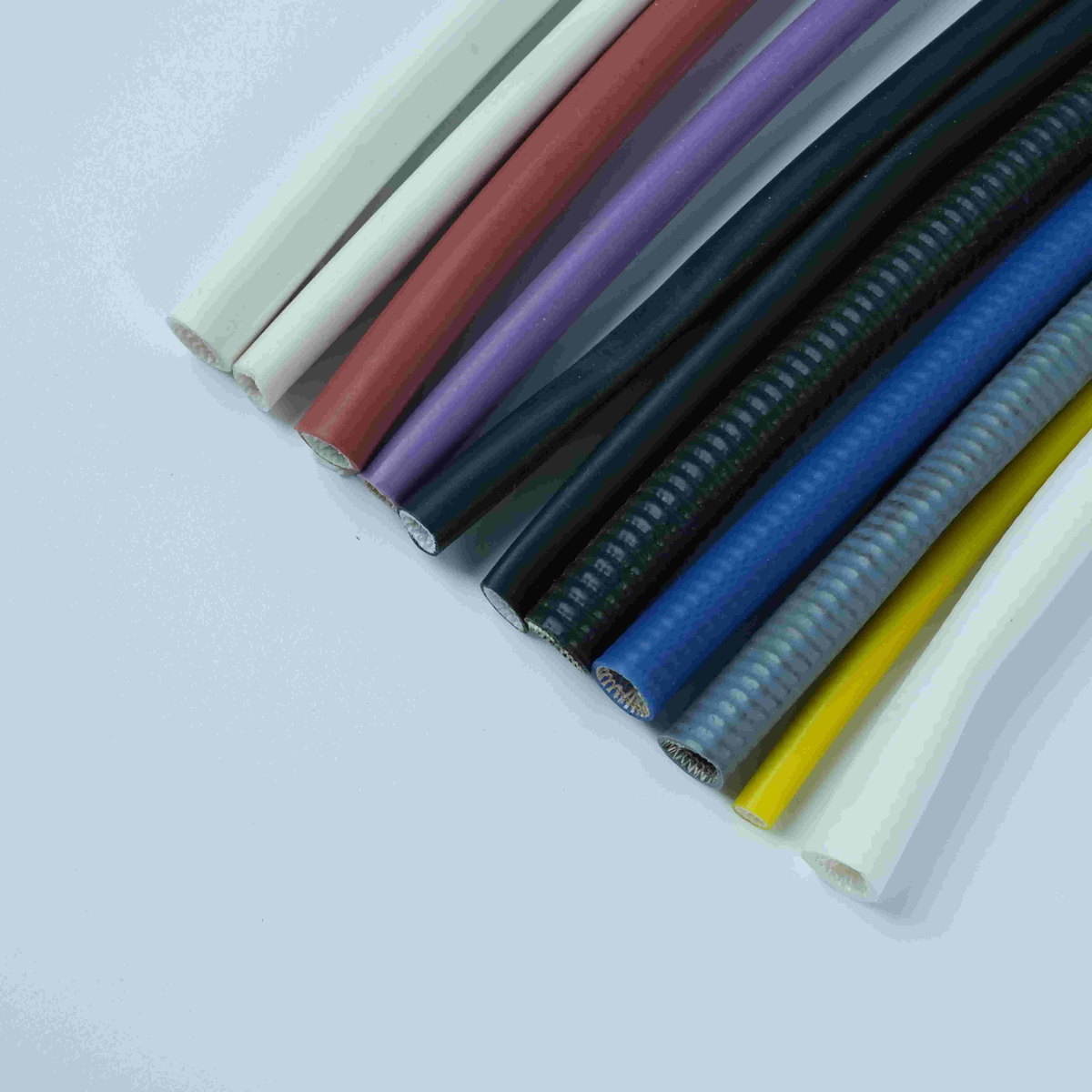
Selecting the right PTFE sleeving requires understanding how different formulations handle extreme conditions. Industrial applications demand cable protection that withstands thermal stress, mechanical wear, and aggressive chemical environments simultaneously. Most engineers face a critical challenge: standard insulation materials fail under combined exposure, leading to costly equipment downtime and safety hazards. PTFE tubing offers superior performance across these demanding scenarios, but not all products deliver equal protection or reliability. Understanding the key comparison criteria ensures you select the optimal solution for your specific operational requirements.

The decision-making process for cable protection materials extends beyond single-property evaluation. Heat resistance, abrasion durability, and chemical compatibility must be assessed together because real-world exposure rarely involves one stressor alone. PTFE tubing excels in this multi-factor environment due to its fluoropolymer backbone, which resists thermal degradation up to 260°C, maintains mechanical properties under friction, and remains inert to most solvents and corrosives. Comparing electrical insulation options effectively means establishing clear performance benchmarks aligned with your operating conditions, regulatory standards, and long-term maintenance expectations.
Heat Resistance and Thermal Performance Metrics
Temperature Ratings and Safety Margins
PTFE sleeving achieves exceptional thermal stability because fluorine bonds absorb extreme energy without molecular breakdown. Continuous-use temperature ratings typically range from 200°C to 260°C depending on formulation and wall thickness. When comparing cable protection products, verify whether manufacturers specify continuous-duty or short-term intermittent ratings, as this distinction directly impacts real-world reliability. Standard electrical insulation materials like PVC or polyimide degrade significantly above 120°C, making them unsuitable for high-temperature environments. PTFE tubing maintains flexibility and structural integrity across this entire range, preventing brittleness and insulation failure.
Thermal Cycling and Degradation Resistance
Repeated thermal cycles cause cumulative stress that standard materials cannot withstand indefinitely. PTFE tubing resists thermal cycling fatigue because its crystalline structure absorbs stress without permanent deformation or micro-cracking. This resistance translates to extended service life in applications involving temperature fluctuations between ambient and elevated extremes. Electrical insulation systems using conventional polymers often exhibit observable degradation within 2–3 years under cycling conditions, while PTFE-based cable protection consistently exceeds 10-year performance windows. Always request thermal cycle testing data when evaluating suppliers, as published specifications reveal whether products meet your cycling frequency and temperature delta requirements.
Abrasion Resistance and Mechanical Durability
Surface Hardness and Friction Characteristics
Abrasion resistance depends on surface hardness and low-friction properties that prevent material transfer during contact. PTFE sleeving exhibits naturally low coefficients of friction (0.05–0.15 against most materials), which reduces wear rates compared to cable protection options with higher surface drag. The fluoropolymer structure also maintains consistent hardness across temperature ranges, whereas conventional insulation materials soften when heated and become vulnerable to scoring. When cables experience repetitive flexing, vibration, or contact with sharp edges, PTFE tubing outperforms standard materials by factors of 5–10× in wear resistance. Compare products by requesting accelerated wear test results using standard methods like ASTM G65 or equivalent protocols.
Flex Cracking and Long-Term Mechanical Integrity
Flex-induced cracking represents a critical failure mode in harsh environments where cables undergo continuous movement. PTFE tubing maintains flexibility without crazing because its molecular chains remain mobile even under stress. Standard electrical insulation materials accumulate micro-damage during flexing cycles, eventually leading to catastrophic failure and electrical exposure. PTFE-based cable protection tolerates millions of flex cycles without visible surface degradation. When selecting between products, request flex-life testing data showing cycle counts before failure under your specific bend radius and strain conditions. This metric directly correlates with real-world service life and prevents unexpected equipment failures.
Chemical Compatibility and Environmental Resistance
Solvent and Corrosive Exposure Performance
Chemical exposure presents unique challenges because many standard insulation materials swell, soften, or degrade when exposed to solvents, acids, bases, or hydrocarbon fuels. PTFE tubing resists virtually all industrial chemicals except molten alkali metals and certain fluorinating agents, making it ideal for cable protection in chemical processing, automotive, and aerospace applications. The fluorine-carbon bond exhibits exceptional inertness because the electronegativity difference creates an energy barrier that prevents molecular attack. Conventional polyimide or elastomer-based insulation often fails within weeks when exposed to jet fuel, aggressive cleaners, or concentrated acids. When comparing electrical insulation options, request chemical compatibility charts and direct immersion test data for your specific exposure chemicals at operating temperatures.
Migration and Leaching Prevention
Certain cable protection materials leach additives or degrade components into surrounding fluids, compromising system cleanliness and equipment reliability. PTFE sleeving contains no plasticizers, phthalates, or reactive additives that migrate under heat or chemical exposure. This inert composition ensures electrical insulation integrity remains unchanged throughout service life and prevents contamination of sensitive fluids or equipment. Applications involving food processing, pharmaceuticals, or electronics manufacturing demand non-migratory materials, where PTFE tubing meets stringent regulatory requirements. Always verify that products carry relevant certifications (FDA, USP, NSF) if your application involves regulated industries, as these standards explicitly address leaching and contamination risks.
Comparative Decision Framework and Selection Criteria
Performance Weighting and Application-Specific Priorities
Comparing PTFE sleeving effectively requires establishing which performance factors dominate your specific application. If thermal cycling occurs frequently in a chemical-rich environment, heat and chemical resistance become primary criteria, while abrasion may rank lower. Conversely, high-flex applications with moderate temperatures prioritize mechanical durability and flex-life over extreme thermal ratings. Create a weighted scoring matrix based on your operational profile: assign higher importance to the three most critical performance requirements, moderate importance to secondary factors, and lower weight to tertiary considerations. This structured approach prevents over-specification on unnecessary features while ensuring critical safety and reliability metrics receive adequate attention.
Total Cost of Ownership and Reliability Trade-offs
Initial material cost represents only one factor in total cost of ownership for cable protection systems. PTFE tubing typically costs 30–50% more than standard polyimide or elastomer alternatives upfront, but delivers 3–5× longer service life, eliminating premature replacement cycles. Additionally, prevented failures avoid production downtime, emergency repairs, and potential safety liability costs, which typically exceed material savings by factors of 10–20×. When evaluating supplier quotes, request lifecycle cost analysis incorporating expected service intervals, failure rates, and replacement labor costs. Many engineers initially select cheaper alternatives and later regret the decision after experiencing unexpected failures and unplanned maintenance events. PTFE-based electrical insulation often emerges as the most economical long-term choice despite higher initial expense.
FAQ
What distinguishes standard PTFE sleeving from heat-shrink PTFE tubing for cable protection?
Standard PTFE sleeving slides over cables as a loose protective sleeve, offering excellent chemical and thermal resistance but requiring manual installation techniques. Heat-shrink PTFE tubing shrinks when heated, conforming tightly to cable geometry and creating a sealed barrier against moisture and contaminants. Heat-shrink formulations provide superior cable protection in demanding environments because the tight fit prevents fluid migration and mechanical abrasion between cable and sleeve. Both types offer equivalent electrical insulation properties, but heat-shrink versions deliver enhanced sealing and durability benefits justifying their slightly higher cost in critical applications. Choose standard sleeving for simple protection needs and heat-shrink tubing when environmental sealing and mechanical integration matter significantly.
How do temperature ratings translate to real-world operating conditions for PTFE tubing and electrical insulation?
Published temperature ratings typically represent continuous-duty exposure limits under controlled laboratory conditions without mechanical stress or chemical presence. Real-world applications rarely match these ideal scenarios because thermal cycling, vibration, and chemical exposure combine to accelerate degradation. A cable protection material rated for 260°C continuous duty might effectively perform only to 220–240°C when exposed to simultaneous cycling and solvent contact. Always apply a conservative safety margin of 20–40°C below published ratings when selecting PTFE sleeving for harsh environments. Additionally, verify that temperature ratings account for your specific cable application profile, including voltage stress and mechanical loading, which influence actual insulation breakdown thresholds. Manufacturer recommendations should incorporate these realistic operating conditions rather than idealized laboratory data.
What regulatory certifications and testing standards apply when comparing PTFE-based cable protection products?
Industrial cable protection materials must meet standards including IEC 60811 for insulation and sheath testing, ASTM D149 for electrical breakdown voltage, and application-specific requirements from aerospace (AS9100), automotive (IATF 16949), or medical device sectors. PTFE tubing commonly carries FDA approval for food contact applications and USP certification for pharmaceutical compatibility. Military applications demand MIL-DTL or MIL-I specifications confirming performance under extreme conditions. When evaluating supplier claims about electrical insulation quality, request third-party test reports and certification documents rather than manufacturer self-certification statements. Reputable suppliers maintain transparent testing data and willingly provide independent verification of performance claims, while vendors reluctant to share detailed specifications often use lower-quality materials. Always confirm that claimed specifications match your industry regulatory requirements before finalizing purchase decisions.
 EN