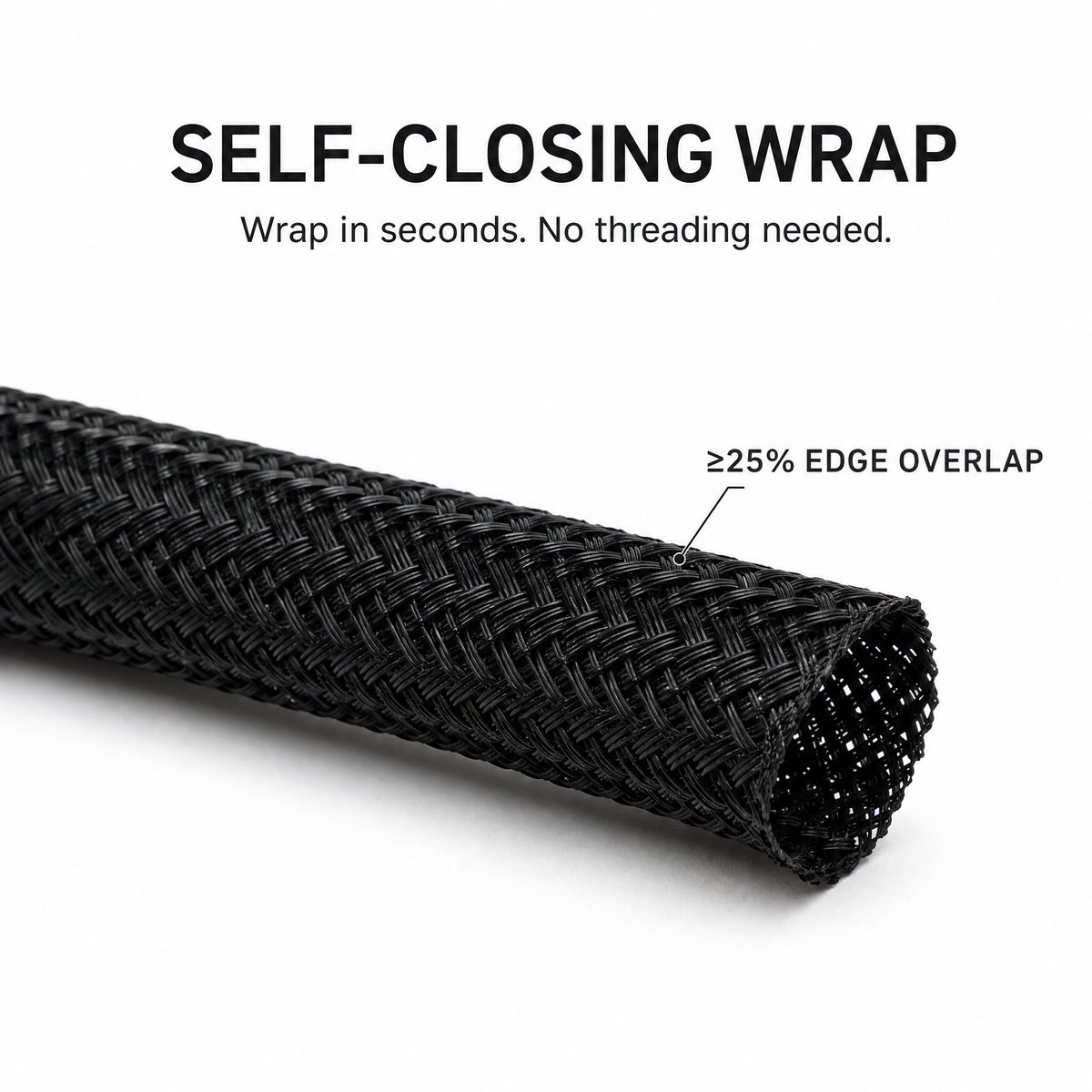
Selecting the right self closing wrap for industrial electrical assemblies is a critical decision that directly impacts assembly durability, maintenance efficiency, and long-term reliability. Electrical systems in industrial environments face constant challenges from vibration, temperature fluctuations, moisture, and mechanical stress. A properly chosen self closing wrap provides essential protection by organizing cables, reducing electromagnetic interference, and shielding components from environmental hazards. Understanding the key factors that distinguish high-quality self closing wrap solutions helps engineers and facility managers make informed choices that align with specific operational demands and regulatory requirements.
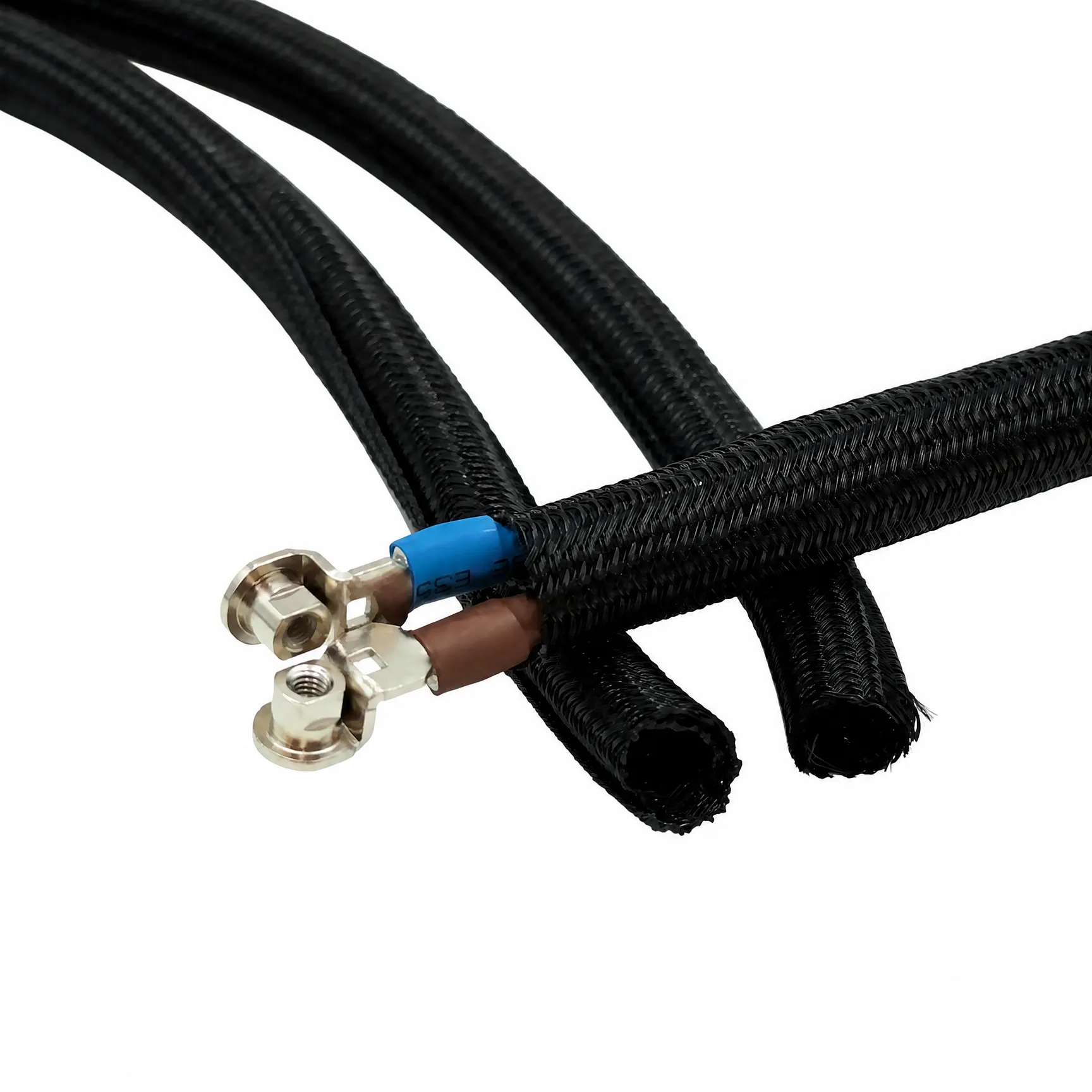
Industrial electrical assemblies require more than basic cable organization. They need robust cable management solutions that can withstand demanding conditions while maintaining accessibility for repairs and upgrades. A high-quality self closing wrap delivers this balance by combining protective coverage with practical usability. The right choice depends on understanding material properties, environmental exposure levels, assembly complexity, and maintenance protocols. This guide walks through the essential evaluation criteria that help you identify the most suitable self closing wrap solution for your specific industrial application.
Understanding Self Closing Wrap and Cable Management Fundamentals
Core Functions of Self Closing Wrap in Industrial Settings
Self closing wrap serves multiple protective and organizational functions in industrial electrical assemblies. The wrap physically consolidates dispersed cables into organized bundles, reducing tangling and simplifying troubleshooting when issues arise. Beyond organization, self closing wrap shields cables from abrasion against sharp edges, metal frames, and moving machinery components that are common in factory environments. It also provides thermal insulation when materials are heat-resistant, protecting sensitive electronics and preventing accidental contact with energized conductors. Additionally, split sleeving designs enable quick installation and removal without disconnecting cables, significantly reducing downtime during maintenance cycles.
The Relationship Between Cable Wrap and System Performance
Proper cable management through effective self closing wrap directly influences overall system performance and longevity. Cables protected from environmental contamination and physical damage experience fewer failures and require less frequent replacement. Organized cable bundles allow electrical current to flow more efficiently and reduce unwanted electromagnetic interference that can disrupt sensitive instrumentation. Industrial facilities that implement robust cable management using quality split sleeving and self closing wrap solutions report measurable improvements in equipment uptime and reduced troubleshooting costs. The relationship between cable wrap quality and system reliability makes the selection process a strategic investment rather than a simple procurement decision.
Key Selection Criteria for Self Closing Wrap
Material Properties and Environmental Resistance
The material composition of self closing wrap directly determines its performance across different industrial environments. Braided nylon and polyester wraps offer excellent abrasion resistance and general-purpose protection suitable for most manufacturing facilities. For high-temperature applications, aramid-based self closing wrap provides superior thermal stability and maintains flexibility even when exposed to heat sources near equipment. Facilities with outdoor installations or high-moisture environments require moisture-resistant materials or hydrophobic coatings that prevent water penetration and corrosion. Chemical resistance becomes critical in plants processing oils, solvents, or aggressive compounds where standard materials would degrade rapidly. Evaluating your facility's specific environmental conditions determines which cable wrap material delivers the protection and durability your assembly requires.
Flame Resistance and Safety Compliance
Industrial electrical safety standards mandate specific fire performance requirements for cable management materials used in hazardous or confined spaces. Self closing wrap must meet recognized flame-rating standards such as UL 94 or equivalent certifications depending on your regulatory jurisdiction and facility classification. Halogen-free self closing wrap is increasingly required in food processing, healthcare, and residential-adjacent industrial settings where toxic smoke during fires poses additional risks. Compliance certifications provide documented proof that your selected cable wrap meets mandatory safety standards and protects your facility from liability exposure. Always verify that supplier documentation explicitly states compliance status rather than assuming generic industrial wraps meet your specific regulatory requirements.
Installation Characteristics and Accessibility
The practical ease of installation and future accessibility of your cable management solution directly affects total cost of ownership over the assembly lifecycle. Split sleeving designs in self closing wrap enable technicians to bundle cables without complete disassembly, dramatically reducing maintenance windows and associated production downtime. Adhesive-backed or velcro-style attachment mechanisms simplify initial installation and allow repositioning during system modifications. Cable wrap flexibility and natural grip characteristics determine whether installers can work efficiently or spend excessive time wrestling with stiff, uncooperative materials. Considering maintenance requirements for your specific assembly helps identify whether maximum accessibility or maximum environmental protection should drive your self closing wrap selection.
Evaluating Cable Wrap Performance Metrics and Selecting the Right Solution
Cable Diameter Range and Accommodation Capacity
Self closing wrap products come in specific diameter ranges that determine which cable bundles they can effectively accommodate. Selecting wrap with insufficient diameter capacity forces technicians to bundle cables too tightly, restricting flexibility and creating stress concentrations that accelerate insulation failure. Conversely, wrap that is oversized for your cable assembly creates excessive bulk and defeats the space-saving advantages of compact cable management. Manufacturers provide detailed specifications indicating minimum and maximum cable diameters that each self closing wrap solution handles effectively. Accurately measuring your cable bundle diameter and selecting wrap with appropriate capacity ensures optimal performance and simplifies future maintenance access when reconfiguring your industrial electrical assembly.
Cost-Benefit Analysis and Long-Term Value Assessment
Premium self closing wrap solutions often demonstrate superior long-term value despite higher initial material costs when compared against cheaper alternatives requiring frequent replacement or emergency repairs. Calculate total ownership costs by factoring in installation labor, expected service life, maintenance requirements, and downtime expenses associated with cable failure. Industrial facilities operating 24/7 cannot tolerate equipment failures from inadequate cable protection, making investment in robust self closing wrap a strategic reliability decision. Bulk purchasing from qualified suppliers typically reduces per-unit costs while ensuring consistent quality across your facility. Comparing specification sheets and performance ratings rather than focusing solely on price ensures your cable management selection aligns with your facility's operational requirements and financial parameters.
FAQ
What makes split sleeving different from traditional self closing wrap options?
Split sleeving features a longitudinal opening that runs the entire length of the cable wrap, allowing technicians to open and close the sleeve around existing cable bundles without disconnecting individual wires. Traditional solid-tube cable wraps must be threaded over cable ends during initial assembly, requiring disassembly for maintenance. This key distinction makes split sleeving infinitely more practical for industrial applications where equipment modifications and troubleshooting occur frequently. The self closing design maintains bundle integrity while providing rapid access when needed for repairs or upgrades.
How do I determine the correct cable wrap size for my industrial assembly?
Begin by measuring the outer diameter of your largest cable bundle when loosely grouped together, then select self closing wrap approximately 1.5 to 2 times that diameter to allow comfortable closure and flexibility. Most manufacturers provide sizing charts correlating wrap internal diameter to cable bundle diameter, simplifying the selection process. Oversized wrap creates unnecessary bulk and reduces effectiveness, while undersized wrap restricts cable movement and may damage insulation. Testing with sample wrap materials before committing to bulk purchases helps ensure your selection accommodates actual field conditions and installation practices.
Are there industry-specific considerations when choosing cable wrap for particular industrial applications?
Yes, different industries have distinct environmental and regulatory requirements that influence self closing wrap selection. Food and beverage facilities require FDA-compliant materials, while pharmaceutical manufacturing demands solutions that prevent particle shedding and contamination. Offshore and maritime applications need superior corrosion resistance and salt-spray performance that standard wrap cannot provide. Automotive assembly lines require cable wrap that withstands hydraulic fluid exposure and extreme temperature cycling. Always research your specific industry standards and consult with experienced suppliers familiar with your sector's unique demands before finalizing your self closing wrap selection.
 EN