High-density harness layouts demand precision in every component selection, and fiberglass sleeving stands as a critical decision point in modern cable management. When designers and engineers pack multiple conductors into confined spaces, thermal protection and mechanical durability become non-negotiable requirements. The right fiberglass sleeving specification prevents insulation degradation, maintains electrical safety, and ensures long-term reliability in demanding industrial and automotive environments. Understanding the nuances of fiberglass sleeving selection transforms a routine purchasing decision into a strategic engineering advantage.
The specification process requires balancing thermal performance, space constraints, cost efficiency, and regulatory compliance. In automotive wiring harnesses, where underhood temperatures can exceed 120°C and vibration cycles reach millions of reversals, cable sleeving must deliver consistent protection without adding excessive bulk. This guide explores the practical methodology for choosing, specifying, and implementing fiberglass sleeving solutions that keep high-density layouts performing reliably throughout their operational life.
Thermal Performance and Temperature Rating
Fiberglass sleeving thermal ratings define the upper temperature limit at which the material maintains its protective properties without degradation. Standard fiberglass constructions handle continuous exposure up to 130°C, while specialty formulations extend heat resistance to 200°C or higher. Automotive wiring harnesses experience temperature cycling rather than steady-state heat, which means the peak short-duration temperature often exceeds the continuous rating. Selecting fiberglass sleeving with adequate thermal margin prevents brittle failure modes that occur when insulation materials approach their glass transition temperature.
High-density harness layouts concentrate heat sources within confined zones, amplifying local thermal stress beyond ambient underhood temperatures. A cable sleeving specification that appears adequate in laboratory conditions may fail prematurely when multiple power conductors run parallel within tight bundling. Engineers must calculate worst-case thermal load by considering conductor amperage, duty cycle, ambient temperature, and radiant heat from nearby engine components. This conservative approach to heat resistance ensures that fiberglass sleeving maintains flexibility and electrical properties under the actual harness operating envelope.
Mechanical Properties and Dimensional Stability
Fiberglass sleeving strength determines how well the material withstands mechanical abrasion, vibration-induced chafing, and assembly handling. The weave density and resin composition directly influence tear resistance, tensile strength, and dimensional stability over thousands of thermal cycles. High-density harness layouts demand cable sleeving that resists creep and stretch, particularly in vertical routing where gravity creates constant tensile stress. Materials with lower elongation at break prevent conductor exposure if the sleeving stretches during thermal expansion and contraction cycles inherent to automotive environments.
Thermal cycling causes differential expansion between the fiberglass sleeving outer layer and the cable conductor inside. A specification that ignores dimensional stability allows the sleeving to shift, bunch, or expose conductor insulation at stress concentration points. Selecting fiberglass sleeving with tight tolerances and stable resin systems prevents gap formation that invites moisture ingress and corrosion initiation. Automotive wiring standards increasingly demand dimensional control because vehicle lifetimes now extend beyond ten years, requiring cable sleeving performance validation across thousands of thermal cycles.
Specification Criteria for High-Density Layout Requirements
Space and Weight Optimization
High-density harness layouts operate under severe space constraints where every millimeter of diameter reduction improves routability and reduces weight. Fiberglass sleeving thickness directly impacts outer diameter, and thinner constructions allow more cables to fit within existing bundle envelopes. However, reducing wall thickness compromises thermal protection and mechanical durability, creating a specification trade-off that demands careful analysis. Engineers must balance cable sleeving diameter requirements against the minimum thickness needed for adequate heat resistance and vibration protection in the specific vehicle platform.
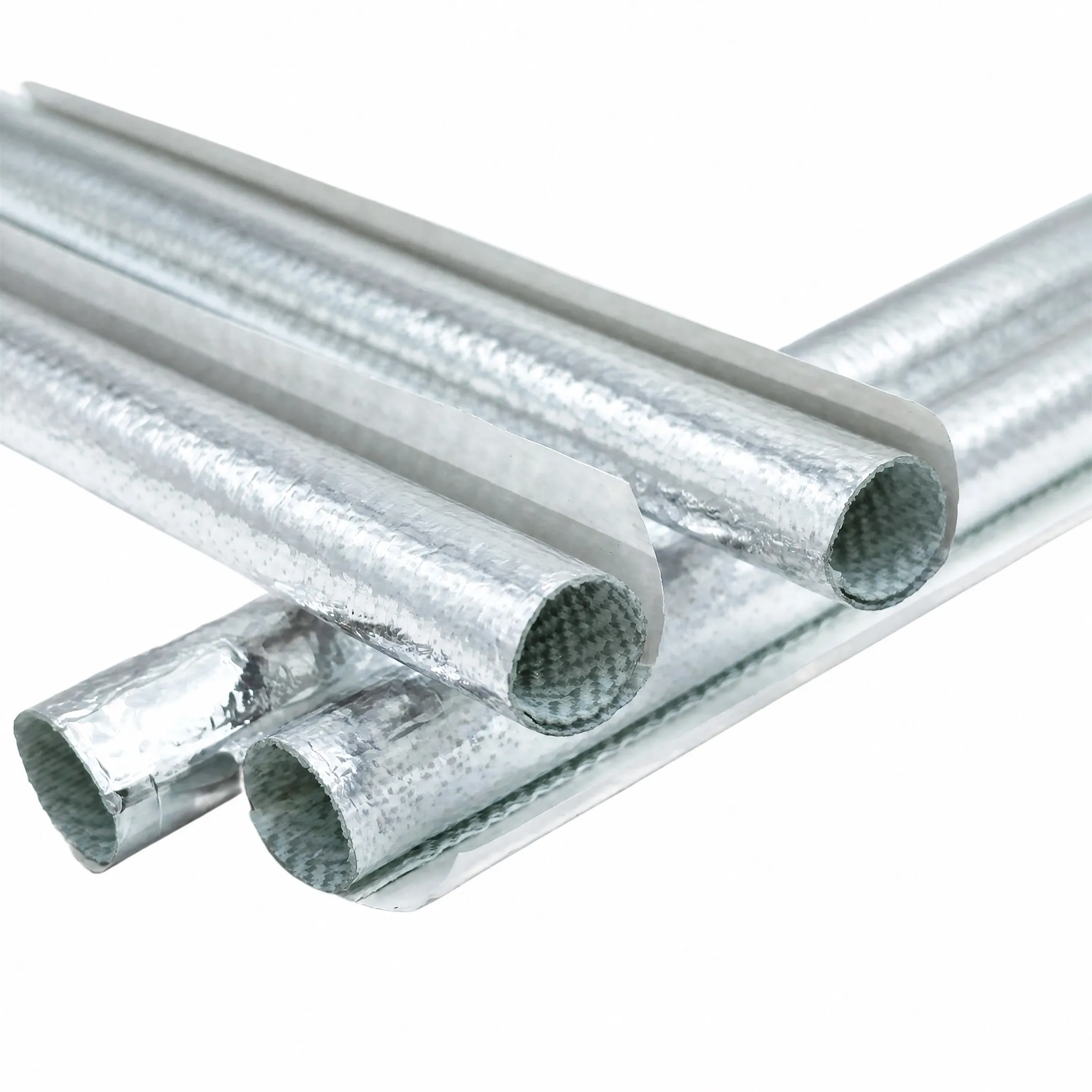
Modern lightweight vehicle design initiatives pressure harness assemblies to reduce weight without sacrificing reliability. Fiberglass sleeving material selection influences total harness mass because a cable sleeving with lower resin content weighs less but may offer reduced thermal performance. Some automotive applications specify aluminum-foil-backed fiberglass sleeving, which adds radiant heat reflection properties while maintaining competitive weight. This hybrid approach improves heat resistance within tight diameter constraints, enabling designers to create high-density layouts that meet both thermal and space requirements simultaneously.
Chemical and Environmental Resistance
Underhood environments expose fiberglass sleeving to engine oils, coolant spray, salt air, and ultraviolet radiation that degrade conventional materials. A robust cable sleeving specification includes chemical resistance to automotive fluids and UV-stabilized resin formulations that prevent embrittlement over vehicle lifetime. High-density harness bundles trap moisture internally, accelerating corrosion if the fiberglass sleeving lacks adequate moisture barrier properties. Designers must verify that cable sleeving materials resist the specific fluid exposures anticipated in their application and validate this protection through accelerated aging protocols.
Environmental durability often determines the cost-benefit ratio of fiberglass sleeving choices. Premium formulations with superior chemical resistance may cost more upfront but prevent field failures that trigger expensive recalls and warranty claims. High-density harness layouts increase failure consequence because damage to one bundle section can interrupt multiple circuits simultaneously. Specifying fiberglass sleeving that exceeds minimum environmental requirements provides a reliability margin that protects vehicle availability and brand reputation in service.
Implementation and Performance Validation Strategies
Assembly Process Integration
Fiberglass sleeving must accommodate manufacturing realities where harnesses undergo crimping, soldering, and thermal cycling during assembly. The cable sleeving selected must resist heat during solder operations without shrinking or deforming around connectors. High-density harness layouts limit access for post-assembly inspection, making assembly-process integration critical to quality outcomes. Specifying fiberglass sleeving that maintains its properties through manufacturing temperatures and mechanical stress prevents yield loss and rework that erodes manufacturing margins.
Installation procedures for cable sleeving demand clear definition in work instructions because improper routing or bundle tension can cause sleeving migration and conductor exposure. High-density layouts require precision routing where cables follow specific paths to maintain optimal thermal and electrical performance. The fiberglass sleeving specification must include installation guidelines that address bundle density, support-point spacing, and tie-down tension to prevent mechanical damage during assembly and installation into the vehicle.
Testing and Validation Protocols
Validating fiberglass sleeving performance requires accelerated testing that reproduces the thermal, mechanical, and environmental stresses anticipated during vehicle operation. High-density harness layouts demand representative test samples that include actual cable configurations, bundle density, and routing geometry to accurately predict field performance. Thermal cycling tests confirm that cable sleeving maintains electrical properties and dimensional stability through the entire lifecycle temperature range. Automotive wiring standards specify validation protocols for heat resistance, moisture absorption, and chemical compatibility that justify fiberglass sleeving specification decisions.
Field experience data provides the ultimate validation for cable sleeving specification adequacy. Harness designs that successfully operate for several model years across diverse climates and customer usage patterns build confidence in fiberglass sleeving material selections. Documentation of field performance supports continuous improvement initiatives where specification refinements reflect real-world conditions better than laboratory simulations alone. High-density harness layouts benefit from this accumulated knowledge because each new platform can leverage validated material selections that reduce technical risk and accelerate design approval cycles.
FAQ
What temperature range does automotive-grade fiberglass sleeving typically support?
Most automotive-grade fiberglass sleeving maintains protective properties from approximately -40°C to 130°C continuous exposure, with peak temperatures reaching 150-170°C during short-duration transients. Specialty heat-resistant formulations extend the upper limit to 200°C or beyond, but these premium materials increase cost and may add weight. The actual specification for your high-density harness layout depends on the specific underhood environment, conductor amperage, and vehicle thermal management strategy. Always verify the cable sleeving temperature rating against your worst-case thermal analysis to ensure adequate safety margin.
How do I calculate the required thickness for cable sleeving in high-density bundles?
Fiberglass sleeving thickness selection balances thermal insulation performance against space and weight constraints. Begin by determining your maximum allowable outer diameter, then subtract the cable conductor diameter to establish maximum sleeving wall thickness. Next, calculate the thermal conductivity requirement based on internal heat generation and desired temperature rise, which indicates the minimum insulation thickness needed. Finally, apply a mechanical durability margin to ensure the cable sleeving resists vibration and abrasion without compromise. This iterative process often yields a narrow acceptable range where engineering judgment and material testing validate the final fiberglass sleeving specification.
Can fiberglass sleeving be used alongside other cable protection methods in high-density layouts?
Yes, fiberglass sleeving frequently combines with other protection methods including braided outer sheaths, corrugated conduit, and foam padding to achieve comprehensive cable sleeving solutions. High-density harness layouts often layer protection strategies where internal fiberglass sleeving provides thermal and electrical insulation while external components add mechanical robustness and environmental sealing. This multi-layer approach allows designers to optimize each component for specific performance requirements without overspecifying individual elements. Validate combined cable sleeving and protection systems through integrated testing that reproduces the actual bundle configuration and environmental exposure to ensure reliable field performance.
 EN







