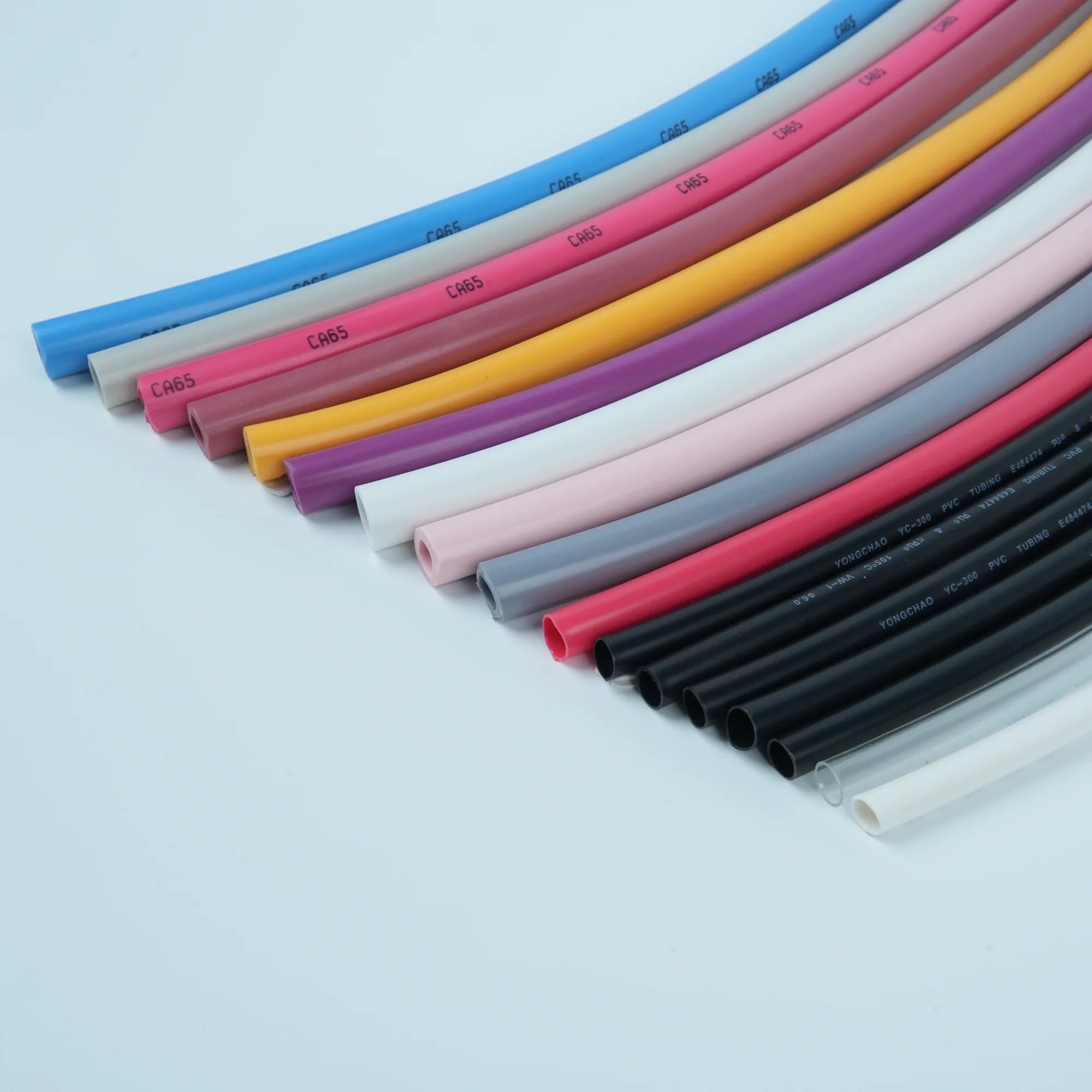
Non-Shrinkable Tube for Fixed-Diameter Wire Protection
A Non-Shrinkable Tube is a fixed-diameter sleeve used where a wire, cable, lead, or component needs a consistent insulating and protective covering without a heat-shrinking step. This category currently includes a 60°C/75°C/90°C Non-shrinkable PVC tube. The listed tube is made from flexible PVC insulation and is offered with 300V/600V options; its listed product information also states a 105°C rating and UL224 VW-1 flammability. Those details should be checked against the applicable product specification before a project is released.
For buyers, a Non-Shrinkable Tube is not simply an outer layer. It is a choice about stable routing, electrical insulation, assembly handling, and the practical fit between a sleeve and the item it covers. Unlike tubing that is designed to contract with heat, a Non-Shrinkable Tube keeps its supplied diameter. That can make it useful when the installation calls for a consistent sleeve size and when the protected item can be fed through the tube during assembly.
Key Characteristics of the Listed PVC Tube
Flexible PVC insulation: The listed Non-Shrinkable Tube uses flexible PVC, a material format commonly considered for insulation and physical protection in equipment wiring.
Fixed, non-shrinking form: A Non-Shrinkable Tube is selected for its stable diameter rather than heat recovery. Confirm inside diameter, wall thickness, and fit for the actual wire bundle.
Listed temperature and electrical options: The product listing identifies 60°C, 75°C, and 90°C tube variants, 300V/600V options, and a 105°C rating. Match the required option to the relevant design documentation instead of treating one listed value as universal.
Flammability information: UL224 VW-1 is stated in the product listing. Where a project requires documentation, verify the current documentation and the exact product configuration.
It is easy to assume that a larger sleeve automatically gives better protection. In practice, the material, wall construction, routing, and installed fit matter as much as diameter. A Non-Shrinkable Tube that is too tight can complicate insertion; one that is too loose may not give the intended routing control. The useful decision is not “largest or smallest,” but which size fits the harness, component, and available installation space.
Where Non-Shrinkable Tube Can Be Considered
Non-Shrinkable Tube is commonly considered for wire and cable covering, electrical insulation, harness organization, and general equipment protection when a fixed-diameter sleeve is appropriate. The listed PVC tube description identifies household appliances, industrial appliances, lighting, automotive wiring harnesses, electronic components, motor fuses, machinery, toys, and stationery as application directions. Actual suitability depends on the installation conditions and the specification required by the finished equipment.
In appliance and industrial equipment wiring, a Non-Shrinkable Tube can help provide a defined insulating layer around routed conductors. In lighting assemblies and electronic-component work, the same product category can be evaluated where a consistent sleeve is needed around leads or wiring sections. For an automotive wiring harness, buyers should use the vehicle or harness requirements as the primary reference, because an automotive program may have more specific material, dimensional, and test expectations than a general-purpose application.
Some buyers compare a Non-Shrinkable Tube with related wire-management items such as wire tape for car or a 3 8 split wire loom. These products solve different installation problems. Wire tape for car is normally used to bind or wrap a harness, while a split loom may support routed bundle coverage and later access. A Non-Shrinkable Tube is a closed sleeve format, so it should be evaluated around the assembly sequence, access needs, and desired insulation coverage. Teflon sleeve may also arise in material comparisons, but it is a different sleeve material family; selection should follow the required environment and documented performance needs.
How to Choose a Non-Shrinkable Tube
Start with the component being covered. Is the goal electrical insulation, abrasion separation, wire identification, bundle organization, or a combination of these? A Non-Shrinkable Tube should be selected against that defined purpose, not only by its nominal diameter. Next, confirm the wire or bundle dimensions, including connectors or terminals that must pass through the tube before assembly.
Then review the application environment. Temperature exposure, movement, surrounding materials, and installation space can influence whether a PVC Non-Shrinkable Tube is an appropriate starting point. If the application involves requirements beyond the facts listed for this product, request the relevant current specifications and test documentation. This approach is especially useful for first-time buyers who may otherwise compare materials only by name rather than by the conditions the sleeve must handle.
Ask a practical question before finalizing size: will the harness remain unchanged, or does the routing need room for a future wire addition? Extra diameter can simplify feeding, but excessive clearance can reduce tidy routing. Conversely, a tight choice may be difficult to install. There is no universal best size; the right Non-Shrinkable Tube depends on the actual bundle, the installation method, and the clearance available in the equipment.
Confirm the specific tube temperature option and electrical option needed for the application.
Measure the covered wire, cable, or bundle and account for installation through the tube.
Review flexibility needs at bends and at fixed points.
Check any customer, equipment, automotive, or market-specific requirements before approval.
For a production program, align the incoming inspection points with the agreed product specification.
Practical Value for Industrial and Wholesale Buyers
For industrial buyers, a Non-Shrinkable Tube category provides a focused starting point for evaluating fixed-diameter PVC insulation tubing. The value is in making the selection discussion clearer: product configuration, intended application, fit, and documented requirements can be reviewed together. This is more useful than treating all sleeves as interchangeable, because appliance wiring, machinery, lighting, and harness work can call for different checks.
The broader product range described in the business profile includes fiberglass sleeving, automotive wire-harness corrugated tubing, heat-shrink tubing, PVC sleeving, and automotive wire-harness tape. That breadth can support a conversation about related cable-protection formats, but it does not mean that each product is suitable for every application. For a buyer who needs a Non-Shrinkable Tube, the priority remains a documented match between the listed PVC tube option and the intended use.
When comparing suppliers or preparing an internal request, keep the information specific: application, required dimensions, desired tube option, electrical requirement, installation method, and any applicable customer standard. This gives engineering, purchasing, and quality teams a more consistent basis for review. It can also help distinguish a Non-Shrinkable Tube from wire tape for car, 3 8 split wire loom, or a teflon sleeve when several protection formats are being considered in one project.
Selection Summary
Choose a Non-Shrinkable Tube when a fixed-diameter PVC insulating sleeve fits the product design and assembly method. The listed 60°C/75°C/90°C PVC tube presents stated 300V/600V options, a 105°C rating, and UL224 VW-1 flammability information; confirm the exact version and documentation needed for your application. By checking dimensions, environment, routing, and required specifications first, buyers can use Non-Shrinkable Tube as a practical part of a structured wire-protection decision.

 KO
KO