What Is a Corrugated Tube?
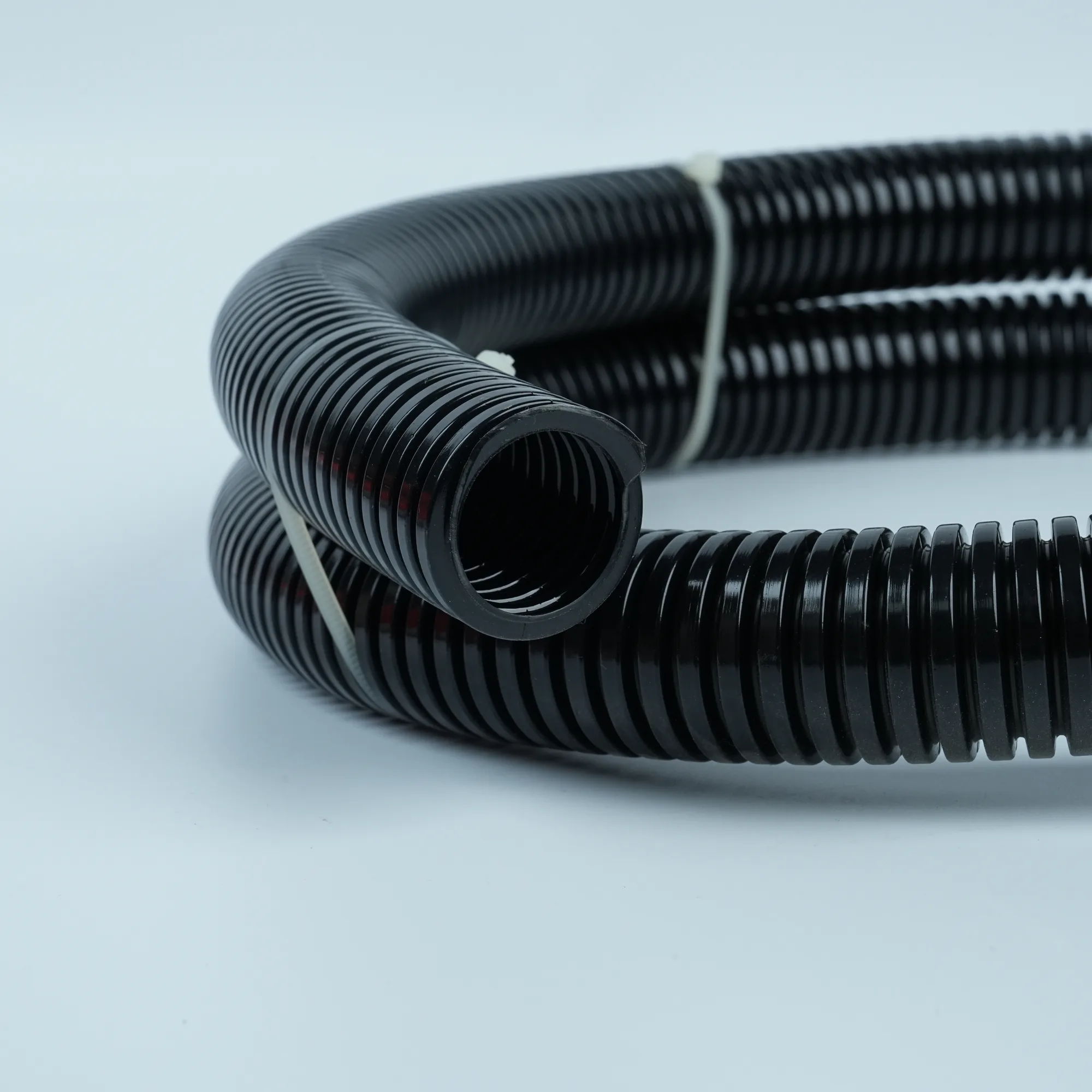
A corrugated tube — also called a corrugated conduit, split loom tubing, or flexible protective conduit — is an extruded plastic conduit with a ribbed, wave-like wall structure that combines flexibility with mechanical protection. Unlike rigid conduits, the accordion profile of a corrugated tube allows it to bend and route along complex paths without kinking or collapsing the inner cable channel. This design makes corrugated tube the standard choice for protecting wire harnesses in automotive assembly, industrial machinery, appliance manufacturing, and a growing range of energy and infrastructure applications.
Three engineering plastics dominate the corrugated tube market: polypropylene (PP), polyamide (PA/nylon), and polyethylene (PE). Each material offers a distinct balance of temperature resistance, chemical tolerance, flexibility, and cost — so the first decision any procurement team faces is material selection, not size or color. Getting that choice right at the design stage is significantly cheaper than correcting a specification error after tooling and assembly have begun.
Key Product Characteristics
PP Corrugated Tube: Polypropylene corrugated tube operates from approximately −20 °C to +120 °C. It offers a good balance of rigidity, flame-retardant performance, and competitive cost, making it widely used in automotive low-voltage wiring, home appliance internal routing, and precision machine tool cable management. Flame-retardant PP corrugated tube meets common industry requirements for limiting flame propagation in enclosed assemblies.
PA Nylon Corrugated Tube: Polyamide corrugated tube — available in PA6 and PA12 grades — extends the continuous operating range to −40 °C to +150 °C, with strong resistance to oils, greases, and a wide range of automotive fluids. PA nylon corrugated tube is the preferred material for engine bay harness runs, underbody routing, and any path that passes near heat sources or chemical exposure zones. Flame-retardant PA corrugated tube rated UL94 V-2 is available for applications with defined ignition-resistance specifications.
Dual-Wall Corrugated Construction: The highest-performance PA configurations feature corrugated profiles on both inner and outer walls. This dual-wall structure increases crush resistance and maintains the inner channel diameter under lateral load, while the ribbed inner wall reduces pull-through friction during high-volume wire routing — a measurable benefit on fast-paced harness assembly lines.
Size Range: Standard corrugated tube is produced in inner diameter increments from Φ5 mm to Φ48 mm, covering single-wire runs and large multi-conductor bundles. A practical sizing rule: allow roughly 20–30% clearance above the wire bundle outer diameter to accommodate installation movement and thermal expansion without overly loosening the assembly.
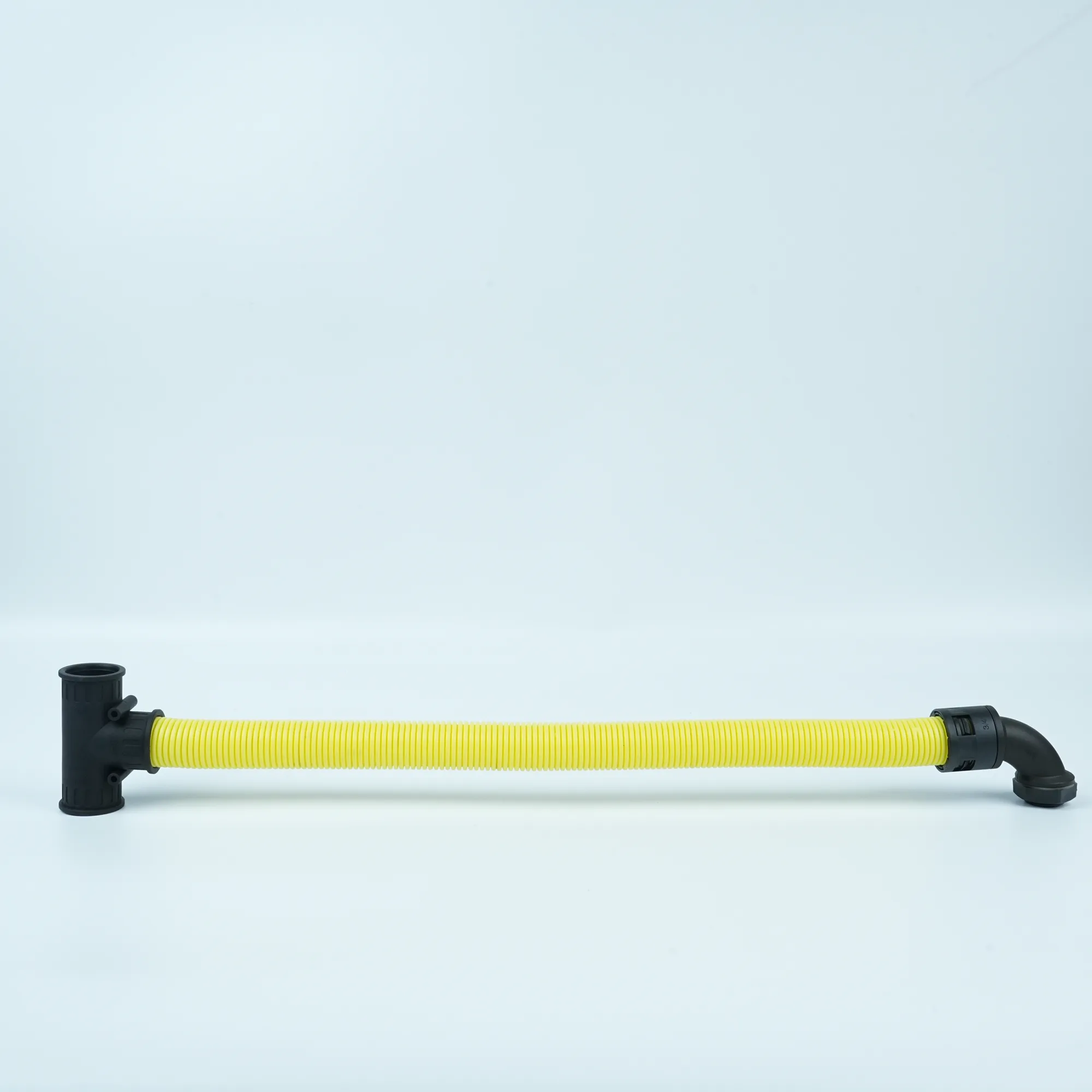
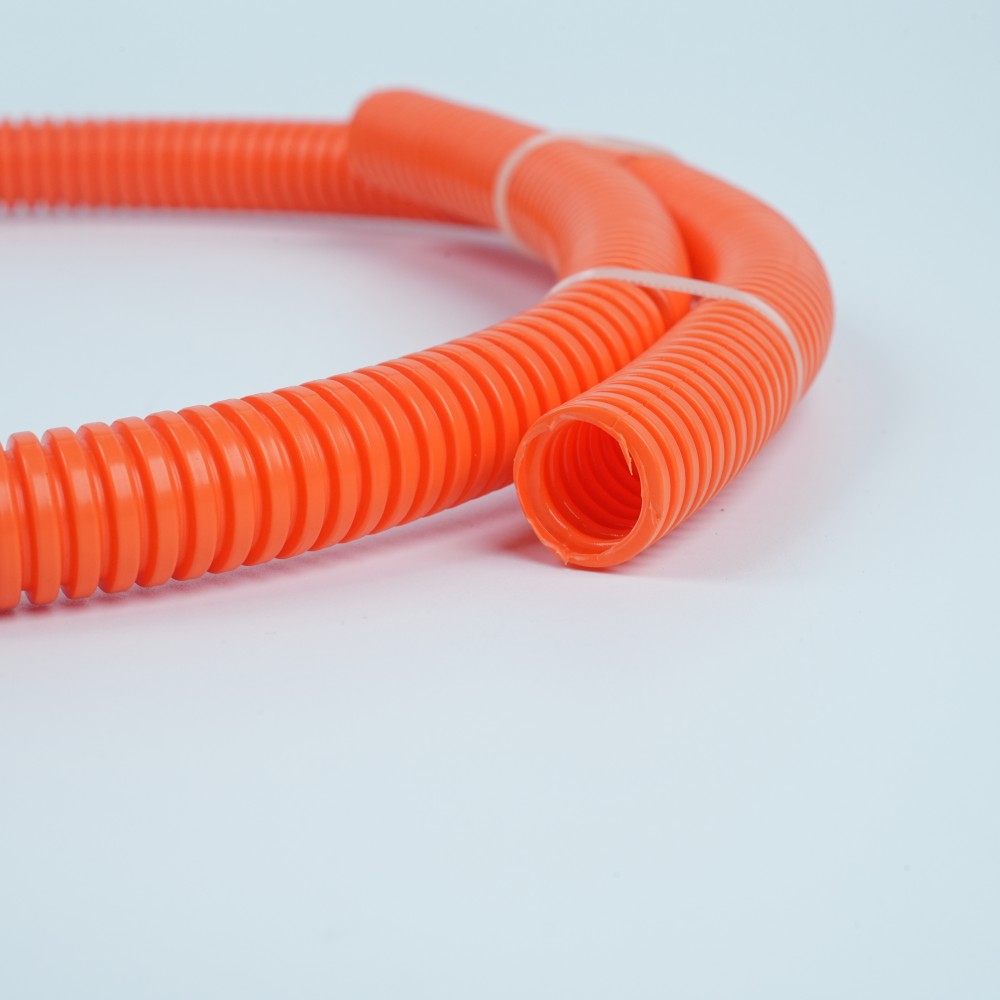
Environmental Compliance: All products comply with ROHS and REACH standards. Optional 5510 odor testing and TVOC testing are available for projects with interior air-quality requirements. Standard color is black; custom colors including orange, gray, white, red, blue, and yellow are available on request.
Common Applications
Corrugated tube serves a broad range of industries, and the selection logic changes significantly with the environment:
Automotive Wire Harness: This is the highest-volume application for corrugated tube globally. PA and PP corrugated tube protect chassis harnesses, engine bay runs, door modules, and underbody routing from heat, abrasion, and fluid contact. Automotive-grade corrugated tube must maintain low-temperature flexibility for cold-start installation while surviving under-hood heat cycles — a range that often rules out PE and points toward PA nylon corrugated tube.
Industrial Machinery and CNC Equipment: Machine tool builders use corrugated tube to organize and protect cables and pneumatic lines on moving axes. In this environment, the critical parameter is often minimum bend radius rather than temperature alone. Think of it like the minimum bend radius for power cable: staying within the design limit keeps the corrugated tube performing across thousands of cycles; exceeding it concentrates stress and accelerates fatigue cracking at fixed points.
Home Appliances: Washing machines, refrigerators, and air conditioning units use PP corrugated tube for internal wire routing. The priority here is standardization — appliance manufacturers typically want a small set of standard inner diameters covering all harness sizes across multiple product lines, reducing SKU complexity in the warehouse and on the assembly floor.
Photovoltaic and Energy Storage Systems: Outdoor solar installations require corrugated tube with UV resistance and long-term weathering stability. For battery pack wiring in energy storage enclosures, flame-retardant corrugated tube with verified UL94 V-2 ratings is increasingly specified to address fire safety requirements in high-energy-density assemblies.
Aerospace, Marine, and Infrastructure: Where chemical corrosion resistance and wide operating temperature range are critical, PA corrugated tube can serve shipboard wiring, aviation cable management, and building services routing that would exceed the limits of PP materials.
How to Select the Right Corrugated Tube
Many procurement teams start corrugated tube selection with outer diameter or unit price — but the most reliable starting point is the operating condition of the installation. Material selection defines what is acceptable; sizing follows from the wire bundle geometry.
A practical decision path:
Operating temperature range: Establish the peak sustained temperature and peak short-term temperature of the routing path. If the corrugated tube runs near a heat source (engine bay, compressor housing, oven wiring), PP corrugated tube is adequate for continuous temperatures up to approximately 120 °C. When the path reaches or exceeds that threshold, PA nylon corrugated tube — with grades tolerating continuous service at 150 °C — is the appropriate step up.
Chemical and fluid exposure: For automotive underbody runs, hydraulic equipment environments, or outdoor industrial installations involving direct contact with oils, cleaning agents, or brake fluids, PA nylon corrugated tube is the conservative selection. PP corrugated tube has adequate resistance for incidental exposure in moderate service conditions.
Flame retardancy class: This is one of the most frequently overlooked specifications in a first purchase. If the end product falls under automotive OEM qualification, appliance safety certification, or energy storage safety requirements, the harness protection materials typically require a defined flame retardancy class. Confirm this requirement from the product specification before finalizing material selection — discovering the gap during a supplier audit is a costly correction.
Split or non-split design: Split (open-slit) corrugated tube allows wires to be snapped in after harness termination, reducing rework time on existing assemblies. Non-split (closed) corrugated tube provides higher crush resistance and is preferred in high-vibration runs or automated pull-through operations where a clean, sealed exterior matters. Both configurations are available across PP and PA material grades.
Inner diameter and wall thickness: Measure the wire bundle at its largest cross-section, then select an inner diameter with appropriate clearance. Oversizing by a large margin can allow bundle movement that concentrates wear at clamp points; undersizing increases insertion force and risks insulation damage during pull-in.
A note on temperature ratings: a PA corrugated tube rated to 150 °C reflects the continuous service temperature of the base polymer under standard test conditions — not a validated result for a specific installation assembly. For safety-critical applications, requesting documentation on the test method and test duration applied to the rated grade is reasonable due diligence before finalizing qualification.
Why This Category Matters for Industrial Buyers
Corrugated tube is a high-frequency, low-unit-cost consumable — but the consequences of a specification error are disproportionate. A harness protection material that cracks during cold-weather installation, degrades under chemical exposure, or lacks the required flame retardancy class can generate assembly delays, field returns, or compliance holds that cost far more than the original savings on the conduit itself.
Our corrugated tube range covers PP flame-retardant conduit for cost-efficient automotive and appliance applications, and PA nylon corrugated tube — including dual-wall configurations — for demanding environments where temperature resistance, chemical tolerance, and dimensional consistency are non-negotiable. Both split and non-split designs are available across the range, allowing the corrugated tube to match your assembly process rather than requiring process adjustments around the conduit.
The range is engineered with global supply in mind. Products comply with ROHS and REACH environmental standards, and technical documentation can be arranged to support supplier qualification in automotive, appliance, and energy sector supply chains across North America, Europe, Africa, Asia, and South America. Custom colors, non-standard inner diameters, and project-specific sample requests can be discussed directly with the supply team.
If you are evaluating corrugated tube for a new design program or consolidating a multi-grade sourcing arrangement, the most productive starting point is typically a specification review — material grade, inner diameter tolerance, flame retardancy class, and supply continuity requirements vary enough across applications that a direct discussion resolves the selection faster than iterating through catalog data sheets alone.

 KO
KO