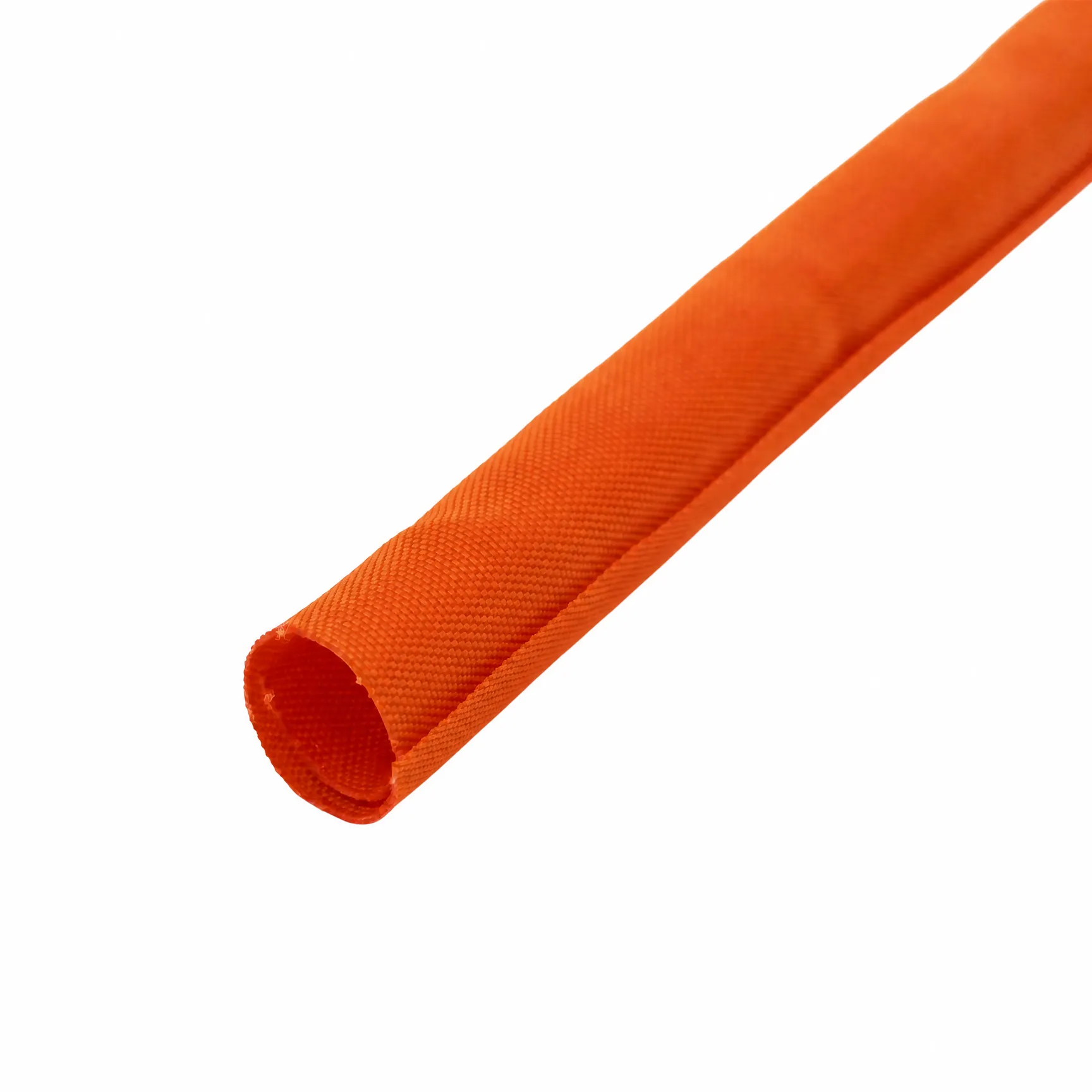
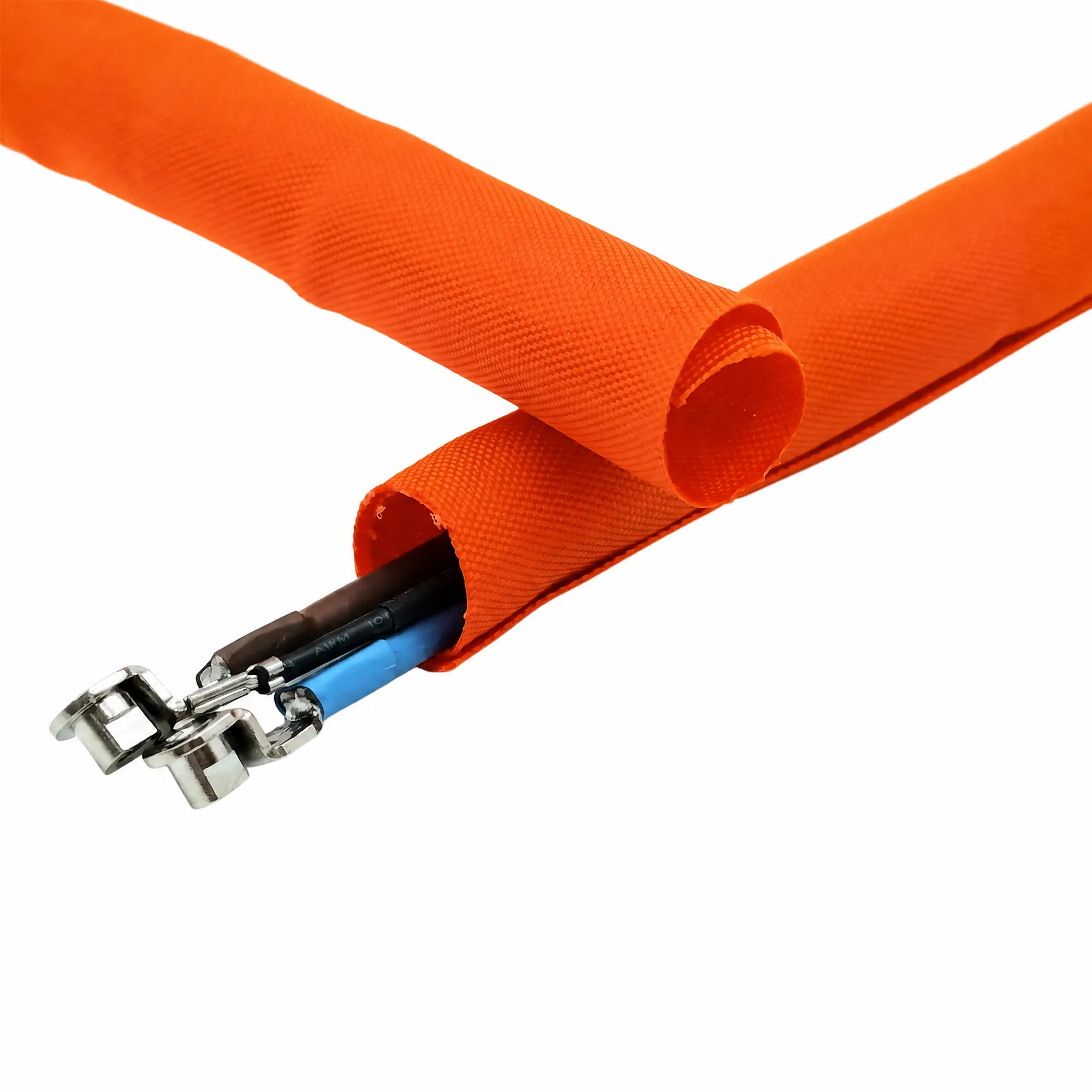
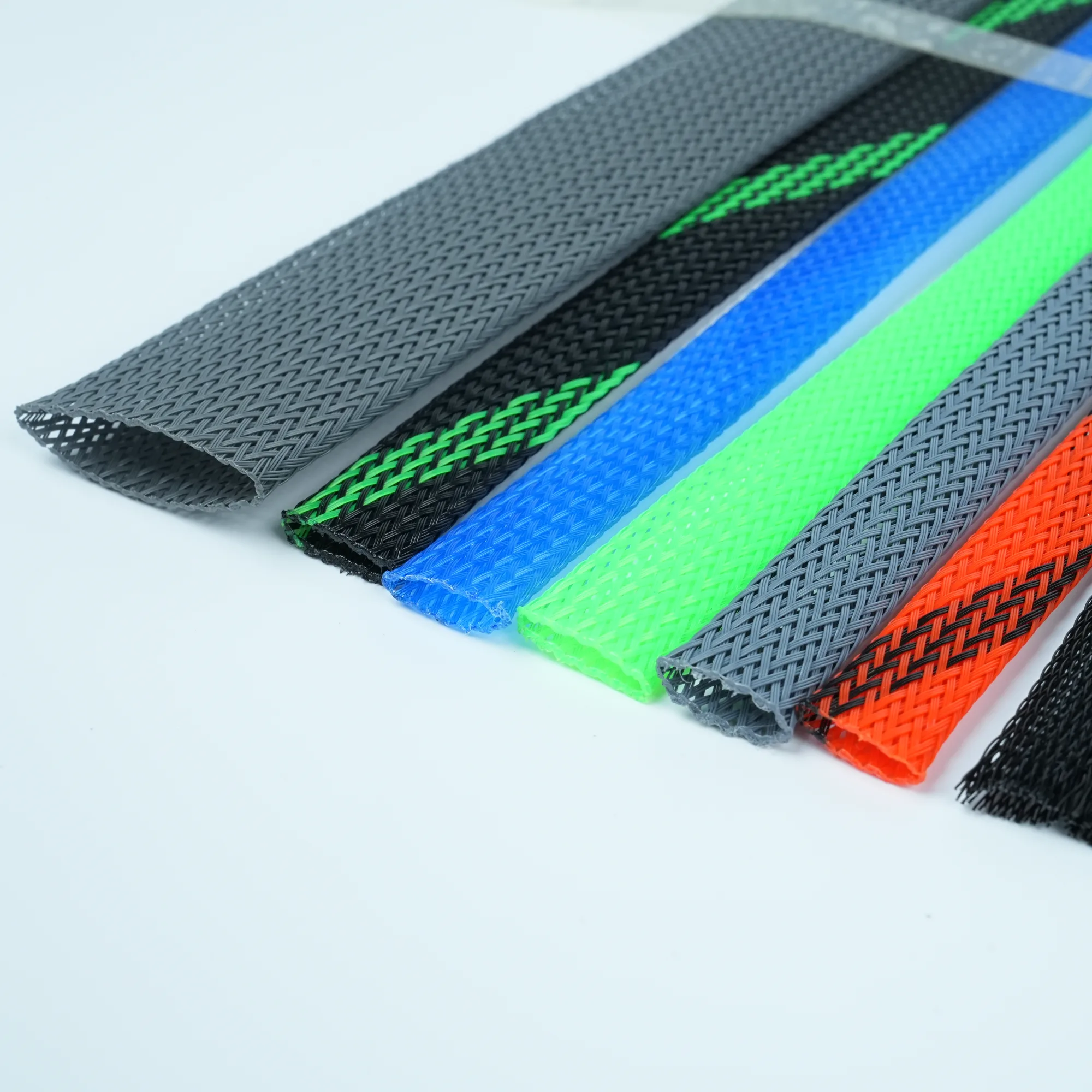
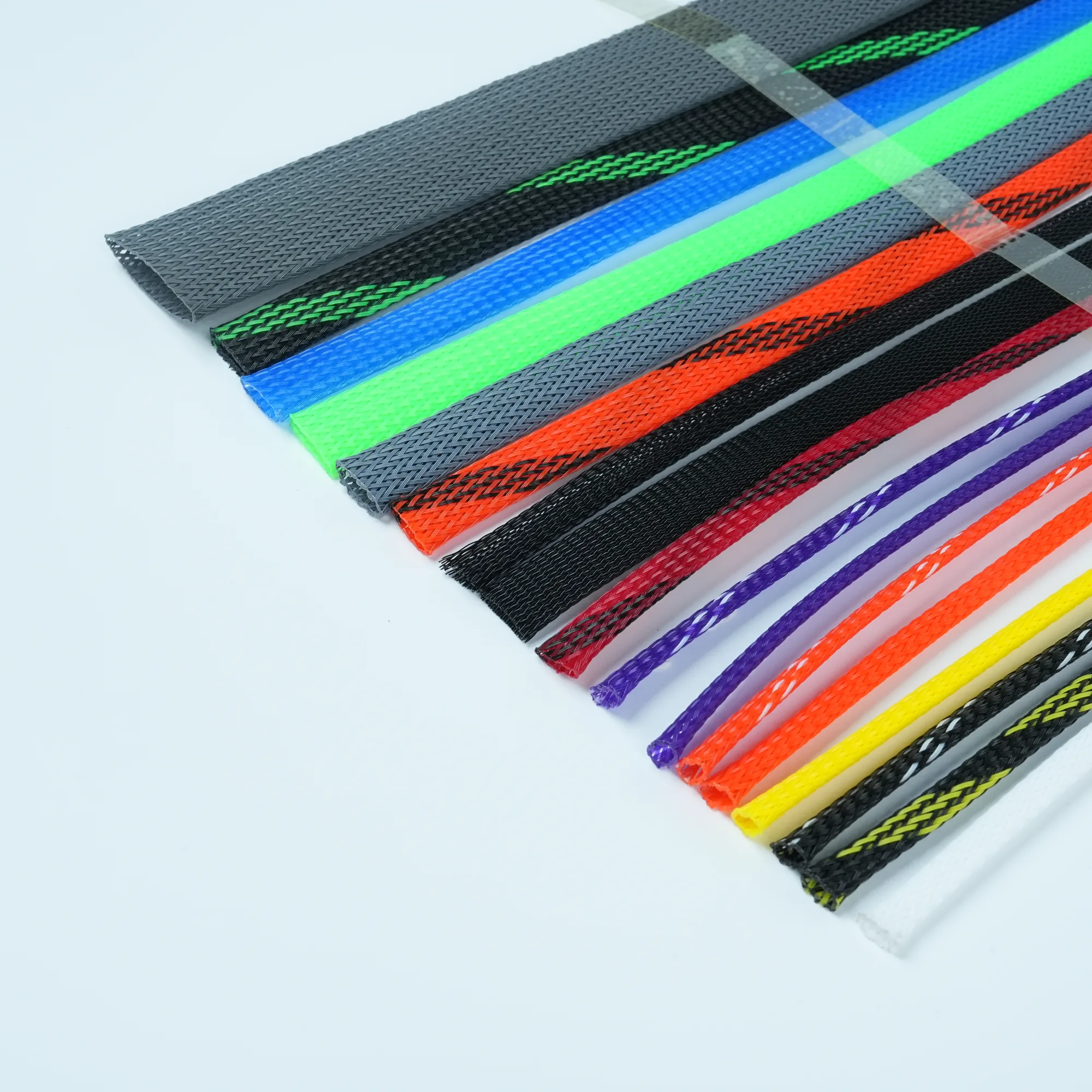
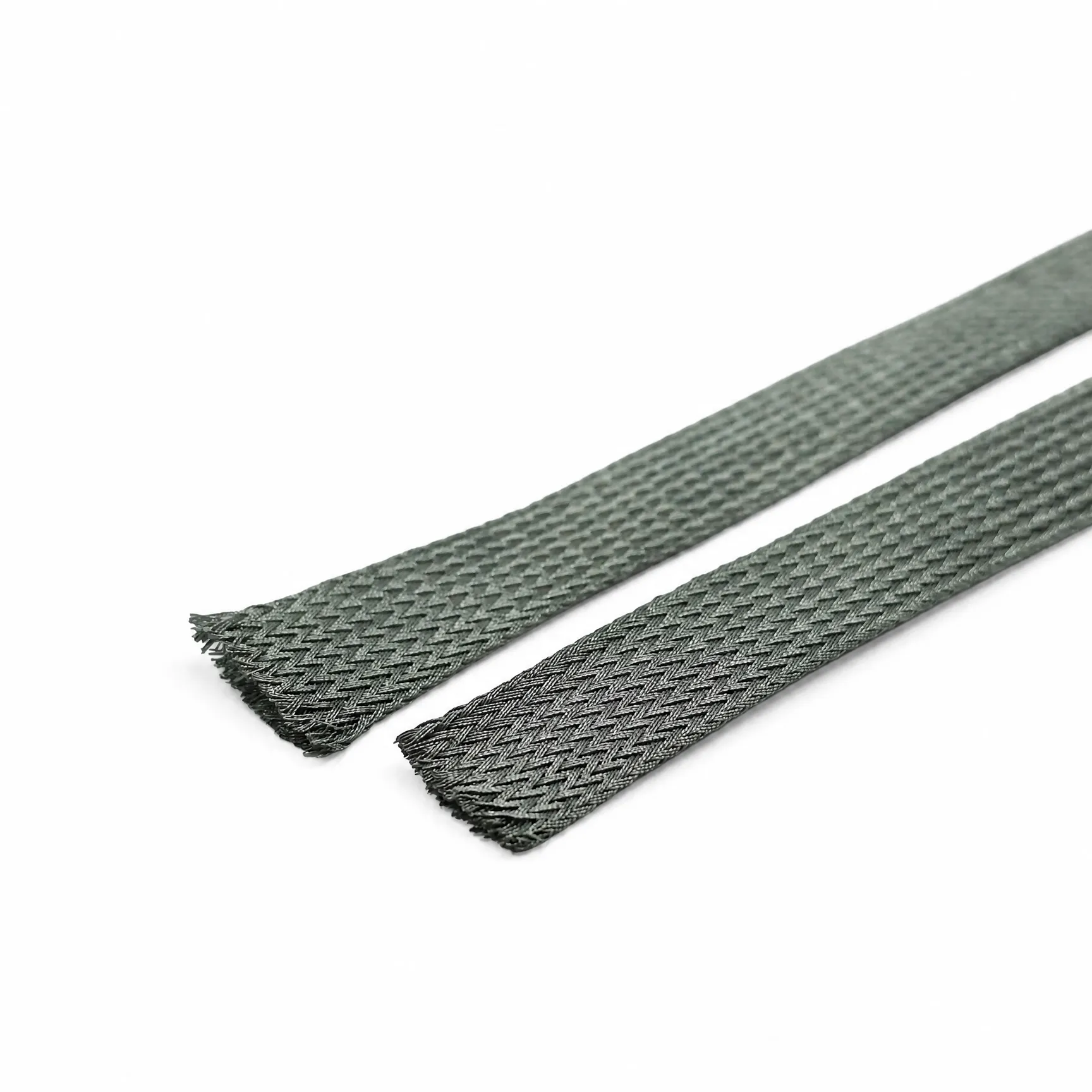
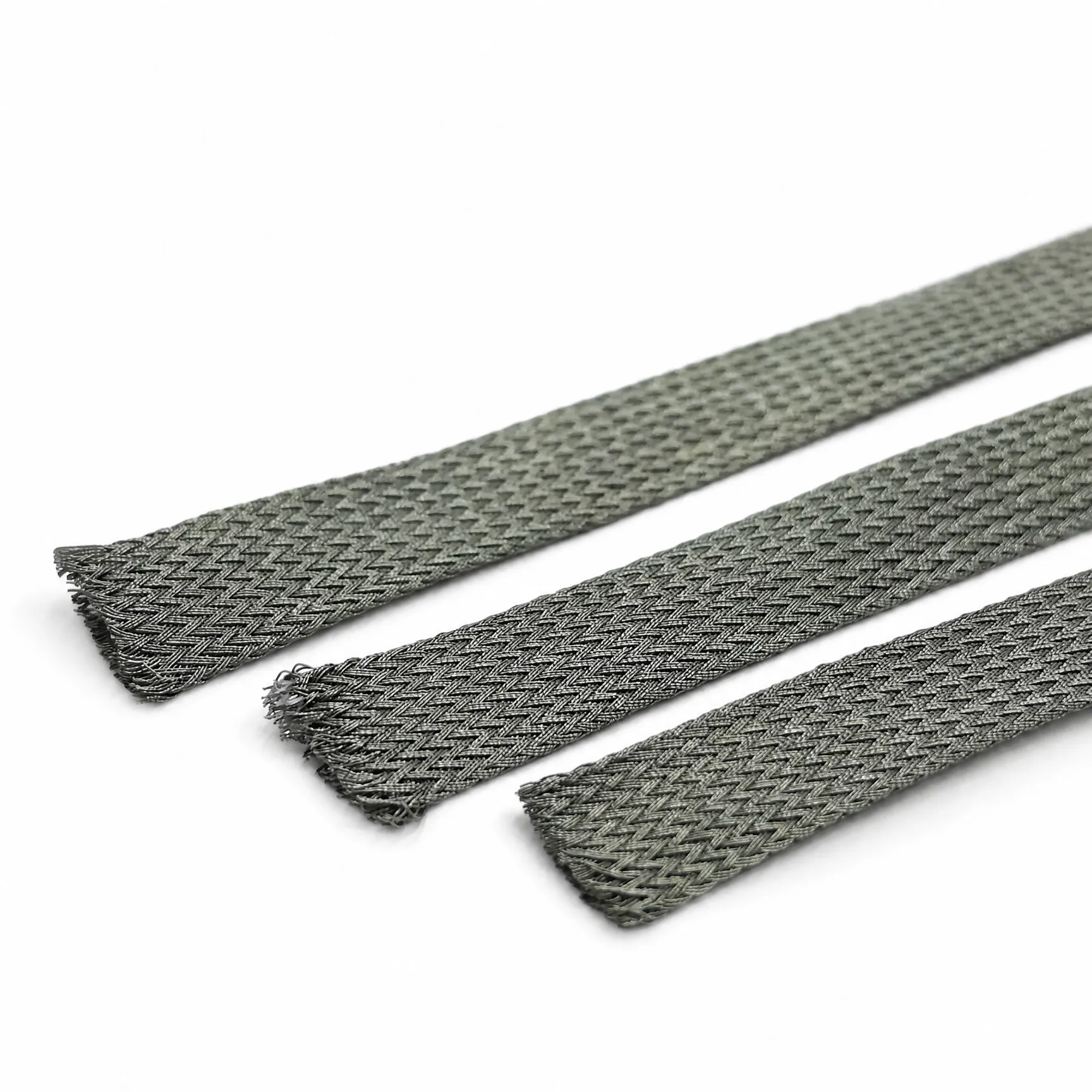
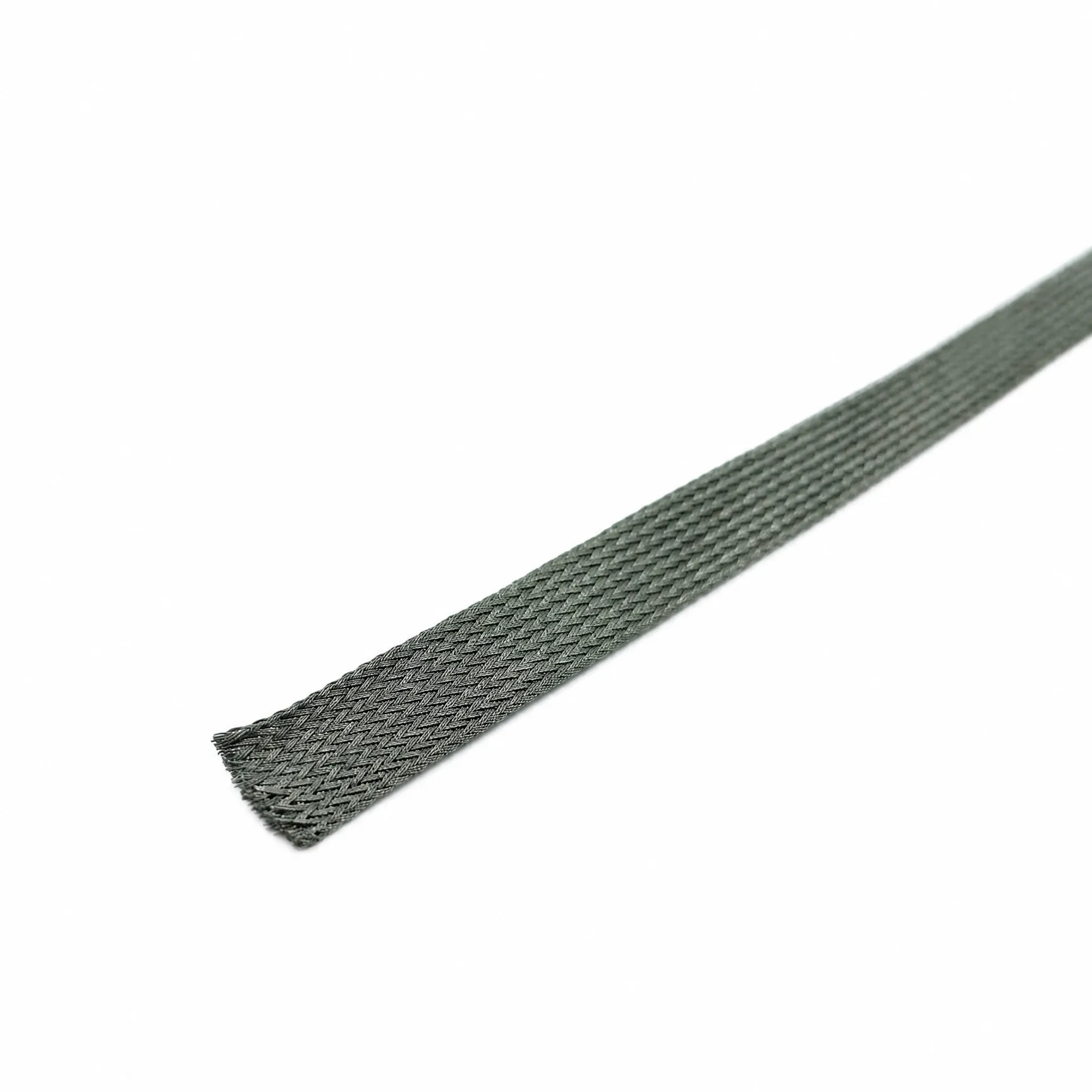
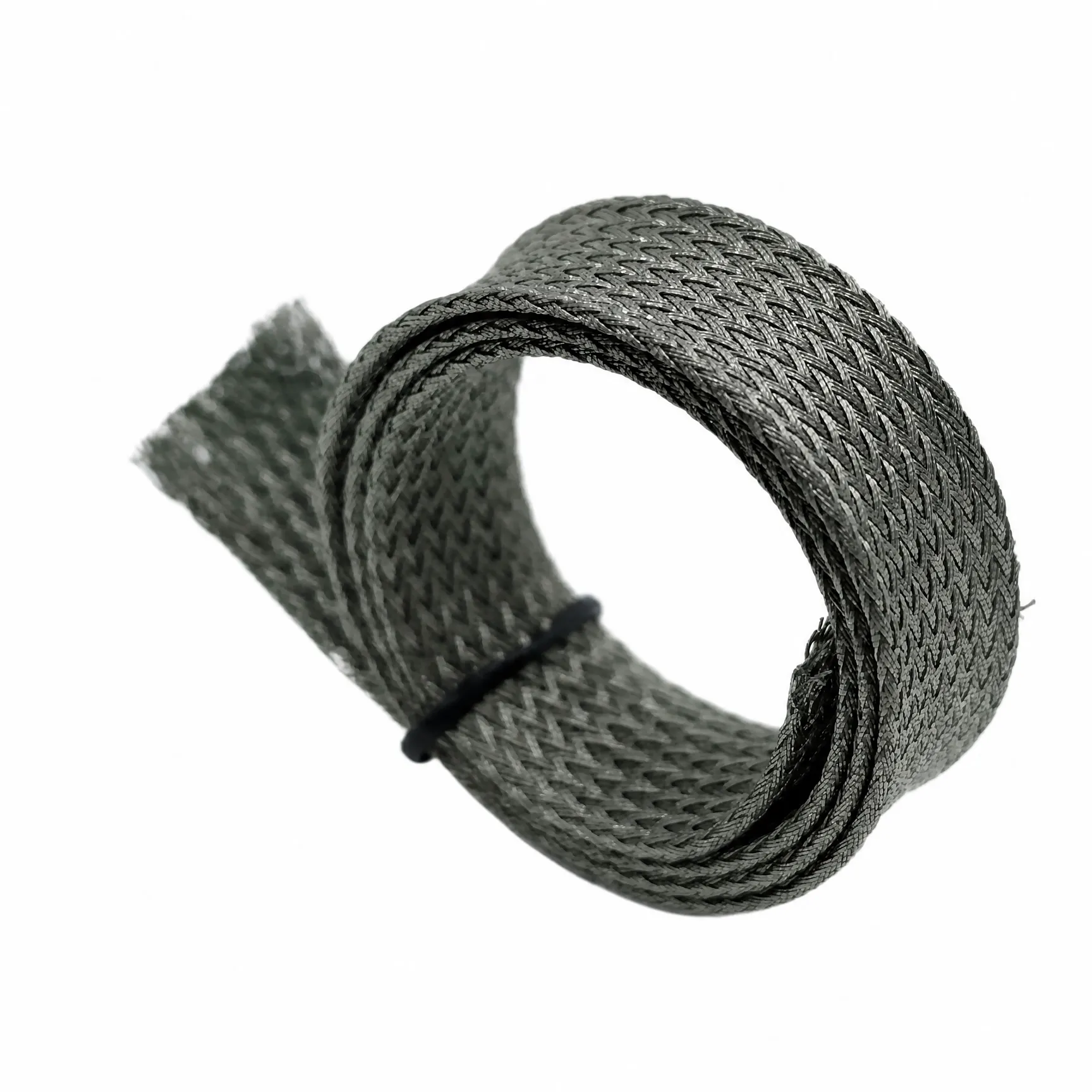
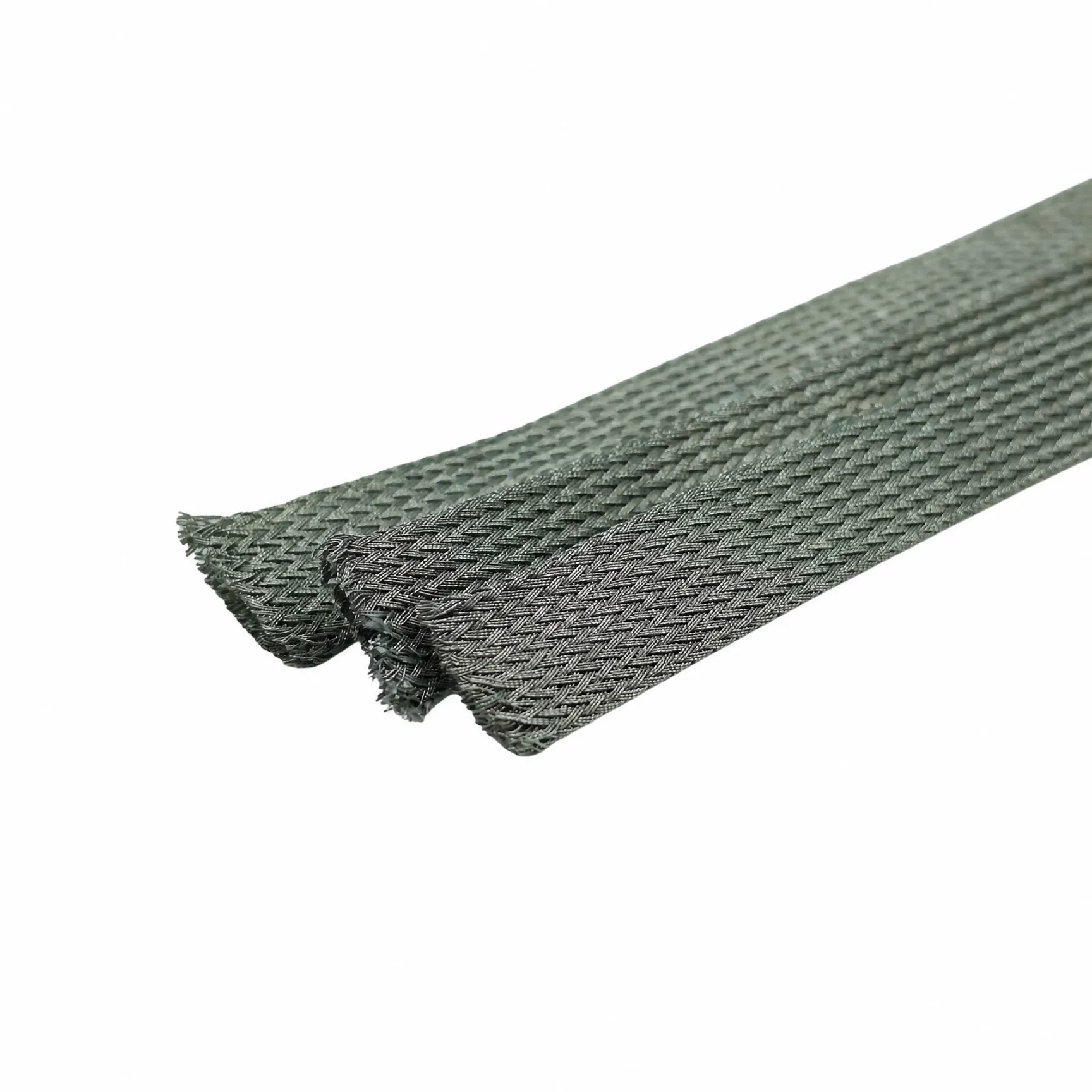
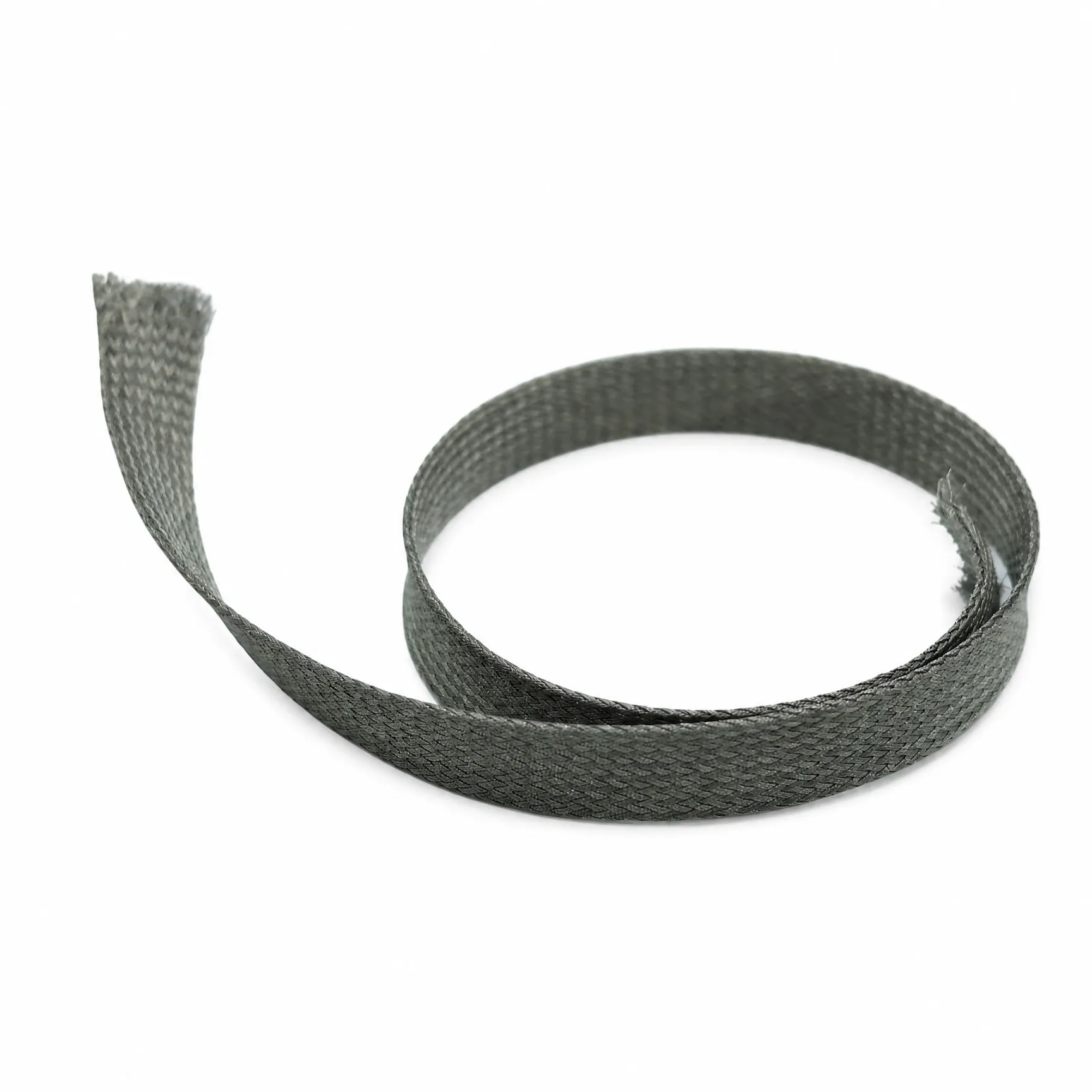
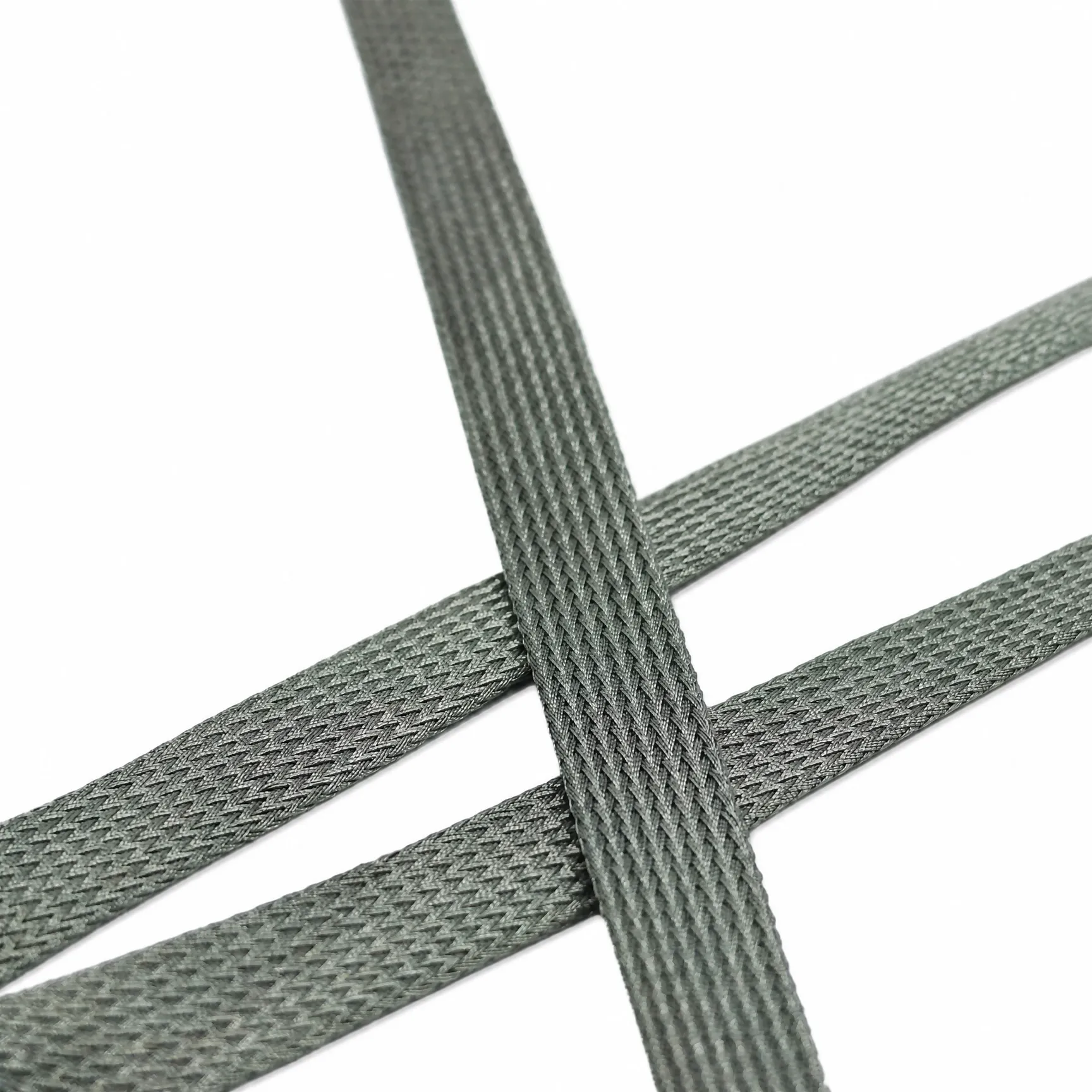
EMI Shielding Braided Sleeving-CR-BS-5002 is a flexible cable-covering braid for assemblies that need to manage electromagnetic interference without adding the bulk of a rigid conduit. Its shielding layer uses high-density tinned copper foil wires. The supplied product information identifies a verified shielding effectiveness above 60 dB from 30 MHz to 3 GHz under GB/T 30142, together with a working-temperature range from -50°C to +150°C. These facts make the sleeve a practical candidate for engineers who need to compare coverage, thermal conditions, routing geometry, and documentation before a harness design is released.
The sleeve is designed for cable and wire-harness runs rather than for a termination-only protection task. It follows complex cable paths, while the woven metal layer provides continuous coverage along the selected length. A custom cut length is available, and the listed range includes eleven reference widths whose applicable cable ranges extend from 1 mm to 40 mm. NYLON is identified by XX=01 and KEVLAR by XX=02 in the part-number convention. Selection should begin with the required cable diameter, installation route, movement, and the test evidence required by the end application.
Shielding and Temperature Reference
The central performance point is the stated shielding result: more than 60 dB across 30 MHz to 3 GHz, verified to GB/T 30142. That statement should be read as a product selection reference, not as a substitute for system-level validation. Actual electromagnetic compatibility depends on cable construction, grounding, connector design, continuity at interfaces, routing, and nearby sources of interference. Engineers should confirm the complete assembly in its intended environment.
| Item |
Listed value |
| Shielding effectiveness |
60 dB, 30 MHz to 3 GHz, GB/T 30142 |
| Working temperature |
-50°C to +150°C |
| Braid material |
High-density tinned copper foil wires |
| Material options |
NYLON (XX=01) or KEVLAR (XX=02) |
| Cutting option |
Fixed length available |
Temperature capability also needs to be considered at the assembly level. The stated -50°C lower limit is useful for cold-climate or refrigerated installation planning, while the +150°C upper limit provides a reference for elevated-temperature routing. However, a cable system contains more than one material. Jacket, connector, seal, tie, and mounting components should be reviewed against the same expected temperature range.
Construction Benefits
-
High-density foil-wire braid: The tinned copper foil-wire construction forms the stated shielding layer while keeping the sleeve flexible for harness routing.
-
Weight-conscious design: The product information states a 30% weight reduction compared with traditional tinned copper wire braided tubes. In weight-sensitive harness programs, evaluate that benefit against the total cable assembly and its mechanical requirements.
-
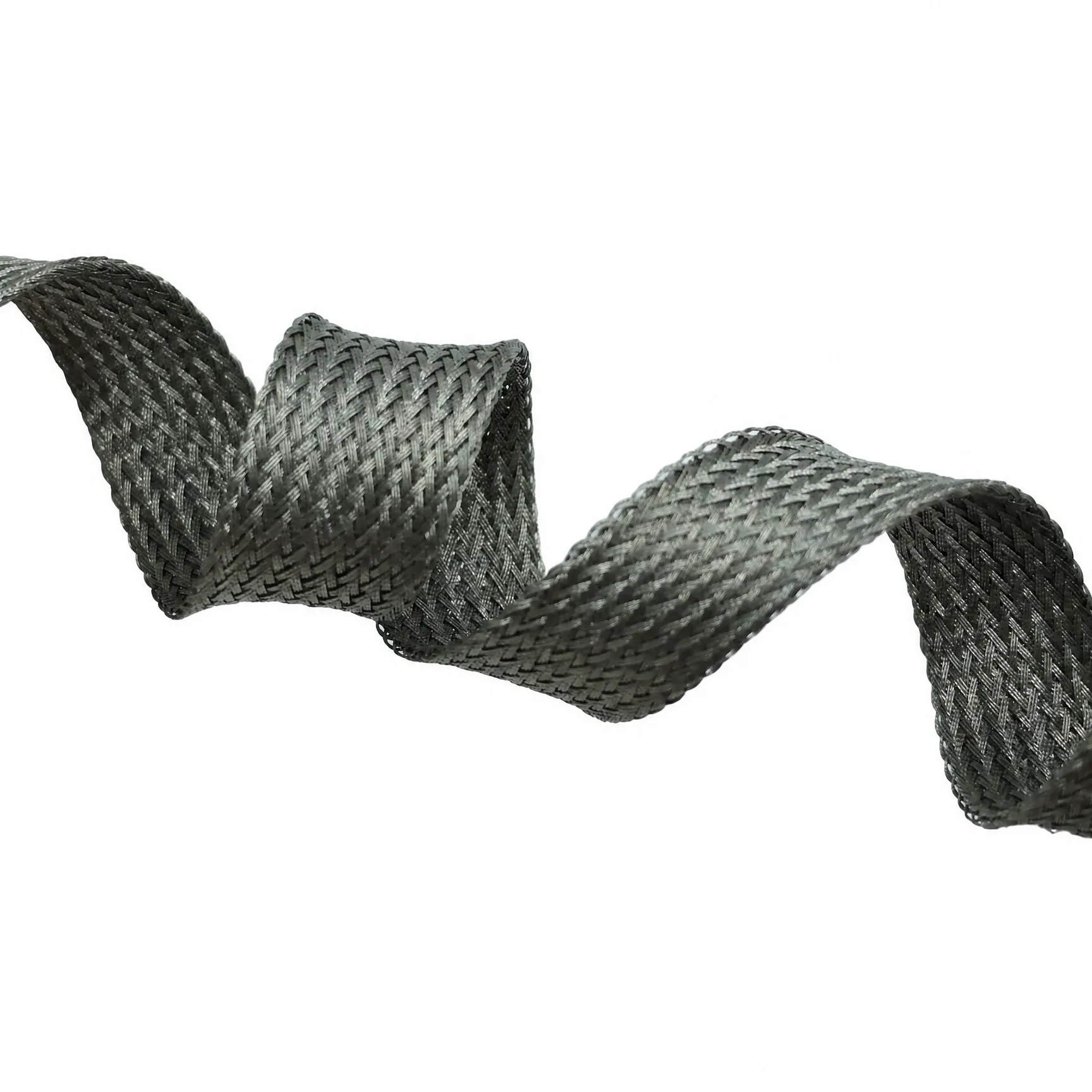
Flexible routing: The braid can follow bends and complex paths more readily than a rigid protective channel. Check bend geometry and attachment points during design review.
-
Two material designations: NYLON and KEVLAR variants give purchasers a documented choice within the CR-BS-5002 part-number system.
-
Range of standard sizes: Reference widths of 3, 6, 8, 10, 12, 14, 16, 19, 25, 28, and 32 mm are listed, with applicable ranges shown in the supplied table.
Many projects start by comparing a shielding figure alone. That is incomplete. The useful question is whether the braid can maintain appropriate coverage through routing, joining, grounding, and service access. A sleeve may have suitable stated performance, but poorly planned transition points can limit system effectiveness. Confirm how the cable enters and exits the protected section before approving a part number.
Size and Part-Number Guidance
The listed sizes provide a starting point for matching the braid to a cable bundle. For example, the 3 ± 1 mm reference width is listed for an applicable range of 1 to 5 mm; the 6 ± 2 mm option covers 3 to 9 mm; the 8 ± 3 mm option covers 5 to 12 mm; and the 10 ± 3 mm option covers 7 to 15 mm. Larger entries continue through 32 ± 4 mm, listed for 25 to 40 mm. Standard reel lengths are 200 m for the 3 mm option and 100 m for the other listed sizes.
Use applicable range as a selection aid, not a guarantee of a finished assembly. Bundle shape, breakout points, connector size, bends, and installation tooling can change the practical fit. If a project needs a non-standard length, fixed-length cutting is available. For a new design, request the relevant test report and confirm the intended material designation before purchase.
Application Contexts
Automotive and vehicle harnesses
Vehicle electrical architectures place signal, power, sensing, and control wiring in compact spaces. Where the selected harness design requires EMI shielding, this braid offers a flexible full-run option with stated thermal and shielding references. The product description notes automotive wire-harness assemblies among its intended contexts. Validate routing, attachment, grounding, and OEM or Tier 1 documentation needs for the individual program.
Communications and network equipment
Communications infrastructure can contain closely routed high-frequency cables. EMI Shielding Braided Sleeving-CR-BS-5002 may be considered where a cable assembly needs a documented shielding sleeve and the stated 30 MHz to 3 GHz range aligns with the design review. It is not a replacement for enclosure, connector, or grounding design; it is one component in the wider interference-control strategy.
Data-center and industrial-control cabling
Dense server, automation, and precision-control installations often make cable management and signal integrity part of the same engineering discussion. The flexible construction supports route planning in constrained spaces. Review the full environment, including movement, temperature, cable diameter, and access requirements, before deciding whether this sleeving is appropriate.
Documentation and Selection Checklist
The supplied material describes ISO 9001, IATF 16949, ISO 14001, ISO 45001, and GJB9001C certifications for the manufacturing facility. Certification needs vary by customer and market, so buyers should request the current documents relevant to their qualification process. The product description also advises contacting a sales representative for specific test reports because listed parameter values are typical values.
- Define the cable or bundle diameter and expected routing path.
- Match the intended environment to the stated -50°C to +150°C range.
- Review the stated 60 dB, 30 MHz to 3 GHz result against the system requirement.
- Specify NYLON or KEVLAR using the appropriate XX designation.
- Confirm length, reel, documentation, and assembly-level validation requirements.
EMI Shielding Braided Sleeving-CR-BS-5002 combines a high-density tinned copper foil-wire braid, stated shielding data, a broad stated temperature range, flexible installation characteristics, and standard size options. For an evidence-led selection, use the supplied figures as a starting point and validate the finished cable system under the project conditions that matter most.
 EN

 Download Product Manual: